Community · Heritage · Sustainability
An Evergreen Community Worth Supporting
At GREEN-HOUSE Festival 2026, a packed weekend at Temasek Shophouse revealed something larger than a marketplace: how an old building can open itself to new people, new purposes and another generation.
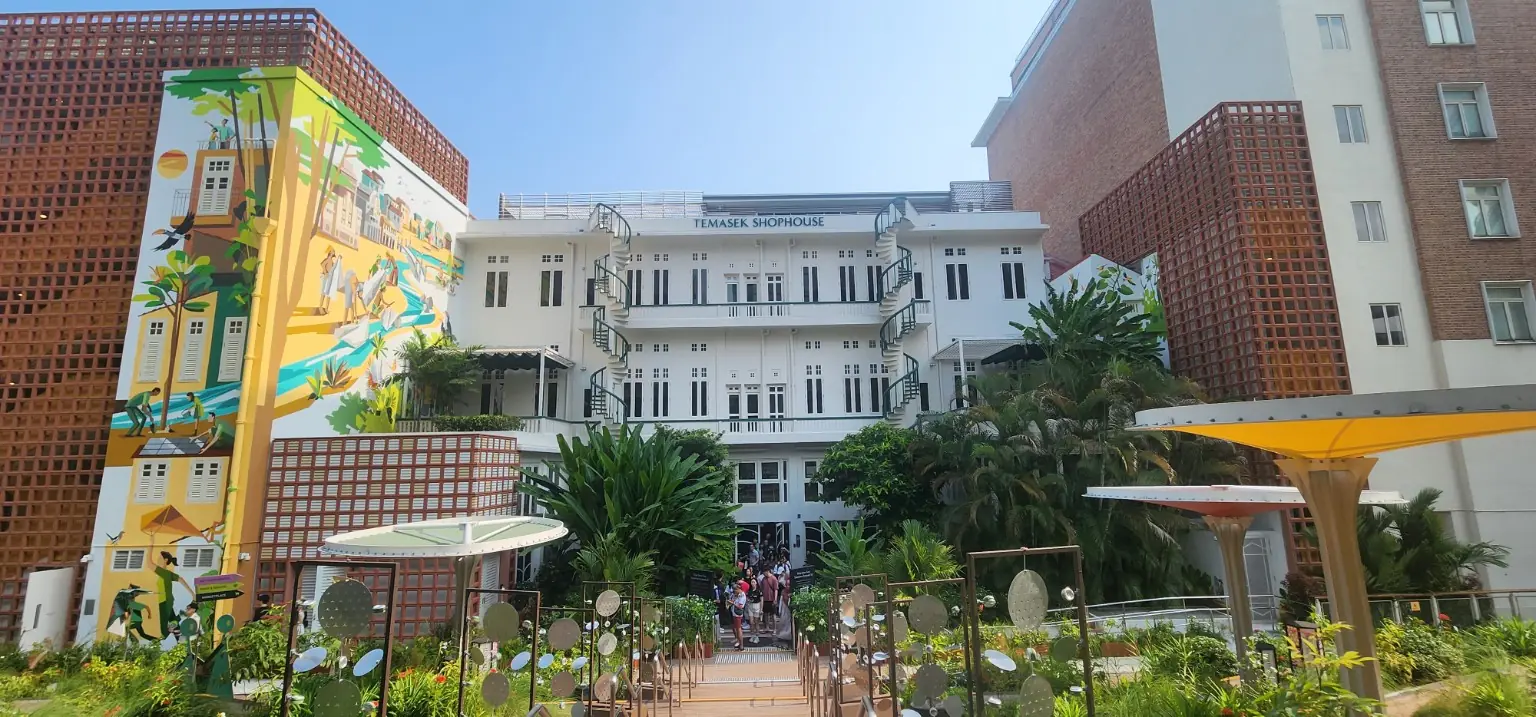
I arrived at Temasek Shophouse expecting a lively sustainability festival. What I found was a place at its most complete: full halls, an active garden and people entering from different sides to discover what had been opened up around this familiar Orchard Road landmark.
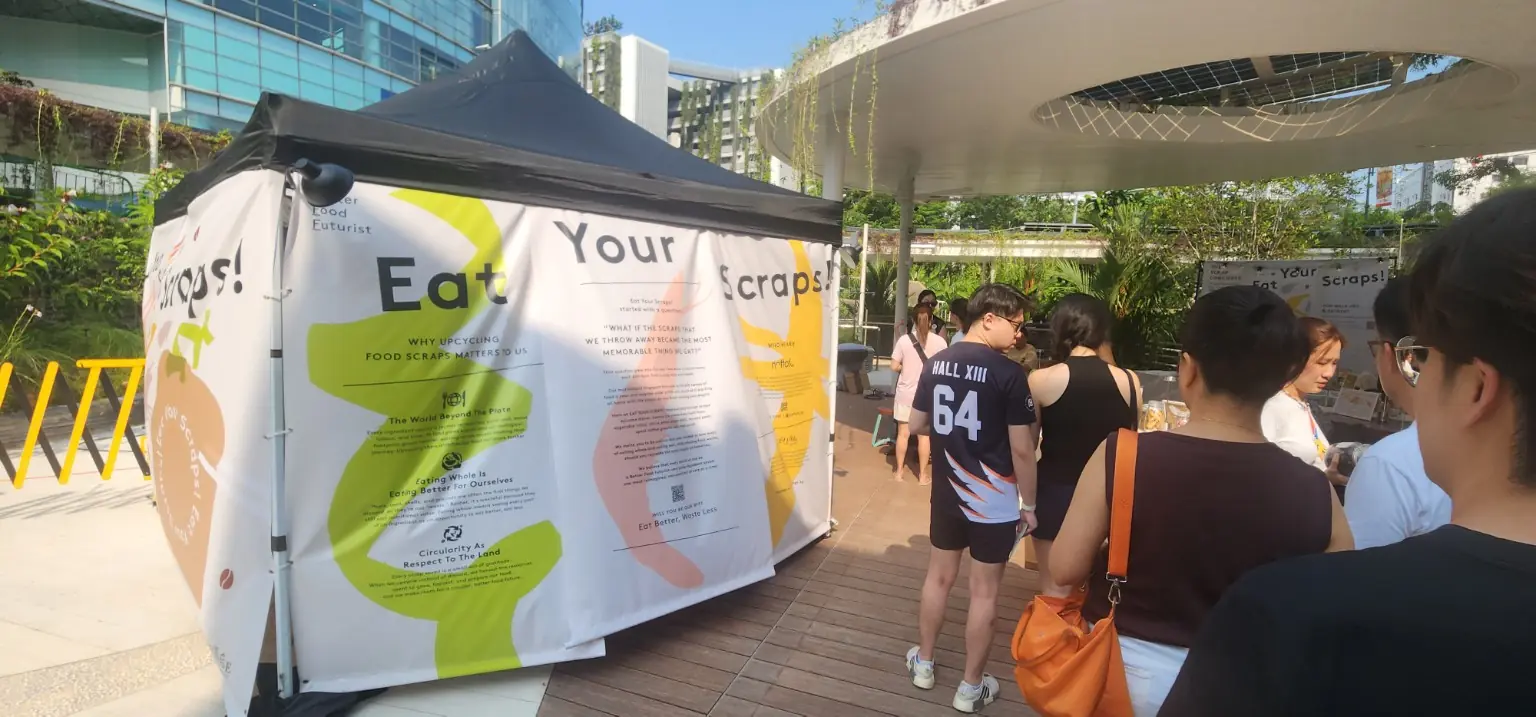
Banyan Cove was packed. Families moved between makers, food, workshops and installations. Outside, the festival continued into paths framed by planting, murals and shaded spaces. Yet the crowd was only one part of the story. The more important change was how naturally the public now flowed through the site.
Temasek Shophouse no longer feels like a conserved building that asks us to admire it from a distance. It feels like a place that wants people to enter, pause, learn and return.
“An evergreen community is not one that never changes. It is one that keeps renewing itself without losing its roots.”
A building that has lived many lives
The building at 28 Orchard Road was built in 1928 by Malacca-born businessmen Ee Kong Guan and Chee Guan Chiang. It began as a townhouse, with commercial space below and apartments above. Across later decades it served as a furniture shop, an eatery, a department store and a fashion outlet.[4]
Its present story is wider than one address. Temasek Shophouse now connects four adjoining conserved buildings. Their earlier occupants included the Malayan Motors showroom and Midfilm House, part of Orchard Road’s commercial and cultural life in the early twentieth century.[2][5]
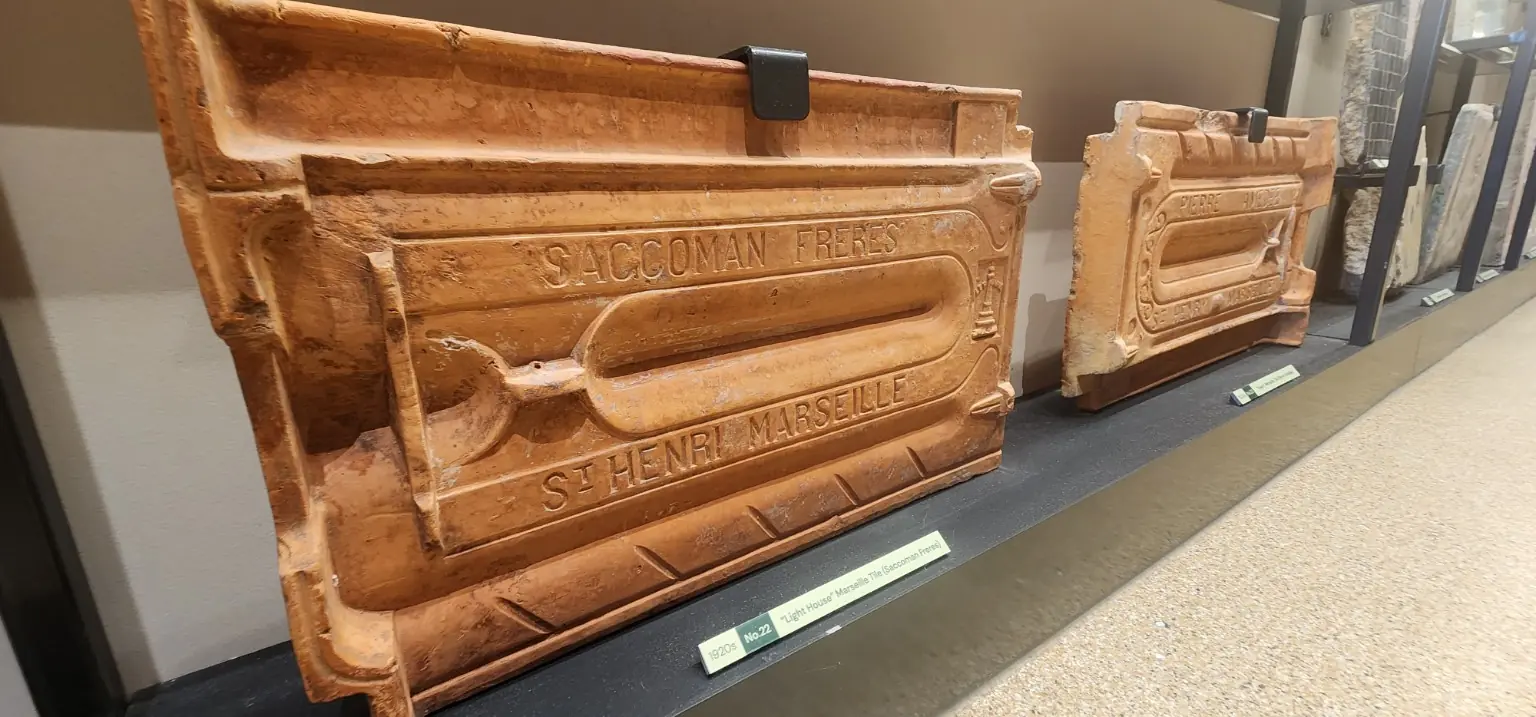
These were never frozen monuments. They were working buildings, repeatedly adapted to the city around them. That makes the surviving details more meaningful. Inside, a preserved Marseille roof tile carries its maker’s imprint, worn colour and the quiet evidence of another era.
The restoration of 28 Orchard Road received the Urban Redevelopment Authority’s 2019 Award for Restoration.[3] The expanded hub reopened across four shophouses on 29 September 2025, creating a connected route through event spaces, public installations, work areas, food and socially responsible retail.[2]
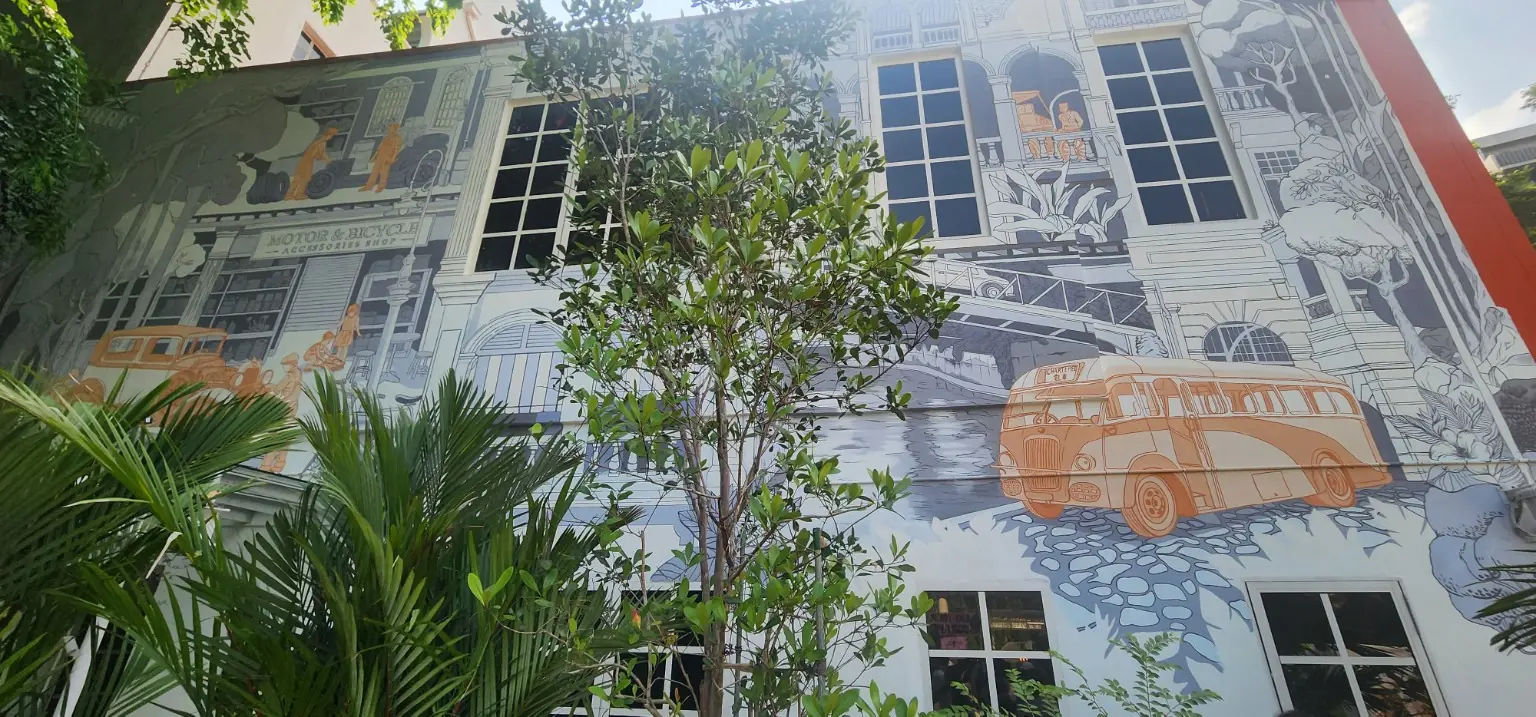
The mural beside the garden carries that history into the public realm. It recalls earlier Dhoby Ghaut while facing a landscape designed for present-day community life. The past is not hidden behind glass; it becomes part of the route people walk today.
The garden changes how the building meets people
The outdoor community space opened to the public on 14 March 2026, completing a multi-year transformation. Temasek Shophouse describes the landscape as a place for environmental learning and public participation, with retained mature trees, native planting, rainwater management, a community farm and regenerated courtyards.[6]
What impressed me was not simply that more greenery had been added. The landscape changes the relationship between the building and everyone around it. Former edges now feel like invitations. More approaches lead towards the shophouses, and there are more reasons to stop before stepping inside.
The wider sustainability work is practical rather than decorative. Official project information identifies solar panels, energy-efficient lighting, hybrid cooling, rainwater harvesting, material reuse, native planting and a community farm as parts of the site’s integrated approach.[6]
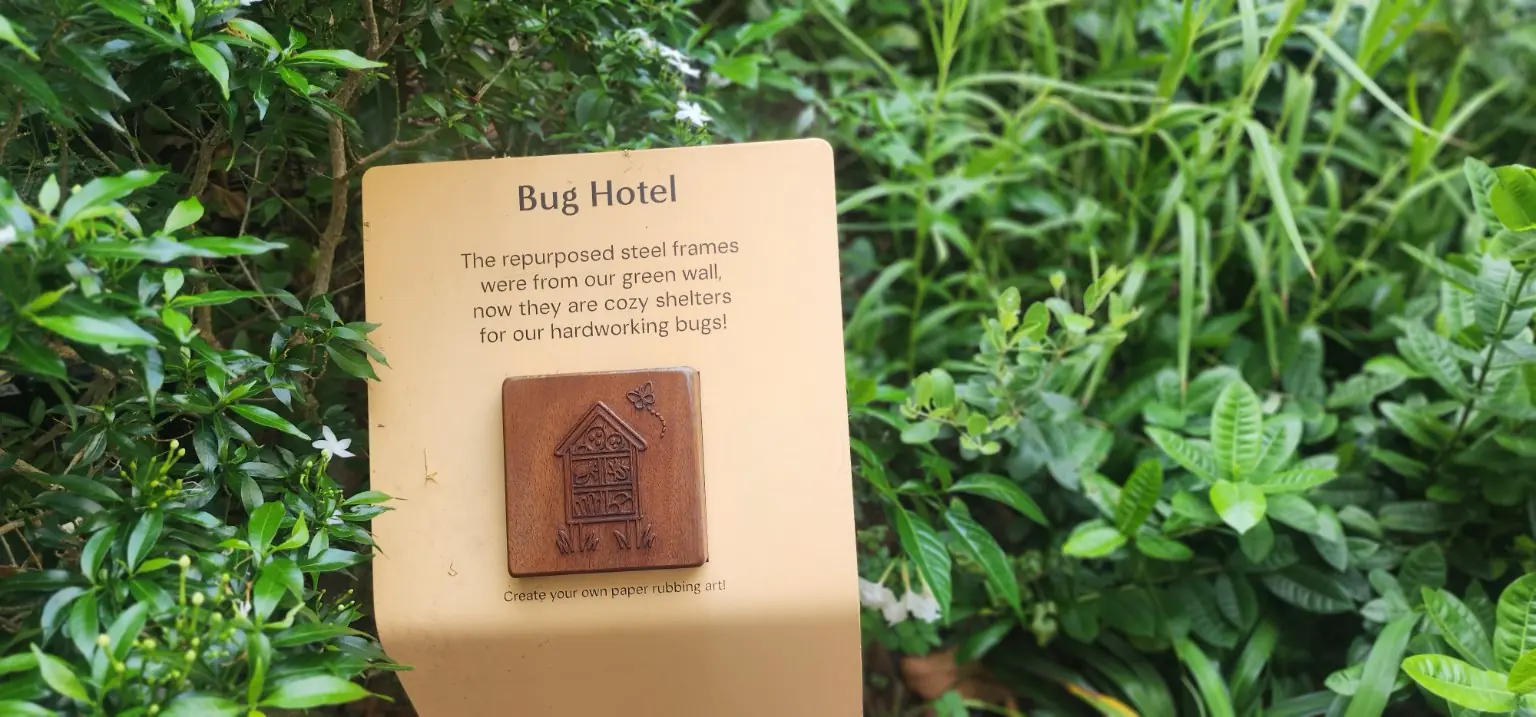
One modest detail captures that thinking especially well. A garden marker explains that steel frames from the former green wall have been repurposed as shelters for insects—a “Bug Hotel”. Something that had finished one job was given another purpose, this time supporting biodiversity.
Original character is retained while the buildings remain active and publicly relevant.
Planting, courtyards and biodiversity become part of an everyday Orchard Road journey.
Makers and social-impact partners meet the public through approachable daily experiences.
Why supporting local begins with curiosity
The official festival programme brings together 74 local brands across food, fashion, beauty, home and lifestyle.[1] That number is impressive, but the real value is the chance to meet the people behind what is being made.
Sustainability can sound remote when it is presented only through targets and technical language. At GREEN-HOUSE, it shows up in ordinary decisions: what we eat, what we keep, what we repair, how something is packaged, and whether a purchase will remain useful.
Supporting local does not mean buying indiscriminately. Ask where an item comes from. Ask what materials were used and how long it should last. Learn who made it and who benefits. Choose something you will genuinely use. Follow a maker whose work deserves a longer life, and share that story with someone who may care.
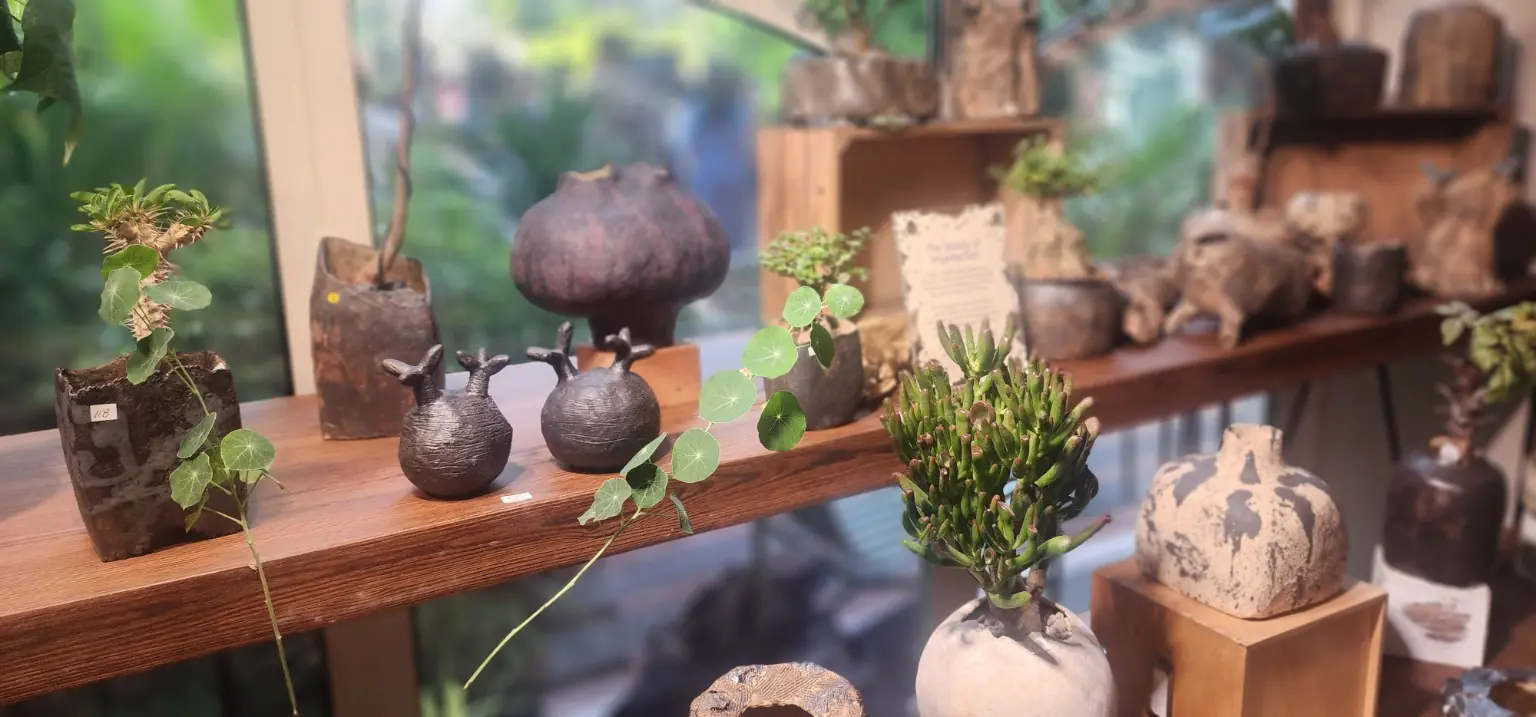
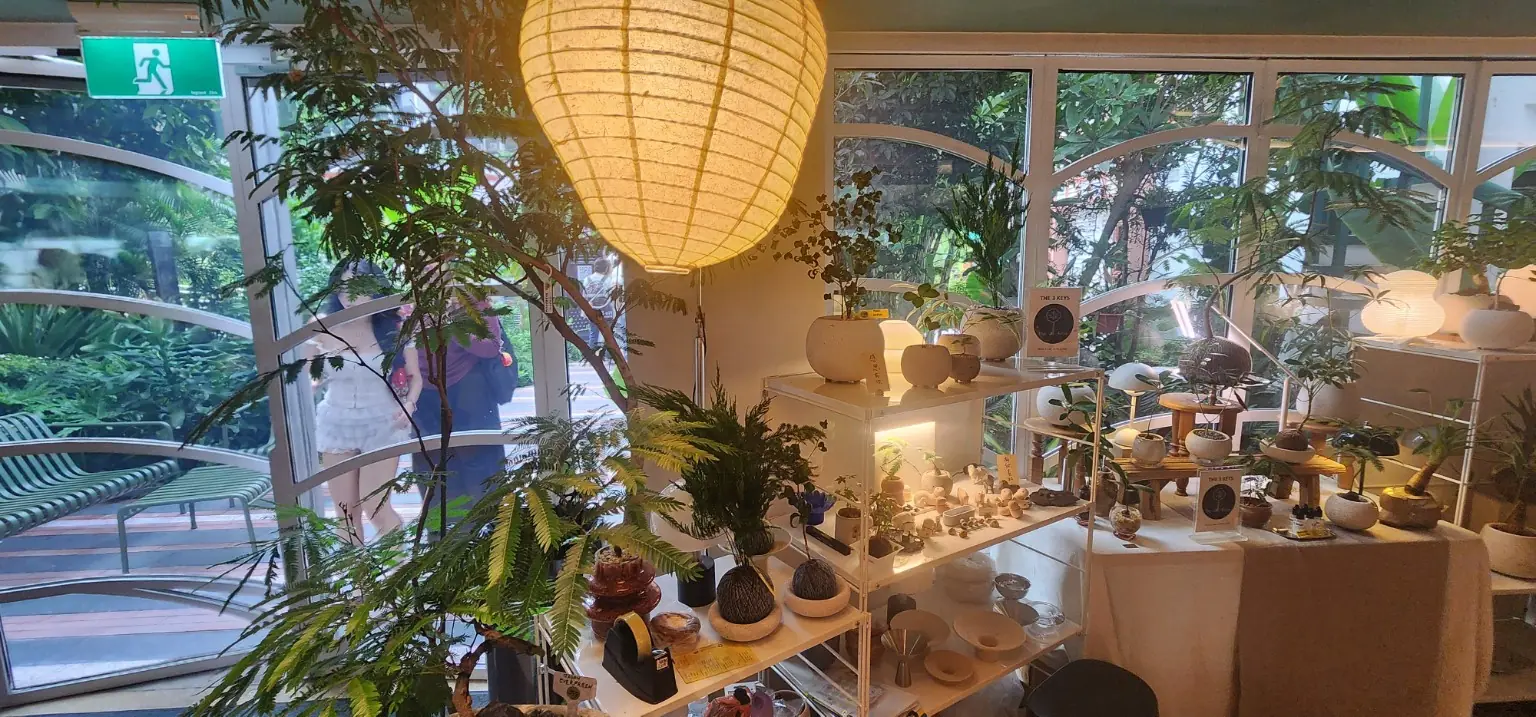
I am deliberately not showing you everything
This is not a catalogue of every stall or a ranking of vendors. Part of the value is going there, speaking with people and forming your own view. The photographs establish the place, purpose and atmosphere; the rest should be discovered firsthand.
Go with curiosity, not a shopping list. You may leave with a product, a new habit, a useful question or simply a better understanding of the people trying to build more responsible businesses.
A place where children can encounter the ideas early
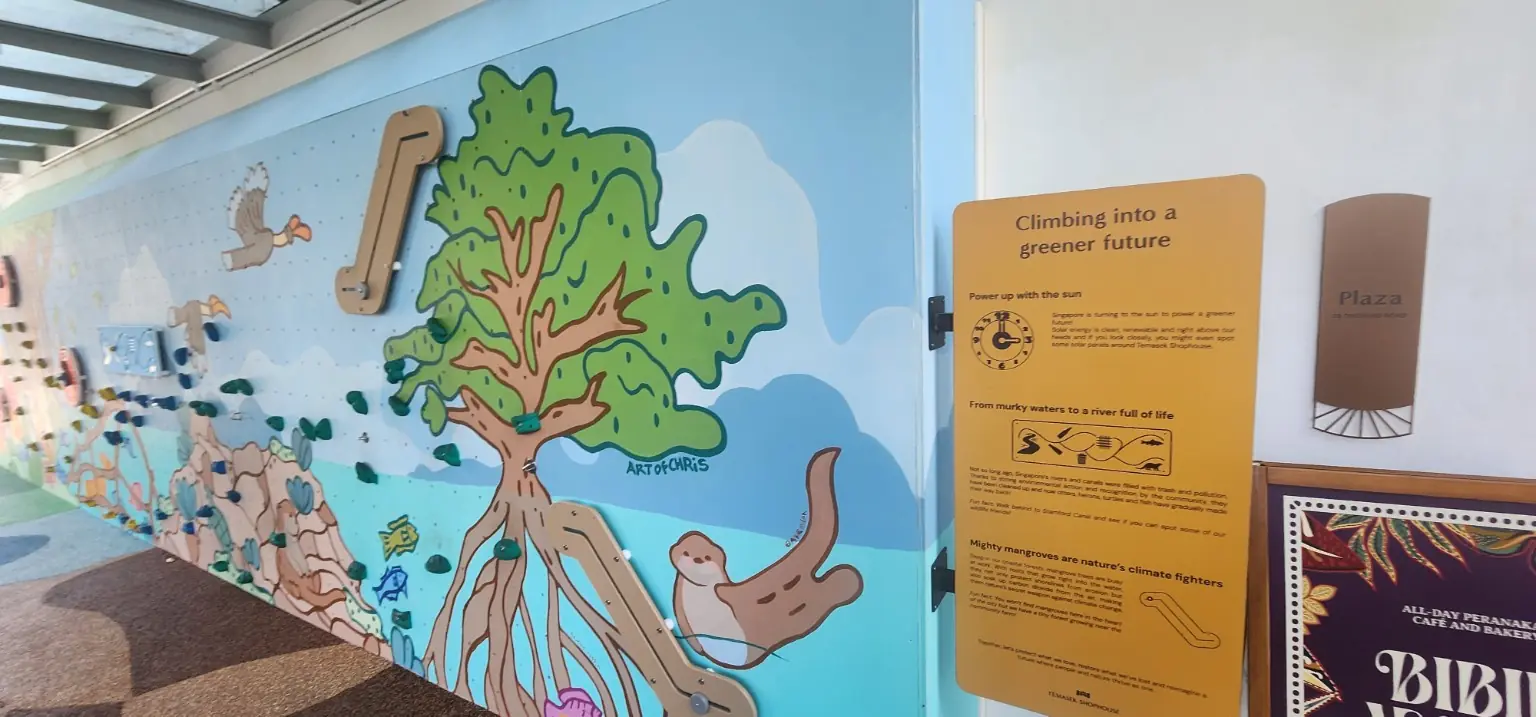
Families don’t need a technical lecture to start a conversation about sustainability. A garden insect shelter, a mural, a reused material or a climbing wall can provide the first question. The play wall I photographed introduces solar power, waterways and mangroves through movement and exploration.
That matters because an evergreen community is built across generations. Children need spaces where ideas about nature, waste and the city feel tangible, not distant, frightening or abstract.
Three simple questions for a family visit
- What was here before? Look for old tiles, spiral staircases, murals and clues from earlier occupants.
- What has been reused? Find the Bug Hotel and notice how materials can begin a second life.
- Who is making a difference? Meet a maker or community partner and ask what problem they hope to solve.
The purpose continues after the festival
A successful festival can bring a crowd for a weekend. A successful community space gives people reasons to return after the booths have gone.
The permanent mix at Temasek Shophouse helps do that. Bibik Violet carries Peranakan food heritage into an everyday café setting. Martket by ABRY combines design and retail with employment and mentorship opportunities for seniors, women from underserved communities and persons with disabilities. Foreword Coffee champions inclusive employment.[2][7]
Food, coffee and retail are familiar parts of city life. Here, they also create approachable ways to encounter heritage, inclusion and social impact. That makes Temasek Shophouse more than a beautifully restored address. It becomes useful to the community around it.
Temasek Shophouse at its best
I believe this is Temasek Shophouse at its best so far. The conserved architecture remains visually powerful, but the building no longer stands apart from the public realm. The open landscape, connected route and multiple approaches make the place feel permeable and welcoming.
The renovation succeeds because it joins ideas that are often separated: heritage with modern use, nature with the city, sustainability with everyday life, enterprise with inclusion, and institutional purpose with public participation.
The crowd made parts of the festival busy, but it was also evidence that the place is alive. Conservation matters most when an old building can remain part of the life around it.
Singapore will keep changing. The deeper question is whether we can change without erasing memory and whether the places we conserve can create room for more people to participate in what comes next.
Temasek Shophouse offers a thoughtful answer: rooted but not static, open to new uses and capable of growing another chapter. That is what an evergreen community can look like.
And yes, I bought something
The person writing about mindful consumption did not leave empty-handed. I stopped at one stall, tried a sample and spoke with the people there. I liked it and left carrying something I had paid for to enjoy at home.
That small, cheerful exchange made the festival’s purpose feel real. Supporting local does not always begin with a grand gesture. Sometimes it begins with one conversation, one taste and one considered purchase.

Go for the heritage. Stay for the garden. Let the children ask questions. Speak with the makers. You may leave with a new idea, a local name worth remembering or, as I did, something worth taking home.
Plan a purposeful Sunday visit
Check the official GREEN-HOUSE Festival page for current schedules, registration requirements and availability before travelling. Families should also check individual workshop suitability and supervise children throughout the visit.
References and further reading
Source details were checked on 29 August 2026. Event information can change; consult the organiser’s page before travelling.
- GREEN-HOUSE — Official Festival 2026 programme. Event dates, hours, admission, 74 local brands and programme information.
- Temasek Trust — Expanded Temasek Shophouse spaces and initiatives. Four conserved shophouses, reopening, connected public spaces and permanent partners.
- Urban Redevelopment Authority — 2019 Architectural Heritage Awards. Award for Restoration at 28 Orchard Road.
- SJ Group — Restoring the Art Deco masterpiece of Temasek Shophouse. Construction date, early owners, historic uses and restoration.
- CNA Luxury — Inside Temasek Shophouse: Hidden histories on Orchard Road. Malayan Motors, Midfilm House and the connected complex.
- Temasek Trust — Outdoor community space and heritage-led sustainability design. Opening date, native planting, material reuse, environmental systems and community farm.
- CNA Lifestyle — Bibik Violet and Martket by ABRY. Food heritage, inclusive retail and mentorship.