Inside Boccia at Pesta Sukan 2026: Precision, Autonomy and the Community Behind the Game
What first appears to be a simple contest of placing balls close to a target is, in reality, a demanding sport shaped by tactics, technical control, athlete autonomy and an entire ecosystem of support.
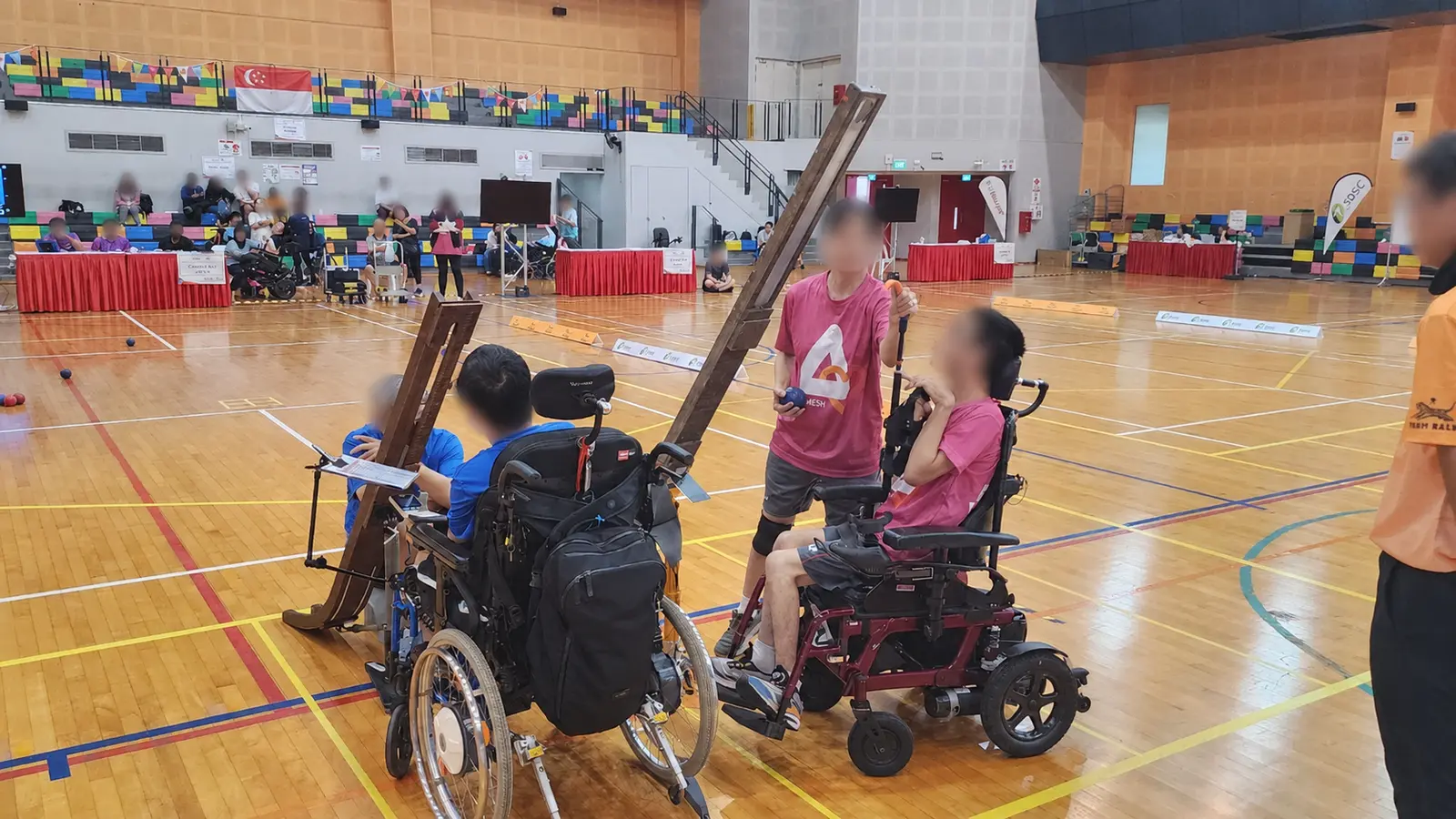
Identifiable faces in these photographs have been blurred as a privacy-conscious editorial measure. The images are included to document the event and raise awareness of inclusive sport—not to identify individual participants, volunteers or spectators.
The first thing that struck me at the Pesta Sukan 2026 boccia competition was the concentration around each delivery. A small adjustment to a ramp, a change of ball or a different line could alter the entire end.
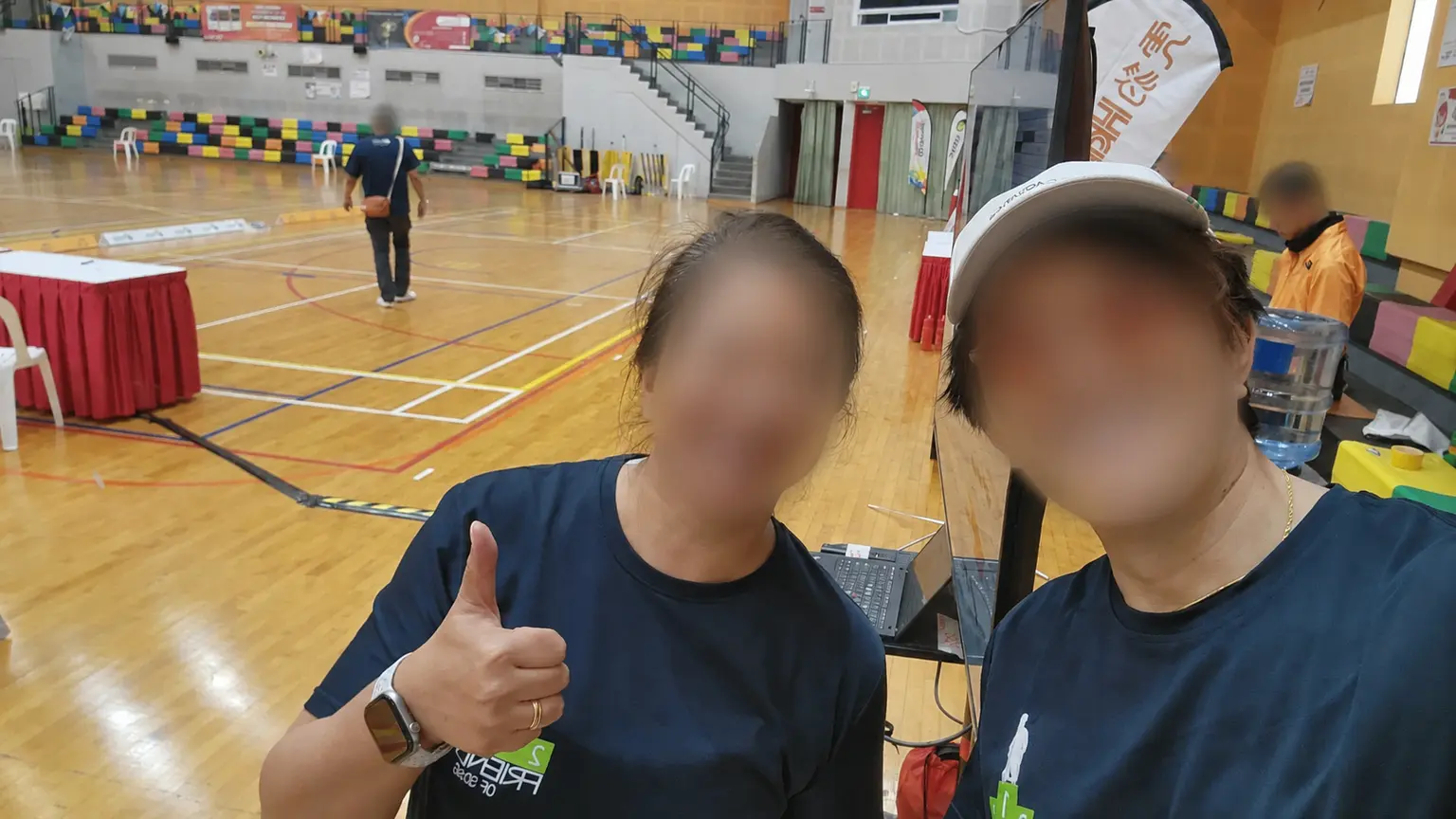
I joined Friends of the Singapore Disability Sports Council at ActiveSG Pasir Ris Sport Centre. From a distance, the objective looked straightforward: place the red or blue balls closer to the white target ball, known as the jack. Up close, the sport revealed layers of angle, pace, ball texture, court reading, risk management and emotional control.
Boccia may also support physical, social and psychological wellbeing, but competition boccia should not be reduced to therapy or recreation. It is a regulated sport with formal rules, classification, specialised equipment, time control, refereeing and pathways for athletes to progress.
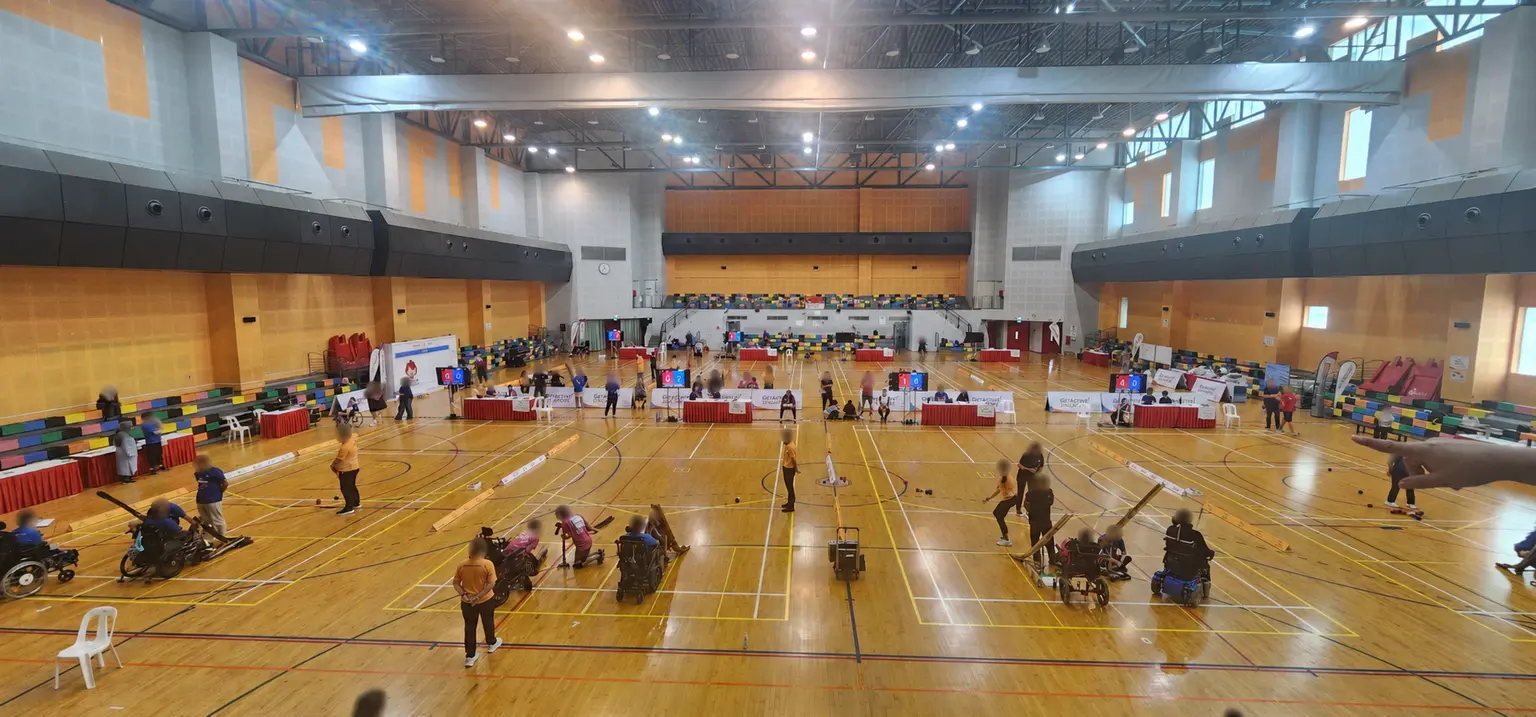
The dates, venue and individual match format are confirmed in the official Pesta Sukan 2026 boccia competition regulations.1
What makes boccia a serious competitive sport?
Each delivery can serve a different purpose. An athlete may try to score directly, block an opponent’s route, protect an existing ball, displace another ball or open a line for a later shot. The closest available shot is not automatically the strongest tactical decision.
Precision
Line, distance, release, ramp height and ball softness all influence where a ball finishes and how it interacts with other balls.
Strategy
Athletes must decide whether to attack, defend, block, displace or prepare the court for a later delivery.
Judgement
The position changes after every ball. Athletes continually reassess opportunity, risk and the remaining options.
Composure
Time limits, official scrutiny and competitive pressure demand repeatable execution after each tactical decision.
After all balls in an end have been played, the side with the ball closest to the jack scores one point for every ball closer than the opponent’s nearest ball. The scoring is easy to understand; the strategic depth is not.2
Sport and fitness are connected, but they are not the same
Fitness develops capacity
Strength, mobility, endurance, coordination and movement tolerance can support health, function and participation.
Sport applies capacity
Rules, tactics, competition, officiating, classification and sporting identity turn participation into organised sport.
This distinction matters. Athletes with disabilities should not be viewed only through the lenses of rehabilitation, care or exercise. They are also competitors, tacticians and teammates whose abilities are tested within a structured sporting environment.
Classification protects meaningful competition
Boccia classification does not simply assign a category according to diagnosis. It considers how an eligible impairment affects the sport-specific actions required to compete. Two athletes with the same health condition may have different functional profiles and may not necessarily be allocated the same class.3
Athletes propel the ball by hand or foot and may receive assistance from a Sport Assistant within defined rules.
Athletes propel the ball themselves and do not use an on-court Sport Assistant during the match.
Athletes use an assistive device, typically a ramp, and work with a Sport Assistant or Ramp Operator while retaining control of every sporting decision.
Athletes propel the ball without a ramp. Under the applicable rules, certain BC4 foot athletes may use a Sport Assistant.
The BC3 partnership: assistance without taking over
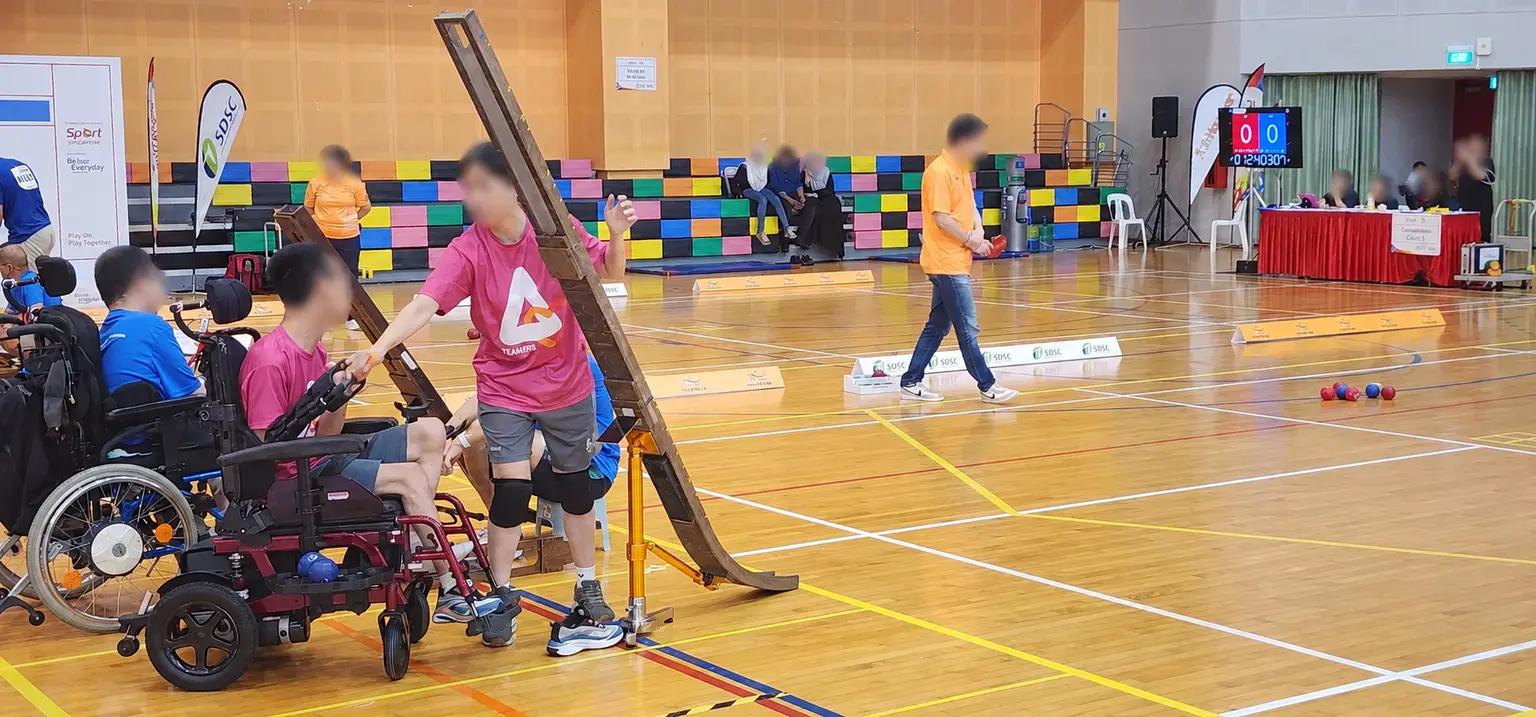
The BC3 category provided one of the clearest demonstrations of trust and athlete autonomy. The athlete determines the intended outcome and directs the setup. The Ramp Operator carries out permitted tasks, such as positioning the ramp or passing the ball, under the athlete’s direction.
During an end, the Ramp Operator must not look into the playing area. That restriction prevents the operator from independently reading the court and influencing the athlete’s strategy. Current World Boccia rules also recognise certain routine actions before or after release, but tactical control remains with the athlete.2
From the outside, the partnership can appear intuitive. In reality, it depends on disciplined communication and repeated practice. Small instructions must translate into consistent changes in direction, height and release. The assistance is highly skilled, but it must preserve—not replace—the athlete’s agency.
Fair competition depends on trained officials
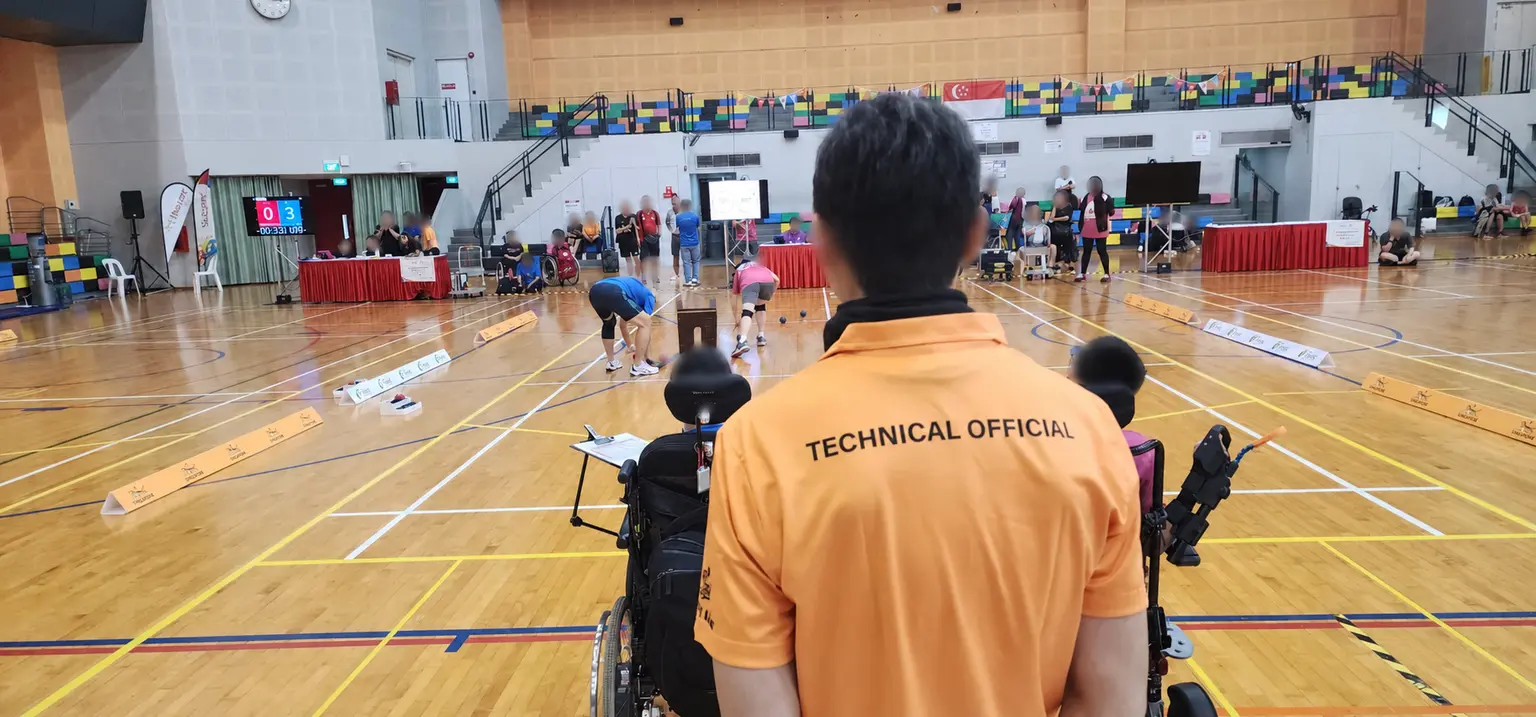
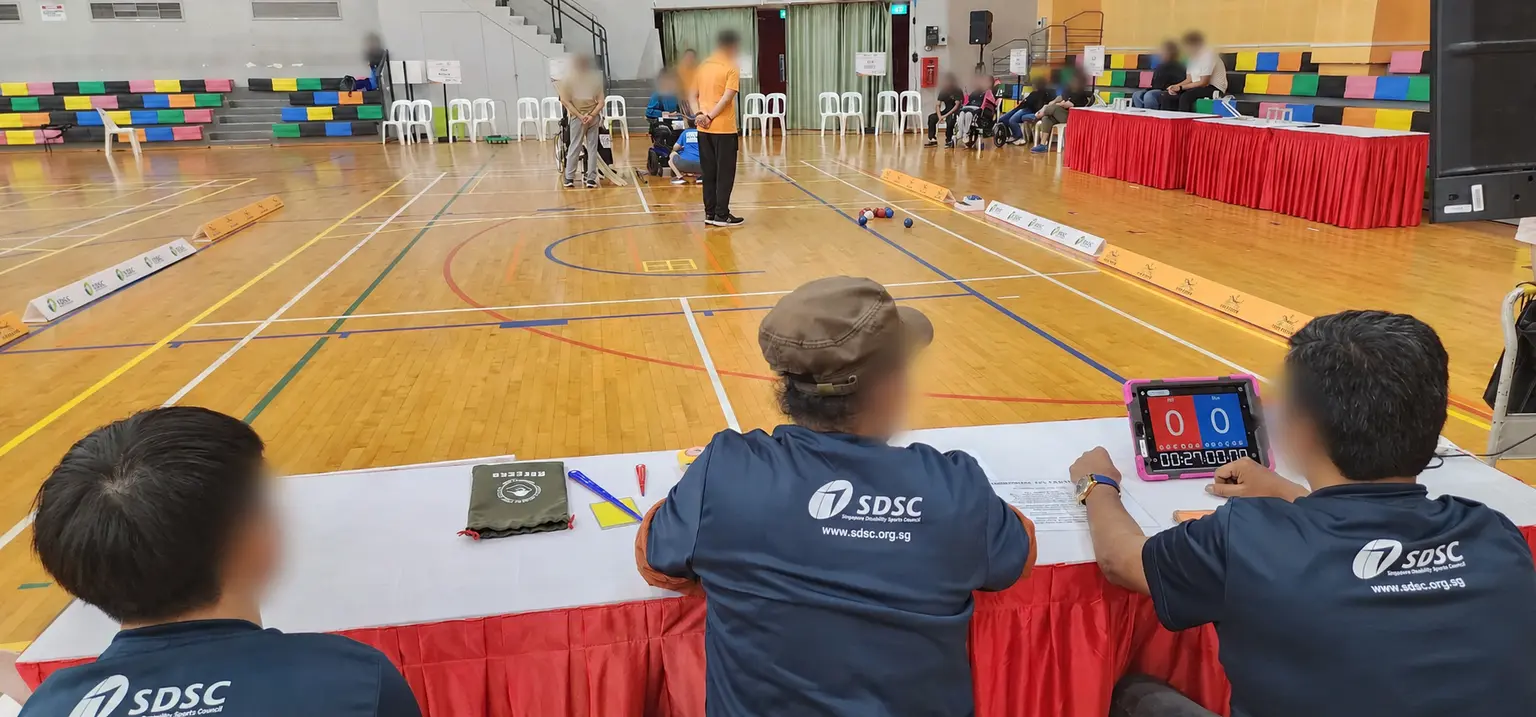
Inclusion does not mean lowering competitive standards. Referees and technical officials manage the order of play, timing, equipment requirements, court boundaries, measurements, penalties and conduct of athletes and support personnel.
Their work is easy to overlook precisely because good officiating creates a stable environment. Athletes can concentrate on competing because the rules are being applied consistently around them.
Inclusive sport requires an ecosystem
What spectators see is the athlete and the match. What makes the match possible is a much wider network of people and organisations working together.
At Pesta Sukan, this ecosystem included Sport Singapore and GetActive! Singapore, the Singapore Disability Sports Council, Friends of SDSC, Team Nila volunteers, disability organisations, families, coaches and operational personnel.
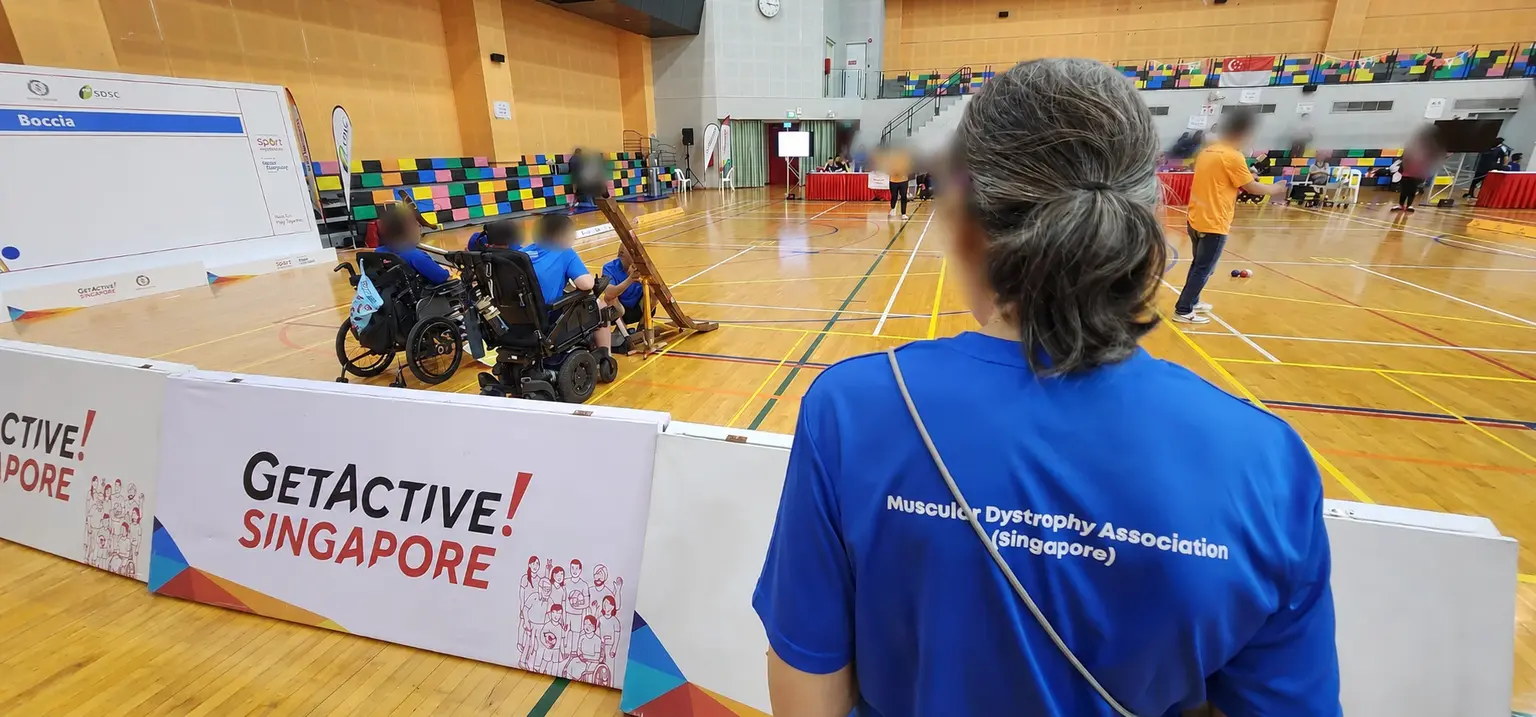
Long-term partnerships also matter. Haw Par states that it has supported the Singapore Disability Sports Council since 2015, with a focus on boccia. Sustained support can contribute to athlete development, competition opportunities and the wider disability-sport community.6
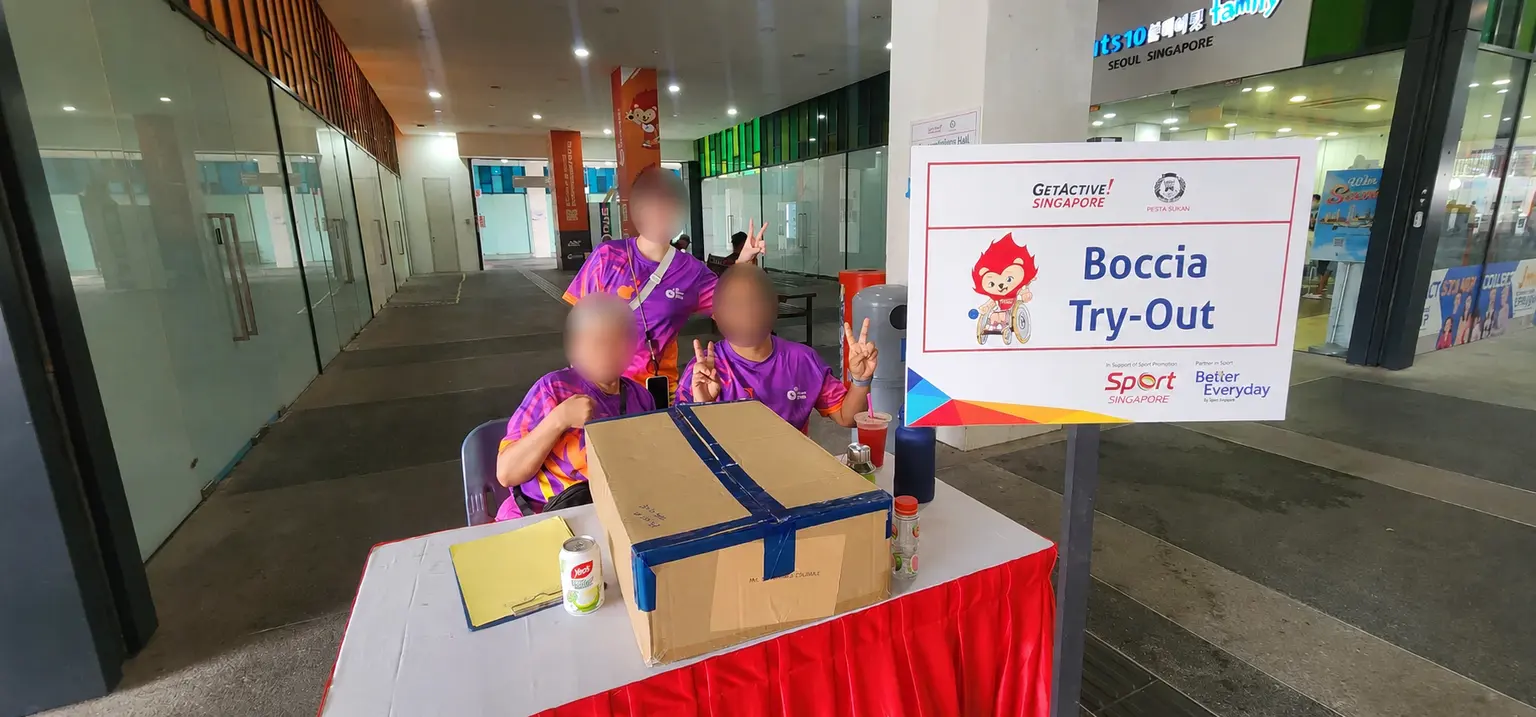
A meaningful Singapore connection
The day also brought back an earlier memory. During my NROC cycling training years ago, I met Singapore boccia athlete Jeralyn Tan.
She later won silver in the women’s individual BC1 event at the Paris 2024 Paralympic Games, becoming Singapore’s first Paralympic boccia medallist.5
Her achievement is a reminder that a medal is never created in a single tournament. It grows through years of preparation, coaching, family support, competition exposure, technical expertise, access and belief from the wider community.
What I took away from the day
- Disability sport is competitive sport. It deserves respect for its preparation, tactics, officiating and athlete identity.
- Good assistance preserves autonomy. It helps an athlete execute a decision without taking ownership of that decision.
- Classification supports fair competition. It considers sport-specific functional impact rather than diagnosis alone.
- Inclusion requires infrastructure. Rules, equipment, venues, training, volunteers, funding and community organisations must work together.
- Visibility changes understanding. When people learn how boccia works, they can recognise the athletes’ judgement and sporting ability more clearly.
True inclusion is not simply opening a door and saying that everyone is welcome. It is building the systems that allow each person to participate meaningfully, compete fairly and retain dignity and control.
At Pesta Sukan Boccia 2026, I saw precision, trust, discipline and community. Most importantly, I saw athletes making decisions and competing on their own terms.
Learn more about boccia and inclusive sport
Understanding begins with seeing athletes as athletes. Explore the official resources, discover participation pathways or find a suitable volunteering opportunity.
Official references and further reading
- Pesta Sukan 2026 — Boccia Competition Rules and Regulations.
- World Boccia — International Sport Rules, 2025–2028.
- World Boccia — Classification Rules, Sixth Edition.
- Singapore Disability Sports Council — Boccia overview and pathways.
- Team Singapore — Tan Yee Ting Jeralyn athlete profile.
- Haw Par — Social sustainability and support for SDSC.