Racial Harmony in Singapore: Beyond Law, Towards Trust and Social Cohesion
Singapore’s racial harmony was not inherited, and it was not achieved once and permanently secured. It has been built over generations through laws, institutions, shared spaces, mutual accommodation and countless everyday choices by ordinary people. The challenge for every generation is to keep building that trust.
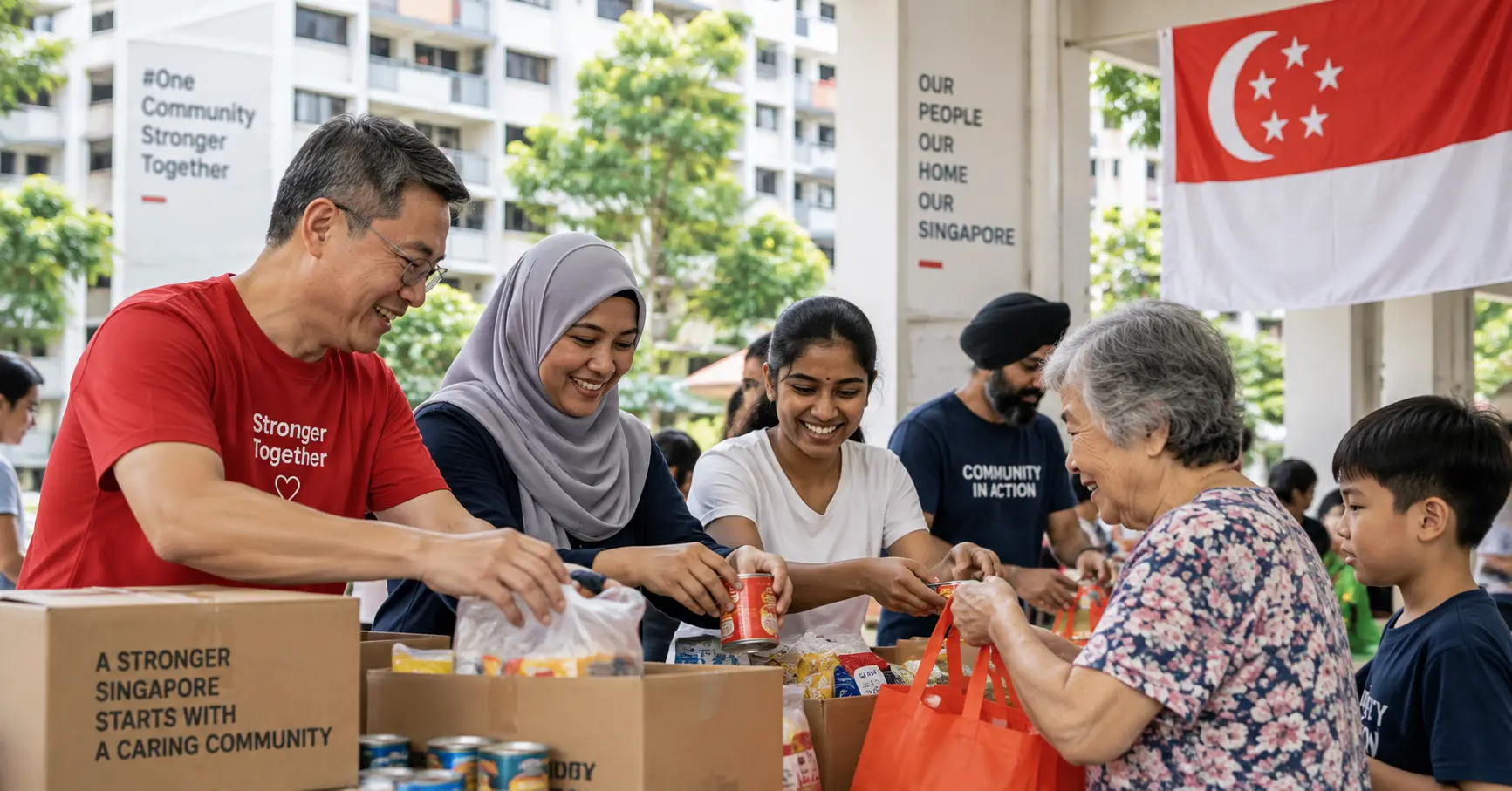
A tragedy should first call forth our humanity
The recent floods in Nepal have caused substantial loss of life and affected families across different countries. Singaporeans are among those reported missing. At such moments, the first response should be compassion for those who have died, concern for those who remain unaccounted for, and solidarity with families enduring uncertainty and grief. [1]
Yet the tragedy has also coincided with racist remarks online, including comments directed at people perceived to be Indian. Separately, legitimate questions surrounding Singapore Airlines and its investment relationship with Air India have sometimes been mixed with racial generalisations. [1]
These are different matters and should remain different.
That distinction is essential. Questions about corporate strategy, immigration, employment, integration or economic policy can be legitimate subjects of public discussion. Racial stereotyping is something else. One interrogates decisions and evidence; the other judges people by ancestry.
2021 showed how quickly fear can become racialised
Singapore encountered a similar challenge during the COVID-19 period. At the National Day Rally on 29 August 2021, then-Prime Minister Lee Hsien Loong observed that race relations had come under stress and referred to incidents in which Indians, including Singapore citizens, had been targeted by hostile or discriminatory remarks. [2]
His wider message was not that Singapore had failed as a multiracial society. Rather, it was that racial harmony remained a continuing work in progress. Singapore had achieved decades of relative peace through mutual accommodation, compromises among communities and a national commitment to equality, but that balance could not simply be assumed to maintain itself. [2]
The lesson remains relevant in the digital age. Fear can begin with a genuine crisis. Frustration can begin with a legitimate concern. But when anxiety is attached to an entire race, nationality or religion, the nature of the discussion changes.
The law matters, but law alone cannot create harmony
Singapore has long treated threats to racial and religious harmony seriously. The Ministry of Home Affairs describes racial and religious harmony as vital to social cohesion and emphasises that trust and acceptance between different communities require continuing effort. [3]
Parliament debated the Maintenance of Racial Harmony Bill in February 2025. Its framework includes measures concerning race-related offences, remedial initiatives, restraining orders against harmful racial content, safeguards against certain forms of foreign influence, and a proposed Presidential Council for Racial and Religious Harmony. [4] [5]
Law performs an indispensable function. It establishes boundaries around conduct that can endanger society and provides institutions with tools to respond when serious lines are crossed.
But legislation cannot compel neighbours to trust one another. It cannot by itself create friendship between families, mutual understanding among colleagues, or the instinct to protect someone from another community during a crisis.
That part of racial harmony has to be built socially.
When crisis came, communities also chose to rebuild trust
Singapore’s history reminds us why this work matters. The communal disturbances of 1964 caused death, injury, fear and deep distrust between sections of the population.
Yet the historical record also contains another story: people working to prevent fear from destroying relationships between neighbours.
A Singapore Government press statement preserved by the National Archives records that, in areas where tensions remained high, goodwill committees were being formed to restore communication and confidence between neighbouring villages and homes. Citizens’ Consultative Committees, village leaders and community representatives helped ease tensions between people who had previously lived as neighbours. [7]
The same historical document records that business groups took steps to maintain prices and extend credit and assistance regardless of race when fear had begun affecting everyday transactions. [7]
This distinction matters. Harmony does not mean a society will never face tension. Resilience means that when tension occurs, there are relationships, norms and institutions strong enough to keep communities connected.
SARS showed another side of the Singapore response
The 2003 SARS outbreak was not a racial crisis, but it provides an important example of social cohesion during fear and uncertainty.
Healthcare workers initially experienced avoidance and stigma. But the wider community response increasingly moved towards solidarity. Singaporeans sent food, drinks, flowers and messages of appreciation to frontline healthcare workers. Hundreds registered to volunteer in public education, support for quarantined residents and temperature-screening efforts. [8]
The Peach Ribbon Campaign raised more than S$322,000 within two months for the Courage Fund, while wider fundraising for the Courage Fund eventually reached tens of millions of dollars. Community organisations, companies and individuals found different ways to support those confronting the outbreak. [8]
SARS illustrated something important about human behaviour: fear can push people apart, but shared purpose can pull them back together.
Singapore’s multicultural model is built on deliberate contact
Multiculturalism is more than the existence of different cuisines, festivals and places of worship. It depends on whether people from different backgrounds actually encounter one another as neighbours, classmates, colleagues, teammates, volunteers and friends.
Singapore’s public-housing system offers a significant example. The Ethnic Integration Policy was introduced in 1989 after signs emerged that ethnic concentrations were beginning to re-form in some public housing estates. Its purpose is to maintain a balanced ethnic mix and reduce the formation of racial enclaves. [9]
The social effect goes beyond housing statistics. Shared lifts, playgrounds, markets, void decks, schools, transport networks and neighbourhood facilities create repeated opportunities for everyday interaction.
Such encounters can appear ordinary. That is precisely their value. Familiarity makes difference less abstract.
Singapore’s broader multicultural approach has similarly emphasised that no single community should have to erase its identity in order to belong. Different languages, cultures and religions are accommodated within a common national identity, with English functioning as a common working language. [2] [10]
Build relationships before a crisis, not during one
One of Singapore’s most practical social-cohesion mechanisms is the network of Racial and Religious Harmony Circles.
The earlier Inter-Racial and Religious Confidence Circles were developed following the September 11 attacks and were later refreshed as Harmony Circles. Their purpose is to build understanding, confidence and relationships among communities during normal times, so those relationships can support society when tensions or crises emerge. [11]
At Harmony Fest 2026, MCCY reported that the network had grown to close to 2,000 members across 97 Harmony Circles, with about 450 religious organisations represented.It also reported that 325 Harmony Circle members had acquired crisis-preparedness skills. [12]
The principle is straightforward:
We must preserve space for legitimate disagreement
Maintaining racial harmony should never require Singaporeans to stop asking difficult questions.
People can reasonably debate immigration, employment practices, integration, housing, education, foreign investment, corporate governance or the strategic merits of an overseas investment.
Healthy discussion becomes unhealthy when evidence is replaced by collective racial attribution.
Constructive public discussion
“What are the financial risks and strategic benefits of this investment?”
“What evidence shows whether this employment policy is working?”
“How can integration be strengthened?”
Racialisation
Assuming motives or loyalty because of a person’s race.
Treating the actions of an individual as evidence about an entire community.
Deciding who belongs in Singapore by appearance or ancestry.
One practical test is simple:
If the answer is yes, the discussion is probably about the underlying issue. If the argument collapses without reference to race, it may be worth examining whether stereotyping has replaced evidence.
Beyond legislation: seven layers of lasting racial harmony
Clear legal boundaries
Laws establish the outer limits against serious conduct that threatens racial and religious harmony. They provide protection, accountability and mechanisms for intervention.
Fair and trusted institutions
People are more likely to resist racial explanations when they believe institutions make decisions fairly, transparently and consistently. Social cohesion therefore depends partly on institutional confidence.
Education and historical memory
Younger generations should understand not only cultural festivals, but why Singapore adopted multiracialism and what previous generations experienced when communal trust broke down.
Shared spaces and experiences
Schools, neighbourhoods, National Service, sports, arts, volunteering, workplaces and community activities create opportunities for relationships across different backgrounds.
Respectful dialogue
Difficult subjects should be discussed with evidence and empathy rather than avoided. Suppressing legitimate concerns can allow frustration to migrate into less constructive spaces.
Digital responsibility
Social media can move emotion faster than context. Citizens therefore need stronger habits of verification, restraint and responsible sharing, particularly when content involves race or religion.
Everyday civic courage
Harmony becomes stronger when people reject unfair generalisations even when their own community is not the target. Defending the common space is a shared Singaporean responsibility.
The outcome we are really trying to protect is trust
Laws, policies and programmes are instruments. The deeper social asset is trust.
A simple discipline for the digital age
Before reacting to emotionally charged racial or religious content online, a useful civic habit is:
This is not about suppressing disagreement. It is about improving the quality of disagreement.
From tolerance to belonging
Singapore’s next stage of multiculturalism should go beyond simply tolerating differences.
Tolerance
“You are different from me, and I accept your right to be different.”
Understanding
“I make an effort to understand why your culture, beliefs or traditions matter to you.”
Participation
“We work, volunteer, learn, play and solve problems together.”
Belonging
“We may be different, but both of us have a place in the same Singapore.”
MCCY’s contemporary approach similarly emphasises active appreciation of different cultures and traditions rather than passive coexistence. [13]
This is increasingly important as society changes. Differences in generation, nationality, religion, socioeconomic circumstances and life experience can affect how people perceive belonging. Social cohesion therefore requires opportunities for meaningful interaction rather than simply placing different groups in the same geographical space.
MCCY’s 2026 work on a more cohesive “We First” community has similarly highlighted the importance of shared experiences, arts, heritage, culture, sport and dialogue in strengthening connections among Singaporeans. [14]
A Singapore Social Cohesion Compact
These are not laws. They are everyday commitments that any of us can choose to practise.
- We debate issues without racialising people.
- We challenge actions and evidence, not ancestry.
- We do not make an entire community answer for the actions of an individual.
- We build relationships across differences before a crisis occurs.
- We verify before sharing content designed to provoke anger or fear.
- When another community is unfairly targeted, we protect the common space even when it is not our own community under attack.
- We remember that Singapore’s diversity is not an obstacle to national identity; it is part of that identity.
Harmony is often built in places too ordinary to make the news
National cohesion does not exist only in Parliament, legislation or major national programmes.
It exists when neighbours accommodate one another’s celebrations and observances. When colleagues respect dietary or religious needs. When children grow up learning and playing together. When volunteers serve residents without first asking what race they belong to. When Singaporeans visit one another during Hari Raya, Deepavali, Chinese New Year or other celebrations.
It exists when people can disagree strongly about policy yet still recognise one another as fellow members of the same national community.
These interactions appear small individually. Collectively, they form the social infrastructure that makes multiculturalism possible.
Who is responsible for racial harmony?
The answer is: all of us, but in different ways.
Government and institutions
Maintain fair rules, protect the common space, provide credible information and create conditions in which different communities can participate confidently.
Schools and educators
Teach history, empathy, critical thinking and meaningful understanding across cultures — not simply festival recognition.
Community and religious organisations
Build relationships across communities during peacetime and create trusted networks that can respond constructively during periods of tension.
Employers and workplaces
Build fair, inclusive environments in which merit, conduct and performance matter more than stereotypes about background.
Families
Many attitudes begin at home. The language adults use about other communities shapes how children eventually understand difference.
Individuals
Verify information, challenge stereotypes, form friendships beyond familiar circles and resist reducing complicated problems to racial explanations.
Every generation has to choose harmony again
Singapore today is very different from the Singapore of 1964. Yet one principle has remained constant: a diverse society cannot assume that trust will maintain itself automatically.
The history of the goodwill committees after communal violence reminds us that relationships can be rebuilt. SARS showed how a frightened society can rally around those on the frontline. COVID-19 reminded a new generation that race remains sensitive even after decades of stability. Our present digital environment adds another challenge: anger, misinformation and stereotypes can now spread at extraordinary speed.
Our response therefore has to be equally deliberate.
Law can protect the boundaries.
Institutions can strengthen fairness.
Schools can develop understanding.
Community organisations can create opportunities for people to meet.
But the deepest foundations of racial harmony are laid through millions of ordinary decisions: how we describe another community, whether we verify before sharing, whether we make room for a neighbour, whether we speak up against an unfair stereotype, and whether we continue to recognise one another as part of the same Singapore.
In 2026, Singapore marks 60 years since the National Pledge was introduced. MCCY has described racial and religious harmony as a collective work in progress that each generation must continue to build. [12]
The familiar words “regardless of race, language or religion” are therefore more than ceremonial language.
They are a continuing civic responsibility.
References & further reading
Primary and official Singapore sources are prioritised below. Links were checked for this article in September 2026.
- Ministry of Home Affairs, Singapore.
Transcript of Media Doorstop by Mr K Shanmugam on Racist
Comments Following Nepal Floods and SIA/Air India Issues
,
5 September 2026.
MHA official source - Prime Minister’s Office, Singapore.
National Day Rally 2021 — English
,
29 August 2021.
PMO official transcript - Ministry of Home Affairs, Singapore.
Maintaining Racial and Religious Harmony
,
updated 4 May 2026.
MHA official overview - Ministry of Home Affairs, Singapore.
Second Reading of the Maintenance of Racial Harmony Bill —
Opening Speech by Mr K Shanmugam
,
4 February 2025.
MHA official source - Ministry of Home Affairs, Singapore.
Second Reading of the Maintenance of Racial Harmony Bill —
Opening Speech by Ms Sun Xueling
,
4 February 2025.
MHA official source - Singapore Statutes Online.
Maintenance of Racial Harmony Act 2025
(No. 10 of 2025)
.Status displayed as “Uncommenced” as at 6 September 2026.
Singapore Statutes Online - National Archives of Singapore.Singapore Government Press Statement, July 1964.
Contemporary record describing goodwill committees and
community efforts following racial disturbances.
National Archives record - SG101.
Singaporeans Came Together in Our Fight Against SARS
.
SG101 case study - SG101.
HDB Ethnic Integration Policy (1989)
,
updated 6 October 2025.
SG101 official resource - SG101.
Building a Multicultural Singapore
.
SG101 official resource - Ministry of Culture, Community and Youth.
Racial and Religious Harmony Circle
.
MCCY official resource - Ministry of Culture, Community and Youth.
Harmony Fest! 2026
,
4 July 2026.
MCCY official source - Ministry of Culture, Community and Youth.
Fostering Social Cohesion Through Multiculturalism
,
5 March 2026.
MCCY official source - Ministry of Culture, Community and Youth.
Building a United “We First” Community
,
2026.
MCCY official source - Internal Security Department, Singapore.
Contending with Communalism
,
updated 6 April 2026.
ISD official resource