Safe Sport Awareness:
Trust. Boundaries. Respect.
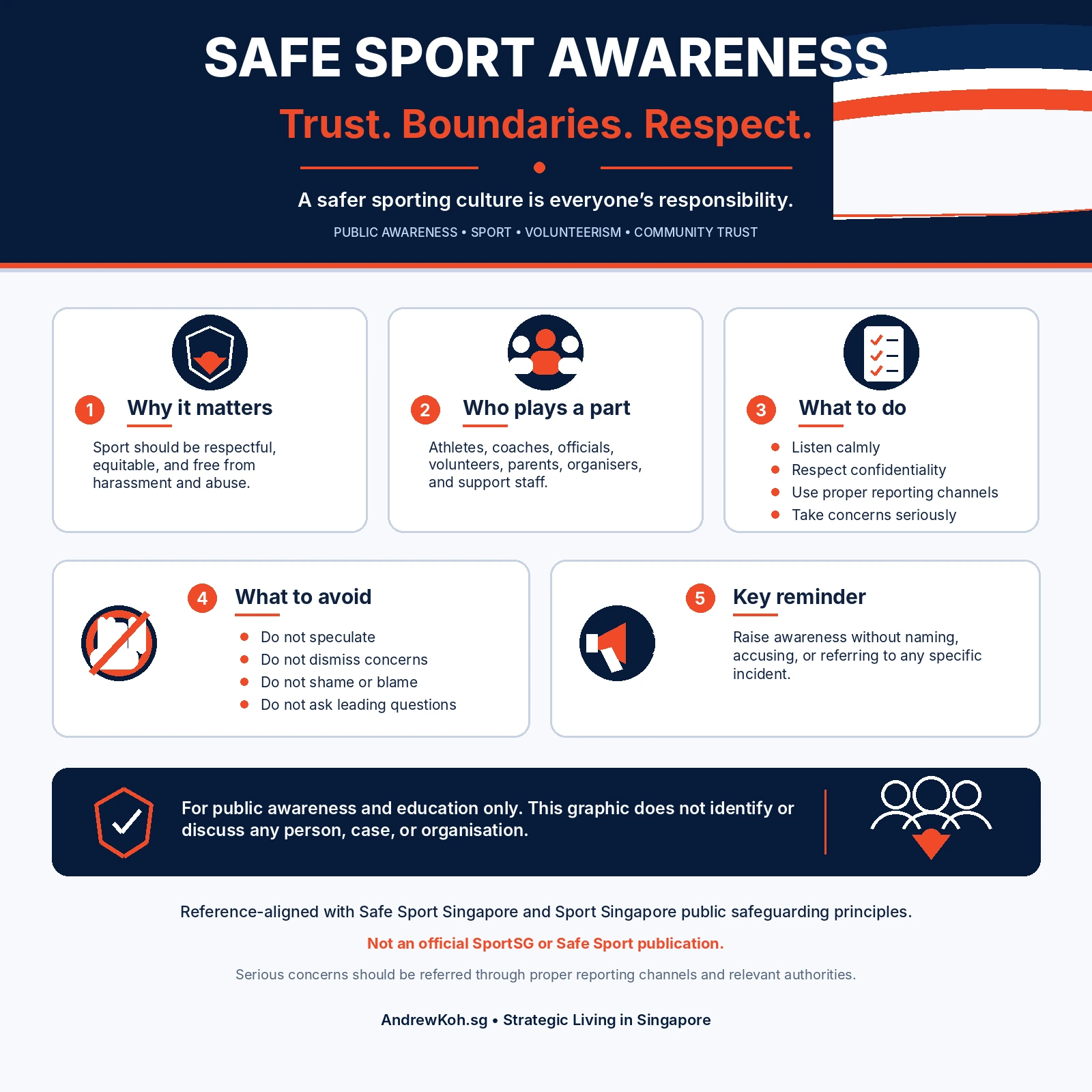
Sport is not only about performance, medals, events, or participation. It is also about whether people feel safe, respected, heard, and protected when they take part in the sporting environment.
A safer sporting culture does not happen by chance. It grows when athletes, coaches, officials, organisers, parents, support teams, and volunteers understand their part in protecting trust.
Why This Awareness Matters
Last year, I attended safeguarding learning, and one message stayed with me clearly: safe sport is everyone’s responsibility.
This does not apply only to athletes, coaches, officials, or organisers. Volunteers also play a part because they are often close to the ground. Volunteers may interact with athletes, spectators, seniors, young persons, persons with disabilities, fellow volunteers, officials, and event teams.
That is why trust matters.
Good volunteerism is not only about showing up and helping an event run smoothly. It is also about understanding boundaries, respecting privacy, listening properly, and knowing when serious concerns should be referred to the right people.
What Is Safe Sport?
Safe Sport is about creating a sporting environment where people can participate with dignity, respect, and protection from harmful behaviour.
Sport Singapore states that participants in sport should be able to play, practise, compete, officiate, work, volunteer, and interact in an environment free from harassment and abuse.[1]
Safe Sport Singapore’s Unified Code provides a common reference for the Singapore sporting community. It helps define, describe, and explain forms of harmful conduct that may take place in sport.[2]
Respect
People should feel respected regardless of age, ability, role, background, experience, or sporting level.
Boundaries
Safe environments need clear behaviour, appropriate conduct, and awareness that some people may hold more influence or authority than others.
Responsibility
Everyone in the sporting environment has a role to play in protecting safety, dignity, trust, and respect.
Why Volunteers Should Understand Safe Sport
Volunteers are often the first friendly faces people meet at an event. They may help with registration, wayfinding, logistics, crowd support, athlete flow, hospitality, and event operations.
Because volunteers are close to the ground, people may sometimes approach them with questions, discomfort, or concerns. A volunteer does not need to investigate, judge, or conclude what happened. But a volunteer should know how to respond calmly, avoid harmful assumptions, and guide serious concerns to the right people.
Safe Sport Singapore’s volunteer learning pathway includes understanding Safe Sport, recognising different forms of harmful behaviour, safeguarding children and vulnerable adults, and understanding the volunteer’s role in safeguarding sport.[3]
Awareness is not investigation. Sharing a Safe Sport message is not the same as making an accusation. The public message should educate without naming, implying, or identifying any person, case, event, or organisation.
What A Safer Sporting Culture Looks Like
A safer sporting culture is built through everyday behaviour. It is not only about policies. It is also about how people speak, listen, respond, and respect one another.
What Helps
- Listen calmly and respectfully.
- Take concerns seriously.
- Respect privacy and confidentiality.
- Encourage use of proper reporting channels.
- Check whether the person feels safe and supported.
- Refer serious concerns to the appointed safeguarding officer, organiser, organisation, Safe Sport reporting pathway, or relevant authority where appropriate.
What To Avoid
- Do not speculate.
- Do not dismiss someone’s concern.
- Do not shame, blame, or make negative public comments.
- Do not ask leading questions.
- Do not post private names, faces, screenshots, or training materials.
- Do not turn a serious safeguarding topic into gossip or entertainment.
Why Proper Reporting Matters
Safe sport should never become gossip.
When a serious concern arises, the response should not be public naming, guessing, blaming, or online speculation. The responsible approach is to listen calmly, respect privacy, check whether the person feels safe, and guide the concern through the proper reporting channels.
This protects everyone involved. It helps the affected person receive support. It allows the matter to be assessed fairly. It also prevents unnecessary harm caused by rumours, assumptions, or emotional public reactions.
Safe Sport Singapore’s reporting resources explain that concerns should be handled through the appropriate pathway, and that different forms of reporting or disclosure may have different implications.[4]
We can talk about Safe Sport without naming anyone. We can educate the public without exposing private matters. We can promote safer sporting culture without turning serious concerns into public entertainment.
Listen With Care
Give the person space to speak. Do not interrupt, judge, pressure, shame, or blame.
Guide Properly
Serious concerns should be directed to the right person, organisation, Safe Sport reporting pathway, or relevant authority where appropriate.
Respect Process
Proper process protects privacy, supports fairness, and reduces harmful speculation.
Safe Sport Is Built on Trust
Trust is fragile. A sporting culture can only grow when participants believe that their safety, dignity, and concerns will be treated seriously.
This applies to youth sport, senior sport, community fitness, disability sport, volunteer-led events, national events, and everyday physical activity spaces.
- Trust is protected by respectful conduct.
- Trust is protected by clear boundaries.
- Trust is protected by calm listening.
- Trust is protected by proper reporting pathways.
- Trust is protected when people avoid speculation and handle concerns responsibly.
How To Raise Safe Sport Awareness Responsibly
Safe Sport awareness should help people understand trust, boundaries, respect, and proper reporting. It should not become gossip, speculation, or public judgment.
The responsible approach is to keep the message educational, protect privacy, and guide readers towards official resources and proper channels.
1. Keep It Educational
Focus on what Safe Sport means, why awareness matters, and how the sporting community can build safer environments.
2. Protect Privacy
Avoid naming, hinting, tagging, describing, or identifying any person, case, event, or organisation.
3. Guide Readers Properly
Encourage official resources, proper reporting channels, calm listening, and responsible action instead of public speculation.
References and Further Reading
These references are provided for public education and awareness. Readers should refer to official sources for the most updated guidance.
Official SportSG Safe Sport page explaining the commitment to a sporting environment free from harassment and abuse.
Overview of the Unified Code as a common reference for the Singapore sporting community.
Volunteer learning pathway covering Safe Sport, safeguarding, harmful conduct, and volunteer responsibilities.
Resource explaining reporting considerations, disclosures, formal reports, and case-management pathways.
Public learning modules for different roles in the sporting community, including athletes, parents, coaches, and volunteers.
Safe Sport Singapore explains the purpose of safeguarding participants and supporting a coordinated safeguarding framework across the sporting ecosystem.
Share This Awareness Article
Help more people understand that a safer sporting culture is built on trust, boundaries, respect, and proper reporting channels.
Disclaimer: This article is written for public awareness and education only. It does not refer to, identify, accuse, or comment on any specific person, case, incident, event, organisation, or ongoing matter. It is not an official SportSG or Safe Sport Singapore publication. It does not reproduce private training material. Serious concerns should be handled through proper reporting channels, appointed safeguarding officers, event organisers, and relevant authorities where appropriate.