A recent CNA report on a Duke-NUS study caught my attention. Among adults in the study who were living with anxiety or depression symptoms, many had not sought professional help. The number is significant, but it should be read carefully. It does not mean that most Singaporeans are mentally ill. It points to a practical and human question: why do many people struggle quietly before seeking help?
To me, this is not only a healthcare issue. It is also a family, workplace, ageing and community issue. People may hesitate because of stigma, privacy concerns, fear of judgement, workplace worries, cost concerns, or simply not knowing where to start.
My position is clear: I am not a psychologist, psychiatrist, counsellor or social worker. I do not diagnose, counsel or treat mental health conditions. As someone trained in Psychological First Aid and involved in senior and community work, I believe more of us can learn to notice signs of distress earlier, listen respectfully, keep proper boundaries and guide someone towards appropriate support.
Why this topic needs careful boundaries
Being able to notice distress can be helpful, but it can also feel heavy. Sometimes we may hold back from getting involved because we worry that the person may depend on us too much, misunderstand our role, reject help, or place us in a difficult family, medical or safety situation.
That concern is valid. Community awareness should never mean carrying a case alone. The safer structure is simple:
- Notice changes from the person’s usual pattern.
- Listen calmly without forcing disclosure.
- Encourage the person to accept support.
- Link them to family, healthcare, social or community resources.
- Escalate when there are safety concerns.
- Document only when appropriate in formal volunteer or work settings, following the organisation’s process.
The root causes are often biopsychosocial
Mental well-being is rarely shaped by one factor alone. It is usually influenced by a combination of biological, psychological, social and environmental factors.
- Biological factors: sleep, chronic illness, pain, medication burden, neurological changes, fatigue and ageing-related changes.
- Psychological factors: grief, anxiety, fear, shame, low confidence, unresolved stress and feeling like a burden.
- Social factors: loneliness, family conflict, caregiving strain, work pressure, financial pressure and stigma.
- Environmental factors: fast-paced living, digital pressure, reduced social connection, housing stress and limited safe spaces to talk.
For seniors, these factors may overlap. A senior may be dealing with chronic pain, bereavement, reduced mobility, financial concerns, fear of falling, loneliness, or the loss of a familiar role after retirement. Distress may not appear as a formal complaint. It may appear as a change in behaviour.
In seniors, distress may not sound like “I need help”
Many older adults may not use mental health language. They may say things like “no mood”, “very tired”, “don’t want to go out”, “old already, like that”, or “don’t want to trouble people”.
That is why we should pay attention to changes from the person’s usual pattern. Possible signs may include:
- Becoming more withdrawn or avoiding usual activities.
- Sudden irritability, fearfulness, tearfulness or unusual quietness.
- Sleep or appetite changes.
- Loss of interest in hobbies, exercise or social contact.
- Neglecting hygiene, meals, medication or appointments.
- Repeatedly saying they feel useless, lonely or like a burden.
- More unexplained body aches, fatigue or vague physical complaints.
- Unusual confusion or sudden change from their normal behaviour.
Important: These signs do not automatically mean depression, anxiety or dementia. They are signals to slow down, observe respectfully and consider whether the person may need more support.
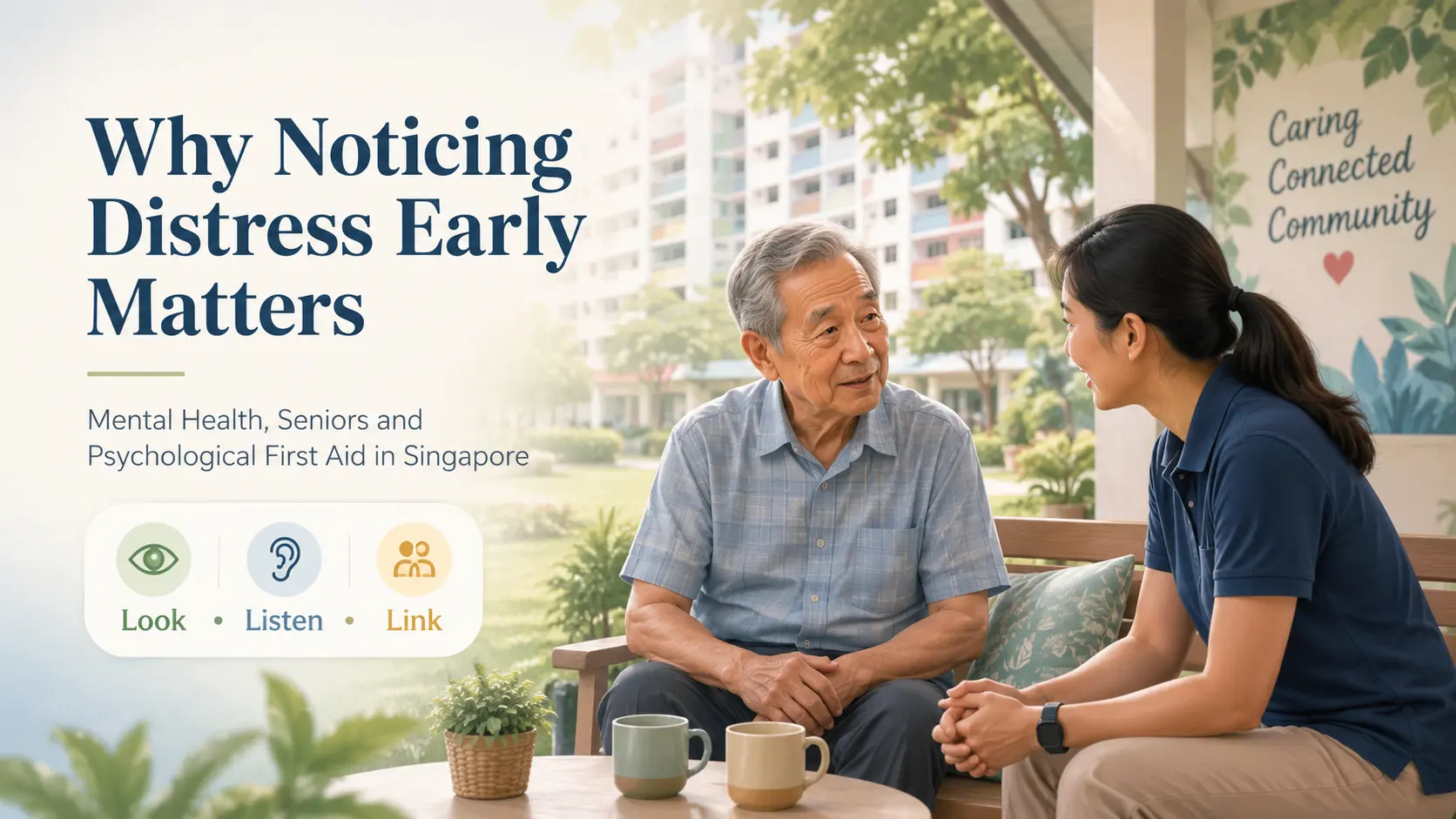
Psychological First Aid: Look, Listen, Link
Psychological First Aid is not therapy. The World Health Organization describes it as humane, supportive and practical help for people in distress. A simple way to remember the approach is Look, Listen, Link.
Look
Notice safety, behaviour, body language, living situation and changes from the person’s usual pattern.
Listen
Give space. Do not rush, argue, minimise or diagnose. Listen with dignity and respect.
Link
Connect the person to suitable support: family, caregiver, GP, polyclinic, social worker, Active Ageing Centre, counsellor or crisis support when needed.
How to guide someone towards help properly
A safe approach is to avoid labelling the person. Start with observation, permission and choice.
- “Uncle/Aunty, I notice you seem quieter recently. Is everything okay?”
- “Thank you for sharing this with me.”
- “You do not have to handle this alone.”
- “Would it be okay if we connect you with someone who can support you properly?”
- “Would you prefer to speak with your family member, GP, polyclinic, social worker or an Active Ageing Centre staff first?”
It is better to avoid phrases such as “don’t think so much”, “just be positive”, “others have it worse”, or “this is depression”. These statements may unintentionally make someone feel dismissed or labelled.
A practical community referral pathway
For non-emergency situations, the next step does not always need to be dramatic. The person may be guided gently towards a trusted and appropriate support point.
- Ask permission: “Would it be okay if I help you find someone suitable to speak with?”
- Start with familiar support: family member, caregiver, trusted friend or community contact.
- Use primary care: GP or polyclinic when symptoms affect sleep, appetite, mood, daily function or physical health.
- Use community support: Active Ageing Centres, social workers, befriending support or community mental health services where appropriate.
- Use national support: national mindline 1771 for mental health support and wayfinding.
- Escalate urgently: when there is immediate danger, severe confusion, suspected abuse, inability to meet basic needs or serious medical symptoms.
Boundary reminder: The goal is not to become the person’s therapist. The goal is to be a safe bridge: notice, listen, encourage, link and escalate when needed.
Why this matters for families and communities
Singapore’s national direction is moving towards a tiered mental health care model. Not every concern begins in a hospital or specialist clinic. Some support begins earlier in the community, through self-help, peer support, family support, primary care and community care, with specialist services available when needs are more serious.
This is why ordinary people can play a meaningful role without crossing professional boundaries. We do not need to diagnose someone in order to care. We can notice. We can listen. We can link.
My takeaway: Mental health support should not only begin when someone reaches crisis point. It can begin earlier, when a family member, neighbour, coach, volunteer, colleague or community worker notices that something has changed and responds with patience, respect and proper referral.
Related articles and guides
You may also find these related AndrewKoh.sg and UFitness.sg resources useful:
- Singapore Life Readiness Hub
- Singapore Family Care & Ageing Readiness Hub
- Resident Self-Help Pathway Guide
- Senior Fitness Readiness Pathway
- Why Fitness Coaches Must Screen Before Training
- About Andrew Koh
References and further reading
- Channel NewsAsia: Nearly 4 in 5 Singapore adults with anxiety or depression do not seek professional help
- Duke-NUS Medical School: Peer support and mental health
- Ministry of Health: National Mental Health and Well-being Strategy
- MOH Healthcare Professionals Portal: Practice Guide for Tiered Care Model for Mental Health
- World Health Organization: Psychological First Aid — Guide for Field Workers
- SingHealth: Geriatric Depression
- NCSS: From stigma to support — shifting conversations around mental health in Singapore
- Agency for Integrated Care: Active Ageing Centres
- Ministry of Health: national mindline 1771
- Samaritans of Singapore: Support services