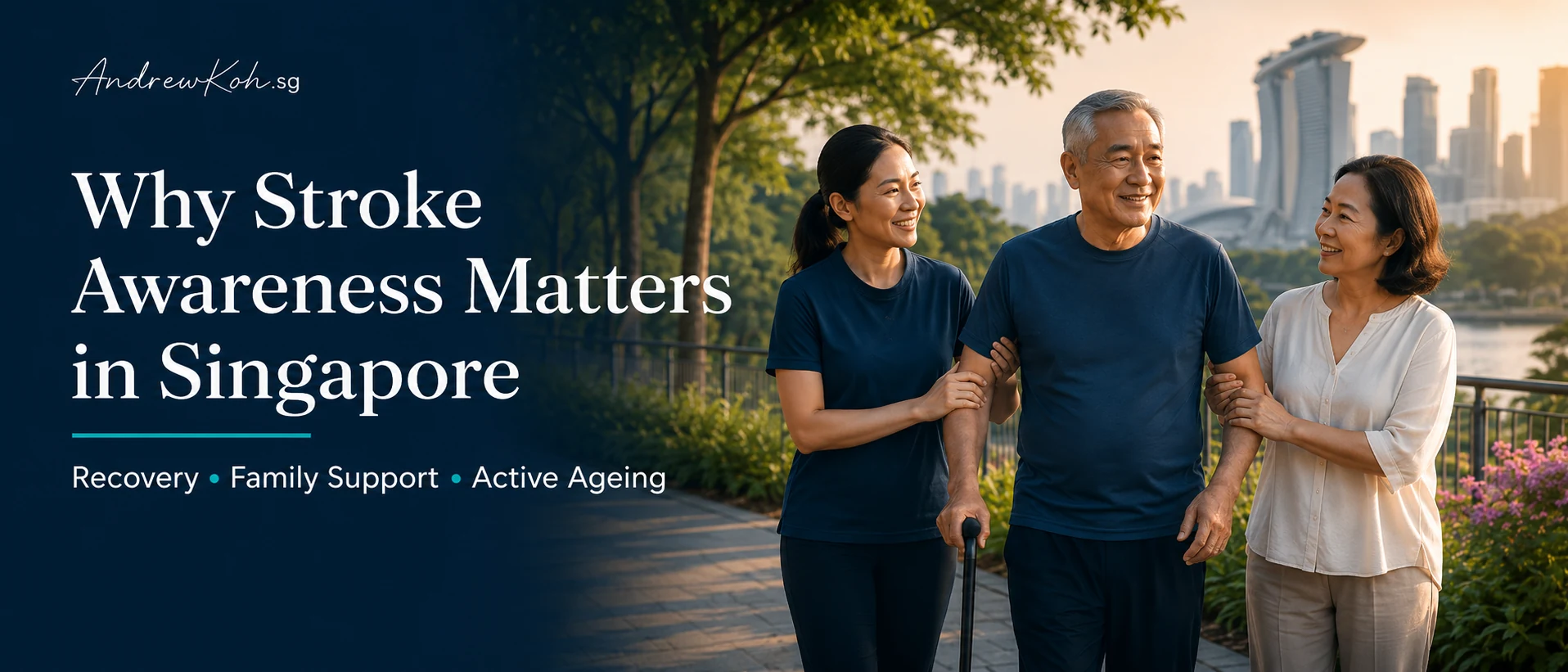
Why Stroke Awareness Matters in Singapore
Stroke awareness is not only about recognising an emergency. It is also about recovery, family support, movement, confidence, caregiving and giving survivors the dignity to rebuild life one step at a time.
I recently wrote on UFitness.sg about stroke awareness, inspired by the stories of Maya and Terence. Their journeys reminded me that stroke is not just a medical event. It can affect movement, speech, emotions, confidence, independence, family routines and the way a person sees life after survival.
That is why I felt this topic should also be shared here on AndrewKoh.sg. My personal site is where I connect community, ageing, wellness and Singapore living. UFitness.sg carries the evidence-based movement and active ageing angle. AndrewKoh.sg carries the human reflection behind why this awareness matters.
Why I Needed To Write About This Again
After writing about Maya and Terence, I realised one article may not be enough. Many people know the word “stroke”, but not everyone understands what stroke survivors and their families may go through after the emergency is over.
Some survivors may need to relearn daily movements. Some may struggle with speech, balance, swallowing, fatigue, memory, mood or confidence. Some family members suddenly become caregivers without much preparation. The journey can be physical, emotional and social at the same time.
For me, this is not about creating fear. It is about creating awareness. If one family recognises the signs earlier, supports a survivor better, or understands the importance of rehabilitation and safe movement, then this awareness has value.
Stroke Is A Medical Emergency
Stroke happens when blood supply to the brain is disrupted. The impact depends on which part of the brain is affected, how severe the stroke is, and how quickly medical care begins.
In Singapore, the public should remember the F.A.S.T. warning signs. If stroke is suspected, call 995 immediately.
HealthHub also highlights that stroke signs can include sudden balance problems, slurred speech, weakness or numbness on one side of the body, sudden vision changes, and severe headache. The key message is simple: do not wait and see when stroke symptoms appear.
The Recovery Journey Is Often Longer Than People Think
Surviving a stroke is only the first stage. The next stage can involve rehabilitation, follow-up appointments, medication management, blood pressure control, physiotherapy, occupational therapy, speech therapy, caregiver education and home safety planning.
HealthHub notes that rehabilitation after stroke can help improve usual function and reduce complications. Depending on the person’s condition, recovery may involve outpatient rehabilitation or inpatient rehabilitation in a specialised unit or community hospital.
This is why we should not only clap for survival. We should also support the rebuilding process after survival.
Where Family And Caregivers Matter
In many Singapore families, stroke recovery affects more than the survivor. It affects spouses, children, siblings, helpers, neighbours and the wider support network.
Caregiving can involve helping with daily routines, appointments, medication reminders, mobility, transfers, meals, emotional support and home safety. AIC’s caregiving resources remind families that caregiving is a continuous learning journey, and that caregivers also need support.
This matters because many families only understand the true weight of caregiving when illness enters the home. When a person loses independence suddenly, family roles may change overnight.
A practical Singapore reality
Stroke recovery is not only about hospital care. It may also involve community rehabilitation, home therapy, day care, home personal care, caregiver training, assistive devices and home modifications. Families should speak to doctors, therapists, medical social workers or AIC Link if they need guidance on suitable care pathways.
Why Movement And Active Ageing Matter
As someone who has spent many years in fitness, training and active ageing work, I see movement not as vanity but as function. For seniors and recovering individuals, movement can mean standing more safely, walking with better confidence, reducing fall risks, maintaining independence and participating in daily life.
Of course, stroke survivors should always follow medical and rehabilitation advice. Exercise after stroke should be guided by the healthcare team, especially when there are medical risks, weakness, balance issues, swallowing problems, fatigue or other complications.
But the bigger message remains important: functional ability matters. A stronger body, better balance, safer movement habits and supportive environments can help people age with more confidence.
What Maya And Terence Reminded Me
Maya and Terence’s stories are not the same, but both carry a powerful message.
Terence’s journey reminds us that recovery may also involve communication, identity, creativity and finding a new voice after life changes. Maya’s journey reminds us that participation, movement, courage and community can help survivors remain connected to life.
They remind me that stroke survivors should not be seen only through what they have lost. They should also be seen through what they continue to rebuild.
How This Connects AndrewKoh.sg And UFitness.sg
AndrewKoh.sg is where I reflect on Singapore living, community, ageing and the human side of our society. UFitness.sg is where I continue building evidence-based active ageing, movement awareness and functional fitness education.
This topic belongs to both spaces because stroke awareness is not only about illness. It is also about how Singapore families prepare, support, adapt and care for one another.
Read the Full UFitness.sg Stroke Awareness Article
I have written the fuller stroke awareness article on UFitness.sg, including Maya and Terence’s stories, F.A.S.T. warning signs, recovery reflections, movement awareness and helpful Singapore resources.
Read the UFitness.sg Stroke Awareness ArticleHelpful Singapore Resources
Final Reflection
Stroke can change a life suddenly. But with timely medical care, structured rehabilitation, family support, community resources and patient encouragement, survivors can continue to rebuild.
I write this not as medical advice, but as public awareness. In an ageing Singapore, we need more conversations about prevention, recovery, caregiving, movement and dignity.
If this article helps one person recognise stroke signs earlier, support a caregiver better, or look at stroke survivors with more compassion, then it has served its purpose.
Small steps. Big impact. Recovery is not only about surviving. It is about rebuilding life with courage, support and purpose.
We use essential cookies to keep AndrewKoh.sg secure and working. With your permission, we also use analytics and third-party cookies to understand website use and improve your experience. Select Accept all, Reject or Choose preferences. You can change your choice at any time.
Have a question about Strategic Living, property guidance, active ageing, community initiatives, collaboration or speaking?
Message Andrew directly below.