People Behind Our Champs · Thomson · Singapore
Meet Jocelyn Goh, the Heart Behind Principal Jo
From nursing to preschool leadership, her story is one of courage, hands-on care and a lasting belief in children, educators and Mandarin learning.
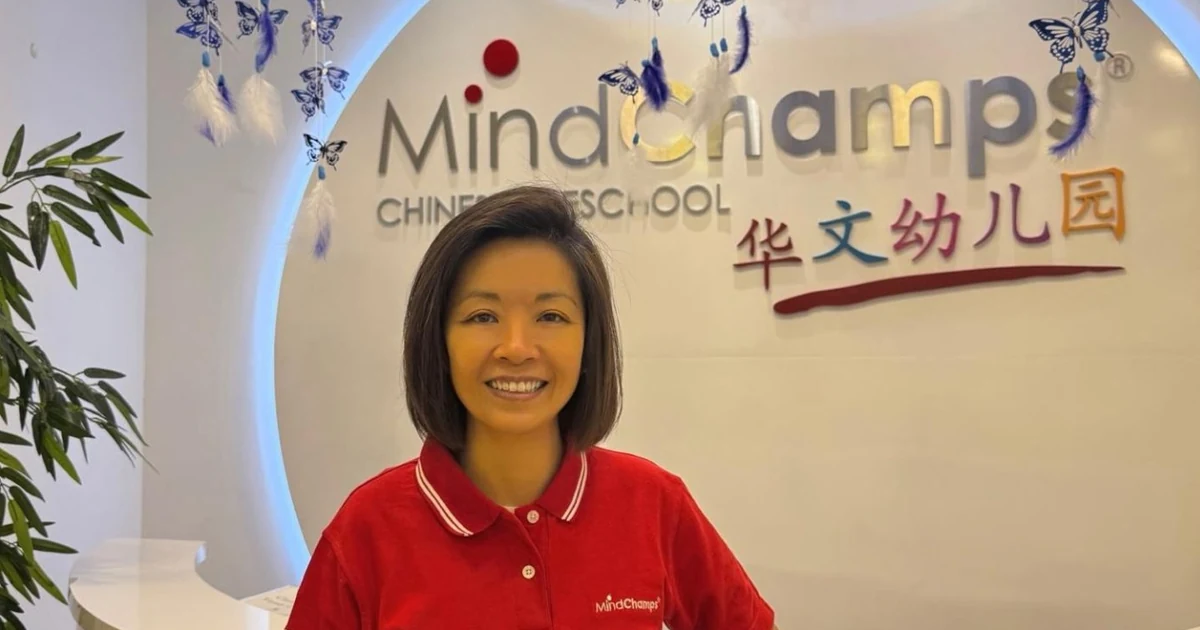
What makes a preschool feel like a place where a child belongs? For Jocelyn Goh, affectionately known as Principal Jo, the answer is not found in a brochure or a classroom timetable. It is found in the people who welcome a child, the teachers who notice a small breakthrough, and the trust built with parents day after day.
As Principal of MindChamps Chinese PreSchool @ Thomson at SLF Podium, Jocelyn brings a perspective shaped by two caring professions. She began her working life as a nurse, became a preschool leader while still in her twenties, and has spent her career learning that the quiet work behind a good school can leave a remarkable mark on a child’s life.
This is her story, told through her own reflections on leadership, Chinese-language learning, teachers, families and the children who continue to remember her years later.
From nursing to nurturing young minds: two callings, one purpose
Jocelyn did not begin her career imagining herself as a preschool principal. She trained and worked as a nurse, motivated by a calling to care for others. When family commitments led her to leave nursing, she faced the uncertainty of entering an entirely new industry.
At the time, infant care was expanding in Singapore, and her nursing background opened a door into early childhood care. What first looked like an unexpected career change became something much more meaningful. She discovered that caring for children included helping them grow in confidence, form relationships, overcome challenges and lay the foundations for later learning.
“My journey may have taken an unexpected turn from nursing to early childhood education, but both professions share the same purpose: caring for others and making a meaningful difference in their lives.”
— Jocelyn Goh (Principal Jo)It is a simple connection, but one that explains much about her approach. A parent considering a Chinese preschool in Thomson is not only assessing the curriculum; they are trusting a team with their child’s safety, emotions and early experiences. For Jocelyn, care comes before any title.
Becoming a principal in her twenties without a mentor
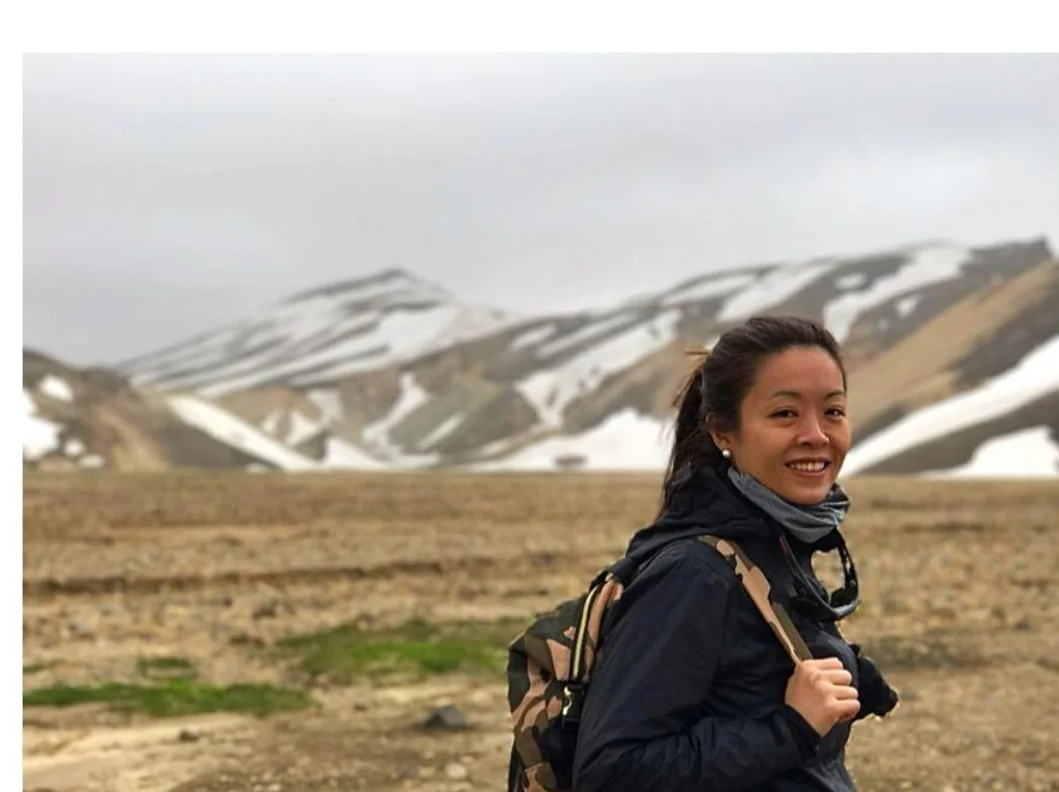
One of the most defining experiences of Jocelyn’s career came early. She became a principal in her twenties, responsible for children’s wellbeing, parents’ expectations and a team of educators before she felt fully prepared for leadership. There was no mentor to hand her a blueprint. She learned through difficult conversations, uncertainty, mistakes and persistence.
She remembers an inner conflict: she loved teaching and missed being in the classroom. Leadership initially felt like moving away from the children who had brought her into the profession.
With time came a different understanding. By supporting one educator, she could positively influence the experiences of every child in that teacher’s care.
Those early years made her more patient and more willing to listen before deciding. They also shaped a commitment she holds today: no young educator in her care should feel they must work through every challenge alone.
“Leadership is not something you become overnight; it is something you grow into through every challenge, every mistake, and every person you meet along the way.”
— Jocelyn GohNot a principal who leads only from an office
Ask Jocelyn about her leadership style and her answer is practical. She believes in walking the talk, stepping into a classroom, helping with care routines, changing diapers when needed, and sharing the demanding parts of a preschool day. To her, no essential task is beneath a leader.
She also believes that teachers thrive when their individual strengths are recognised. One may excel at bringing stories to life; another may connect naturally with a hesitant child; another may be particularly effective at guiding families.
Rather than expect every educator to be identical, she looks for ways their strengths can complement one another.
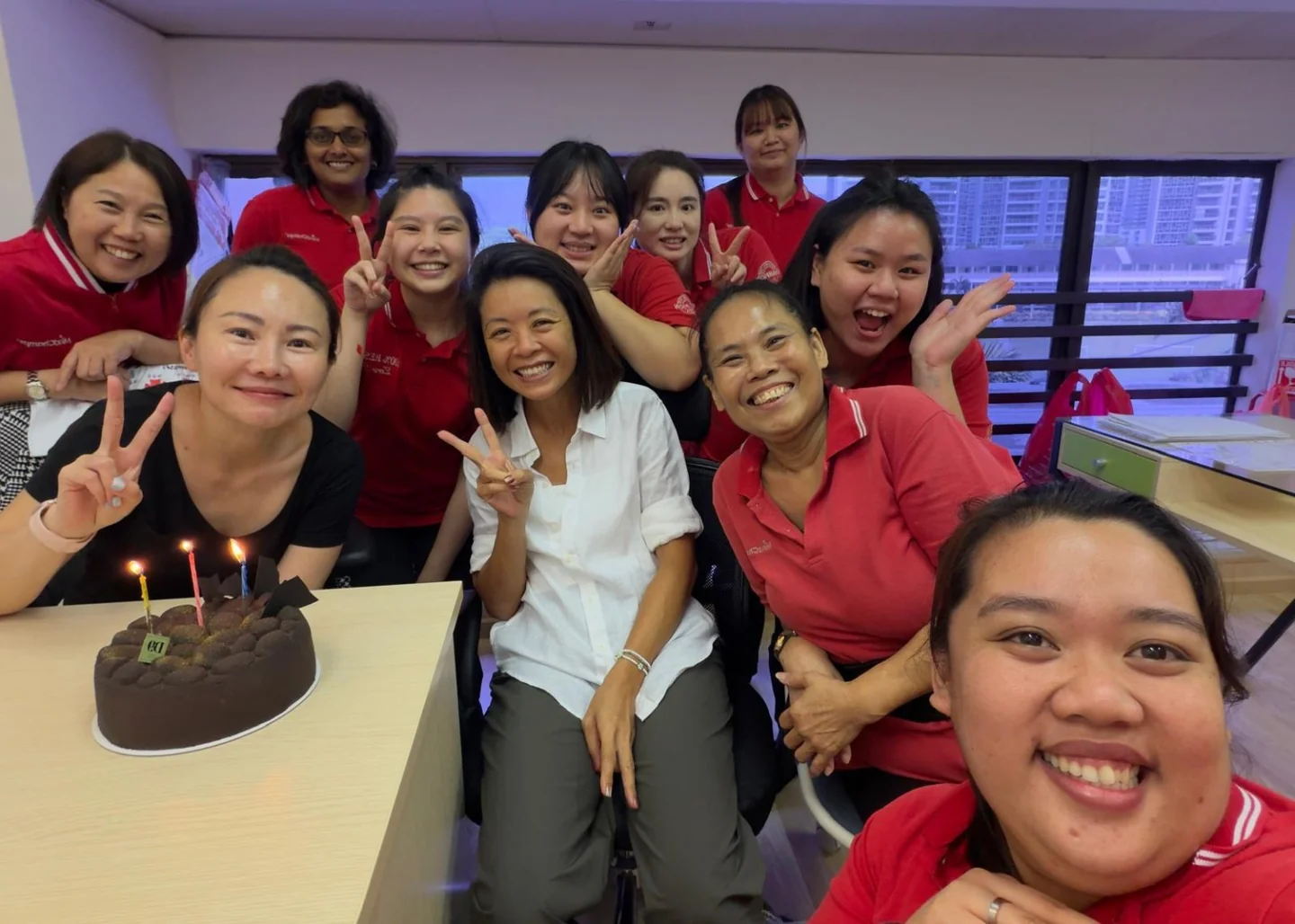
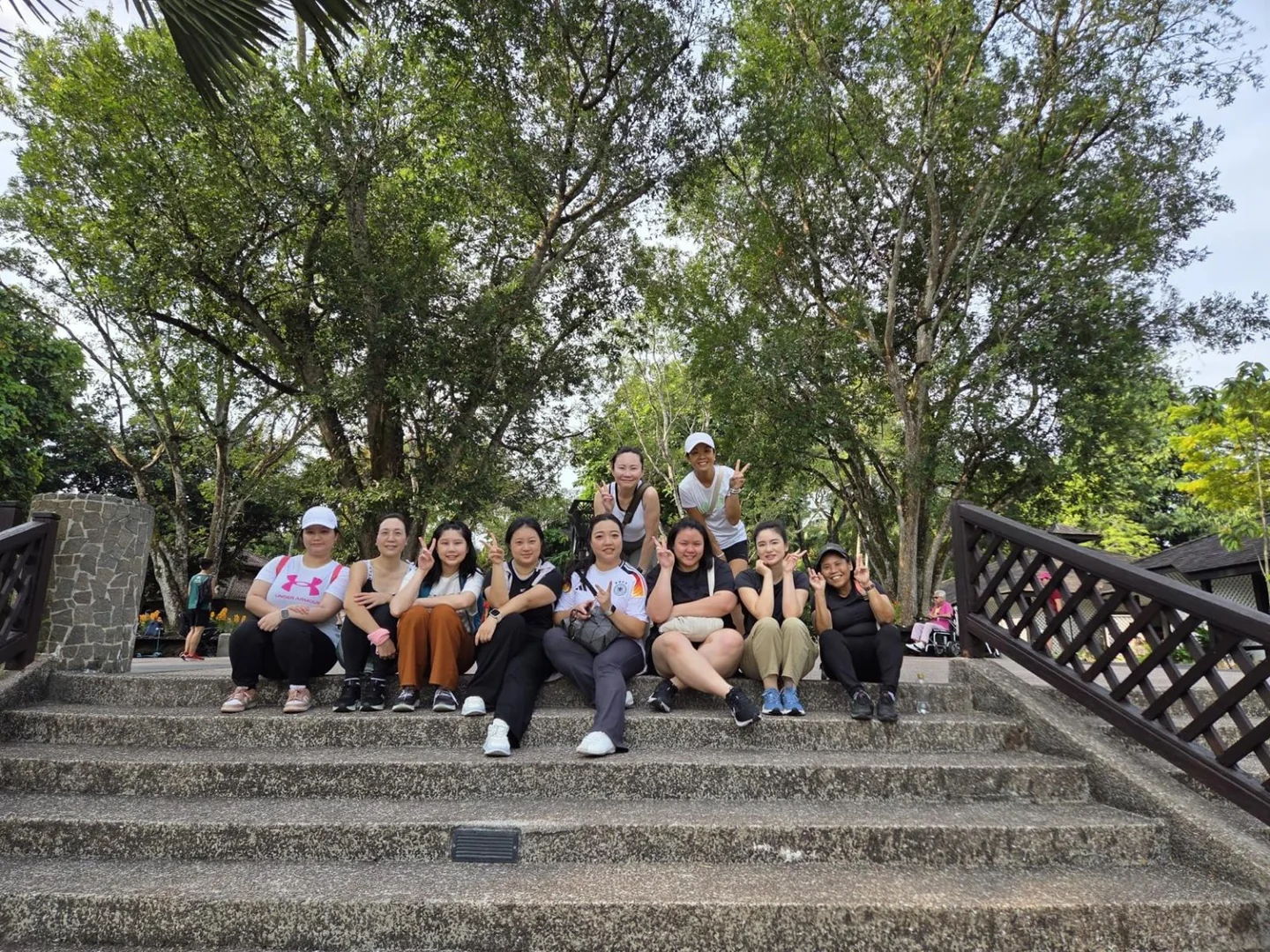
Team gatherings, shared activities and time spent together beyond routine meetings matter to her too. They are opportunities to build the relationships that make honest communication and mutual support possible at work.
Much of a principal’s work is invisible to parents: coaching teachers, resolving concerns, preparing for each day and making decisions that protect the quality of children’s experiences. Jocelyn has learned that this work need not always be recognised publicly to be worthwhile.
What matters is that educators feel supported and children are well cared for.
Why Mandarin at MindChamps Chinese PreSchool @ Thomson means more than language
Jocelyn grew up in a bilingual family where Chinese held a particularly important place. That upbringing helped shape her conviction that Mandarin should be experienced as a living language, not merely studied as a subject for tests.
For her, language can connect children to family stories, grandparents, festivals, traditions, music and cultural identity. She wants children to hear and use Mandarin during conversations, storytelling, songs, imaginative play and everyday interactions without feeling that every sentence must be perfect.
This philosophy is especially relevant to families whose children are more familiar with English at home. Rather than expecting immediate speech, Jocelyn encourages teachers to make children feel safe enough to listen, observe, copy sounds, try a word and gradually participate. A positive relationship with the language comes first.
She recalls her own nephew, who grew up in the United States speaking English and joined the school at the age of six. In her account, his Mandarin communication advanced rapidly over several months. It remains a meaningful personal experience for her , not a prediction of the rate or outcome every child will achieve. Each child’s comfort and language development is different.
“For me, the most meaningful milestone is not when a child can recite a long sentence, but when they begin using Mandarin willingly because they feel confident enough to do so.”
— Jocelyn GohHow the Chinese-language pathway works: Playgroup to Kindergarten 2
For parents considering a Chinese preschool in Thomson, Singapore, it helps to understand the actual programme rather than rely on the word “immersion” alone. The following reflects MindChamps’ published Chinese preschool curriculum :
Playgroup & Nursery 1
Chinese-led early learning
Chinese is the main teaching language, with the published exceptions of MindChamps Reading & Writing™ and Creativity & Theatrical Strategies™. Early exposure gives children opportunities to hear and communicate in Mandarin throughout daily experiences.
Nursery 2 to Kindergarten 2
A progressive bilingual environment
Classes move to an arrangement of one English teacher and one Chinese teacher, giving children opportunities to develop both languages as they move towards primary school.
Jocelyn hopes children will grow comfortable expressing themselves in both languages while discovering the stories and values connected with Chinese culture. The aim is not to make every child learn at the same speed, but to build opportunities for participation that match different stages of development.
Parents who want to understand how Mandarin is integrated with culture, creative learning and the indoor and outdoor school environment can explore the Thomson preschool guide and then see the classrooms for themselves.
A former student in Ireland, and a memory that lasted more than a decade
Among Jocelyn’s most treasured stories is one involving a child she taught in 2011. The boy and his family moved back to Ireland in 2013, yet his mother continued to keep in touch. Year after year, she shared updates about his growing-up years.
Jocelyn remembers being told that he still spoke fondly of her and regarded her as the best teacher he had known. In a recent update, his mother told her he was beginning university and had a girlfriend and Jocelyn was still part of their conversations.
For her, the story captures something that numbers cannot easily express: a preschool educator’s influence may remain with a child long after lessons, graduations and school photographs have passed.
Her hope for children at Thomson is similar. They may not remember every activity, but she wants them to remember how the teachers made them feel loved, encouraged, capable and free to explore.
What the Champion Mindset means to Principal Jo
When Jocelyn speaks about being ready for Primary 1, academic skills are only part of the picture. She hopes every child develops kindness, resilience, independence, empathy, gratitude and curiosity. She especially values respect for parents and elders, care for others, and appreciation of Chinese cultural traditions.
In her view, the Champion Mindset doesn’t mean being first or winning at everything. It means having the courage to try again, the patience to learn from setbacks and the willingness to help others. These qualities can be nurtured in everyday situations sharing an idea, including a friend, solving a disagreement or taking responsibility for a mistake.
This personal philosophy sits alongside MindChamps’ wider educational approach. Parents can read more about the preschool levels and 3-Mind Approach in the Singapore parent guide , or explore the discussion of growing up in an AI world .
“To me, the Champion Mindset is not simply about being the best or achieving success. It is about having the courage to keep trying, the humility to keep learning, the patience to grow, and the heart to care for others.”
— Jocelyn GohChoosing a Chinese preschool in Thomson? Come and meet the people
Jocelyn’s advice to parents is refreshingly practical: visit the school. Observe the warmth of teacher-child interactions. Notice whether children appear comfortable and engaged. Speak openly about your child’s temperament, language exposure, interests and worries.
It is understandable for families to feel anxious when a child starts preschool or has little experience speaking Mandarin. Jocelyn’s starting point is to help the child feel safe rather than pressuring them to perform. She believes that honest conversations between home and school help parents and educators support each child more thoughtfully.
Four useful questions to bring on your centre tour
- How will teachers welcome my child if Mandarin is new to them?
- What does a typical day look like at my child’s Playgroup, Nursery or Kindergarten level?
- How are language, cultural activities, play, wellbeing and social development connected?
- How will the school communicate with us as our child settles in and grows?
MindChamps Chinese PreSchool @ Thomson is located at 512A Thomson Road, #02-01, SLF Podium, Singapore 298137 , near Caldecott MRT. The school offers Playgroup through Kindergarten programmes. See the official Thomson centre profile for the operator’s programme and contact information.
Frequently asked questions: Principal Jo and MindChamps Thomson
Who is Jocelyn Goh, also known as Principal Jo?
Jocelyn Goh is the Principal of MindChamps Chinese PreSchool @ Thomson. Her professional journey began in nursing before she moved into early childhood education. She became a principal in her twenties and describes her approach as hands-on and people-centred.
Where is MindChamps Chinese PreSchool @ Thomson?
The centre is at 512A Thomson Road, #02-01, SLF Podium, Singapore 298137, near Caldecott MRT. Its official centre telephone is 6250 8484.
Does the Chinese preschool teach English as well as Mandarin?
Yes. According to MindChamps’ published curriculum, Chinese is the main language of instruction at Playgroup and Nursery 1, apart from two specified English-taught enrichment programmes. From Nursery 2, classes have an English teacher and a Chinese teacher. Parents should confirm arrangements for their child’s specific level with the centre.
Can a child from an English-speaking home join the Chinese preschool?
Families can enquire even if their child is not yet confident in Mandarin. Principal Jo describes a supportive approach using gestures, songs, visual cues, stories and peer interactions. The centre can discuss age-appropriate settling-in and language support; children’s progress varies.
How can parents book a Thomson preschool visit?
Message the centre enquiries team through WhatsApp +65 8336 6538 or telephone +65 6250 8484 . The team will confirm visit arrangements.
What she hopes every child will remember
When asked what she hopes her Champs will carry into adulthood, Jocelyn doesn’t start with exam results or accolades. She hopes they will remember friendship, kindness and the feeling that someone believed in them.
“Always believe in yourself. Be kind, be curious, be brave enough to do your best, and never be afraid to make mistakes because that is how you learn and grow.”
— Principal Jo’s message to her ChampsPerhaps that is the clearest way to understand her journey: from nursing to teaching to principalship, Jocelyn Goh has continued to follow the same instinct — to care for people and help them become more confident in who they are.
That is the person families meet behind the name Principal Jo.