Singapore’s Orchid Diplomacy: Where Nature, National Pride and Friendship Bloom
From royalty and world leaders to the quiet beauty of an ordinary walk, discover how Singapore’s orchids tell extraordinary stories of heritage, international friendship and lasting memories.
A Small Nation, A Beautiful Way of Connecting With the World
Singapore may be a small island nation, but our connections with the world reach far beyond our shores. Among the many ways we build international friendships, one tradition is especially beautiful: naming orchids in honour of distinguished visitors.
Within the Singapore Botanic Gardens, the National Orchid Garden preserves a remarkable collection of these botanical tributes.
Here, the names of presidents, monarchs, prime ministers and international figures are associated with living flowers, each commemorating a particular relationship or moment in history.
During a walk through the garden, I photographed these orchids and their accompanying historical displays. What began as an appreciation of botanical beauty gradually became a deeper appreciation of Singapore’s heritage and its place in the world.
These 19 original photographs offer a personal journey through that history. They also preserve memories of a walk shared with someone very dear to me.
Singapore’s orchid diplomacy reminds us that meaningful relationships, like beautiful gardens, are cultivated with patience, care and time.
What Is Singapore’s Orchid Diplomacy?
Imagine welcoming a distinguished visitor with a gift that is not simply presented, admired and put away.
Instead, a specially cultivated orchid hybrid is named in that person’s honour. Its name becomes part of Singapore’s botanical and diplomatic history.
Singapore’s VIP orchid-naming tradition began in 1956 with Aranthera Anne Black, named after Lady Anne Black, wife of Singapore’s then Governor, Sir Robert Black.
The tradition has since expanded to honour visiting royalty, heads of state, government leaders, international personalities and significant organisations.
There is an important scientific story behind the diplomatic tradition.
Orchid breeding requires horticultural knowledge, careful selection, experimentation and patience. A new hybrid may take years to flower.
Singapore’s orchid diplomacy therefore brings together two forms of achievement: botanical expertise and the cultivation of international goodwill.
A living orchid is an especially fitting symbol of friendship. It needs nurturing, just as meaningful relationships do.
The National Orchid Garden: A Legacy Worth Preserving
The Singapore Botanic Gardens has occupied its present Tanglin site since 1859.
Over generations, it developed into an internationally recognised centre for tropical botanical research, conservation, education and recreation.
Its orchid hybridisation programme began in 1928 under Professor Richard Eric Holttum.
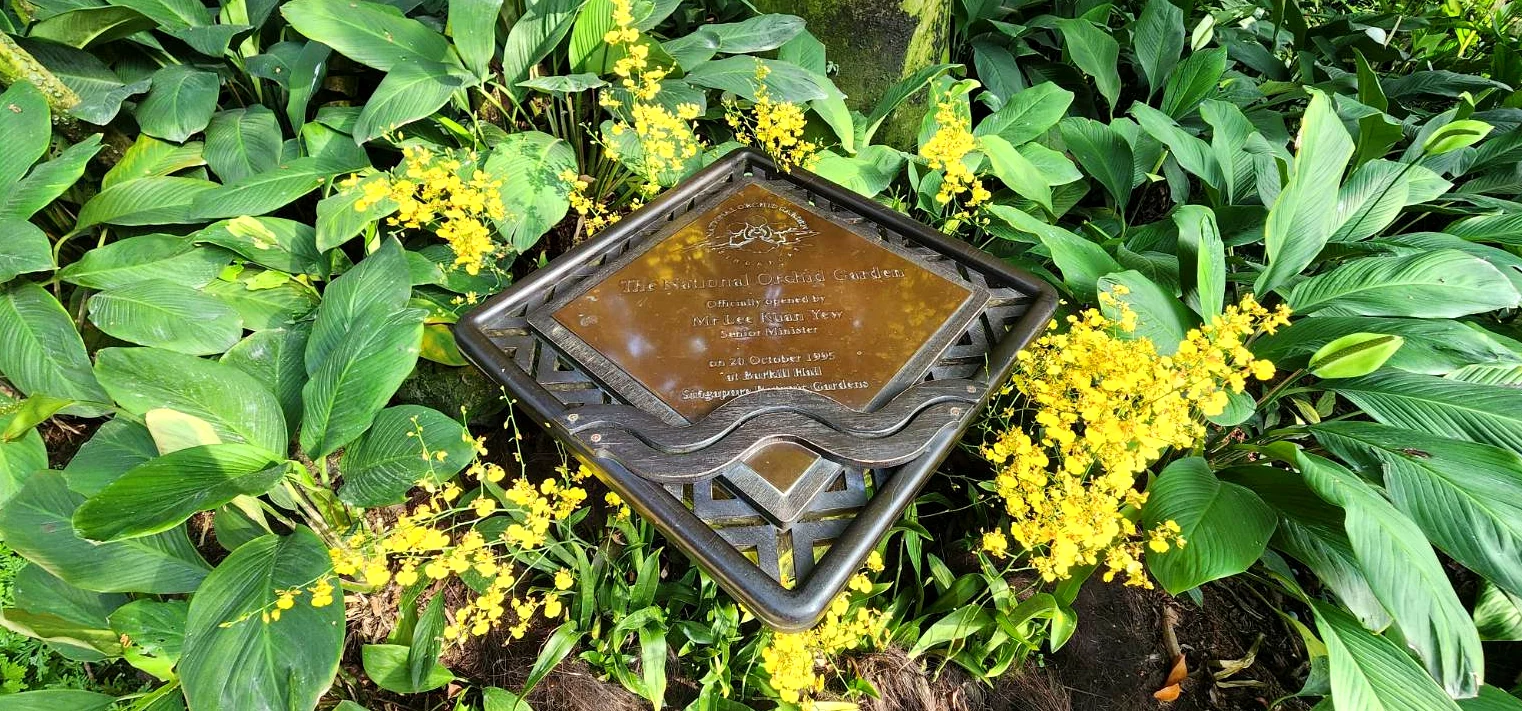
The National Orchid Garden was officially opened by Senior Minister Lee Kuan Yew on 20 October 1995.
In 2015, the wider Singapore Botanic Gardens became Singapore’s first UNESCO World Heritage Site.
This recognition reflects the Gardens’ historical and scientific importance, as well as the exceptional cultural landscape preserved for future generations.
Orchids That Honour Royalty and Historic Relationships
Some of Singapore’s named orchids commemorate royal visits and longstanding relationships between nations.
Their names connect today’s visitors with historical occasions that might otherwise be remembered only through official archives.
Dendrobium Elizabeth
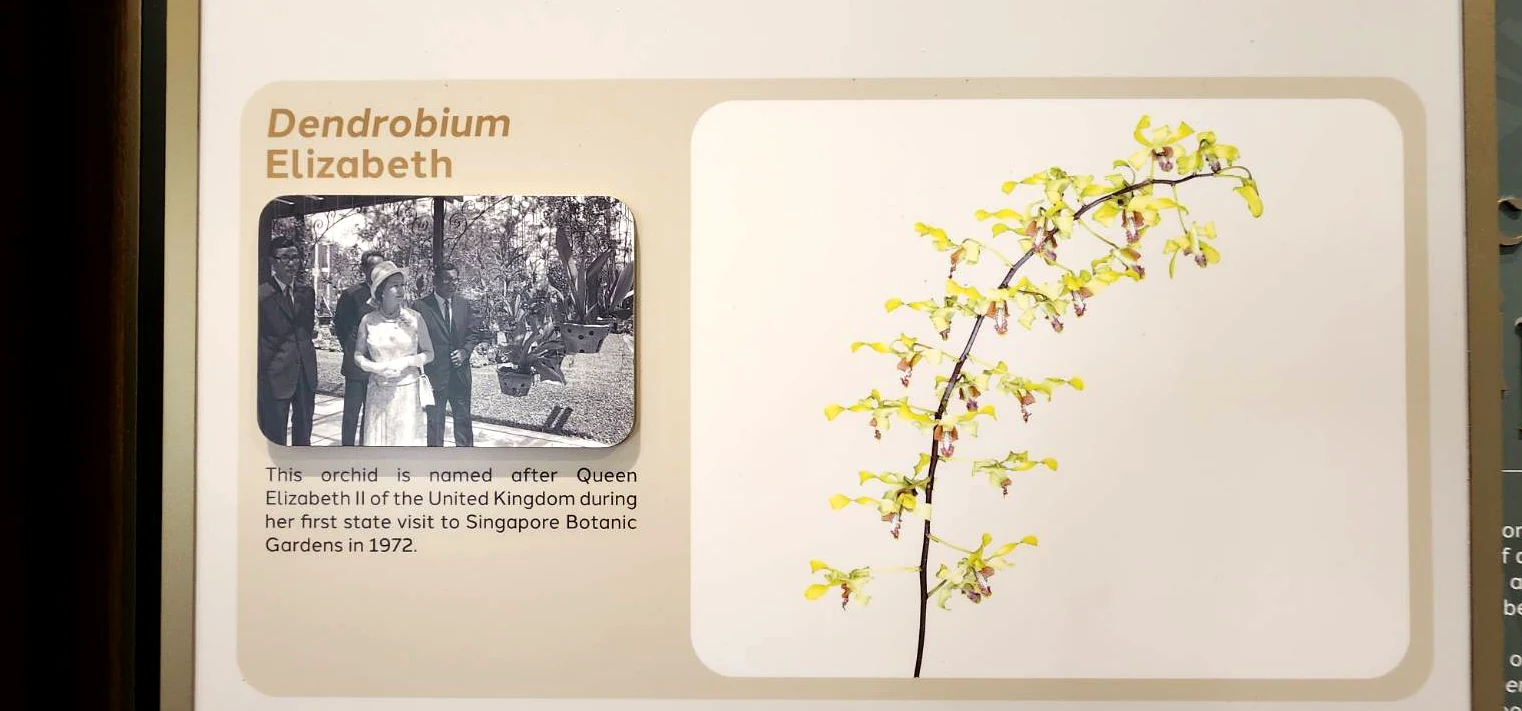
1972Named after Queen Elizabeth II during her first state visit to Singapore in 1972, this orchid preserves a moment in the relationship between Singapore and the United Kingdom.
The display offers an opportunity to reflect on how relationships between countries evolve across generations.
While leaders and circumstances change, historical records help us understand the connections that shaped the past.
Dendrobium Ibrahim Zarith
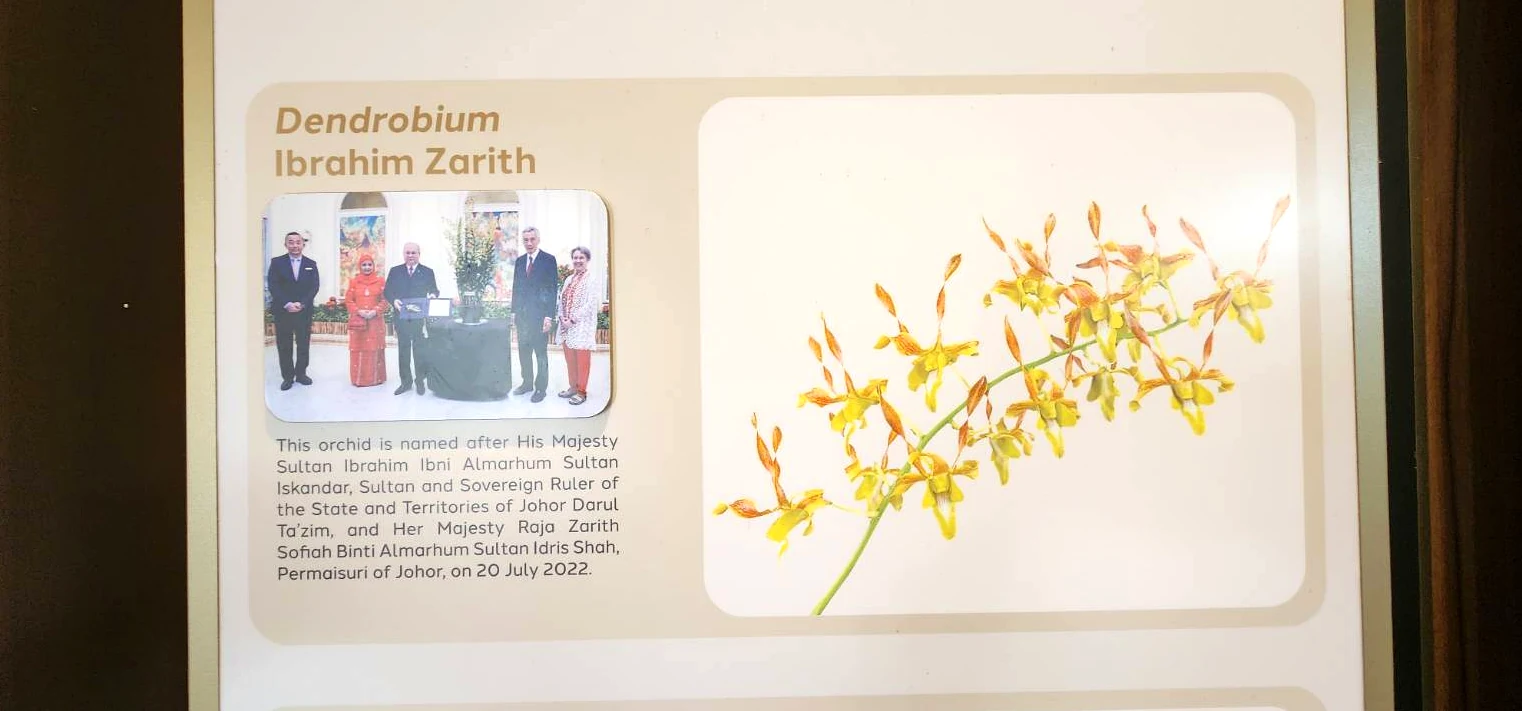
20 July 2022This orchid honours Sultan Ibrahim of Johor and Raja Zarith Sofiah.
Singapore and Malaysia share close geographical, historical, economic and family connections.
For many Singaporeans, these relationships are part of everyday life.
The orchid provides a beautiful reminder that international friendship can also be deeply rooted in personal and community connections.
World Leaders, Diplomatic Visits and the Stories Behind the Orchids
The VIP orchid collection includes tributes associated with leaders from different regions, political traditions and generations.
The significance of the collection is not that every visitor shared the same ideas or worldview.
Rather, it records Singapore’s diplomatic engagement with the wider international community.
The following photographs show both living orchids and interpretive exhibition panels.
Papilionanda Xi Jinping-Peng Liyuan
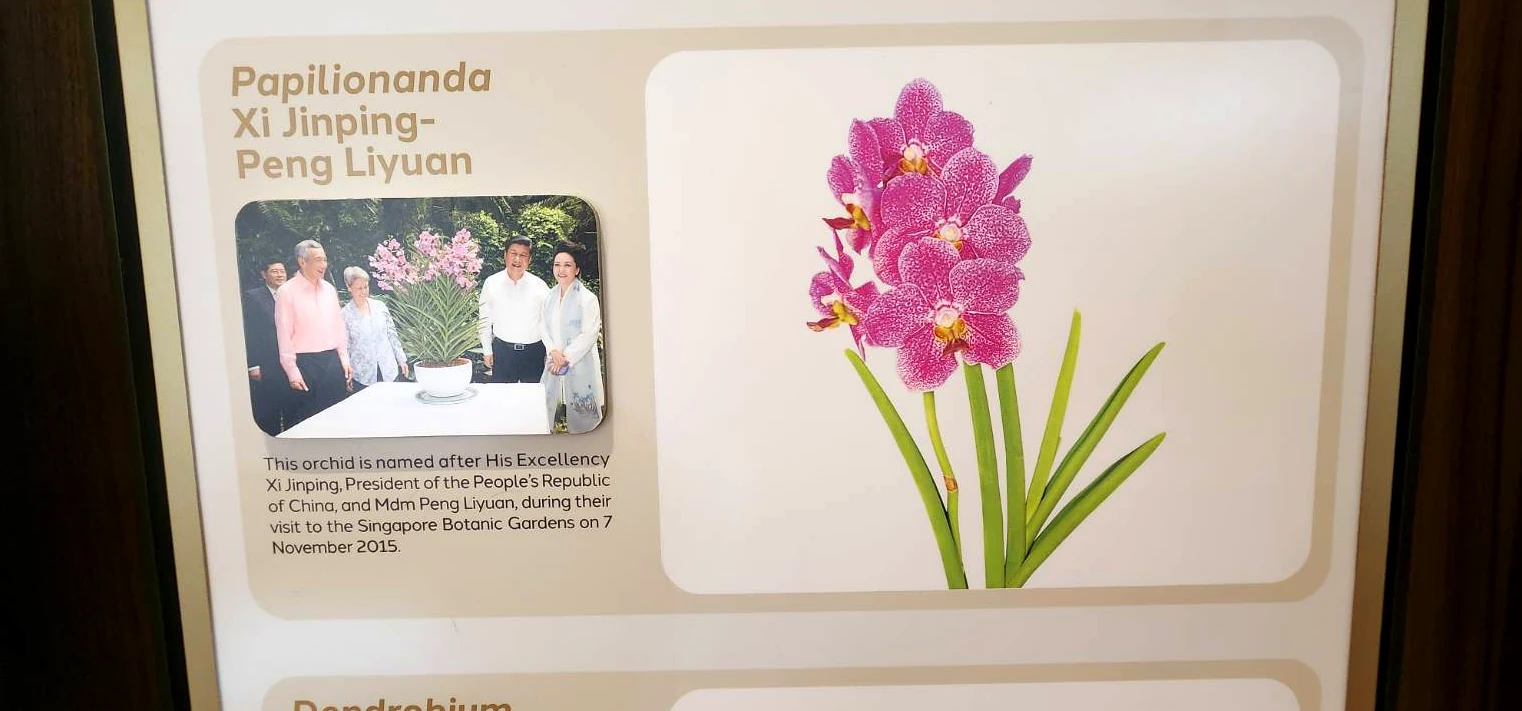
Named during the November 2015 visit of Chinese President Xi Jinping and Madam Peng Liyuan, the orchid commemorates a diplomatic occasion in the year marking 25 years of Singapore–China diplomatic relations.
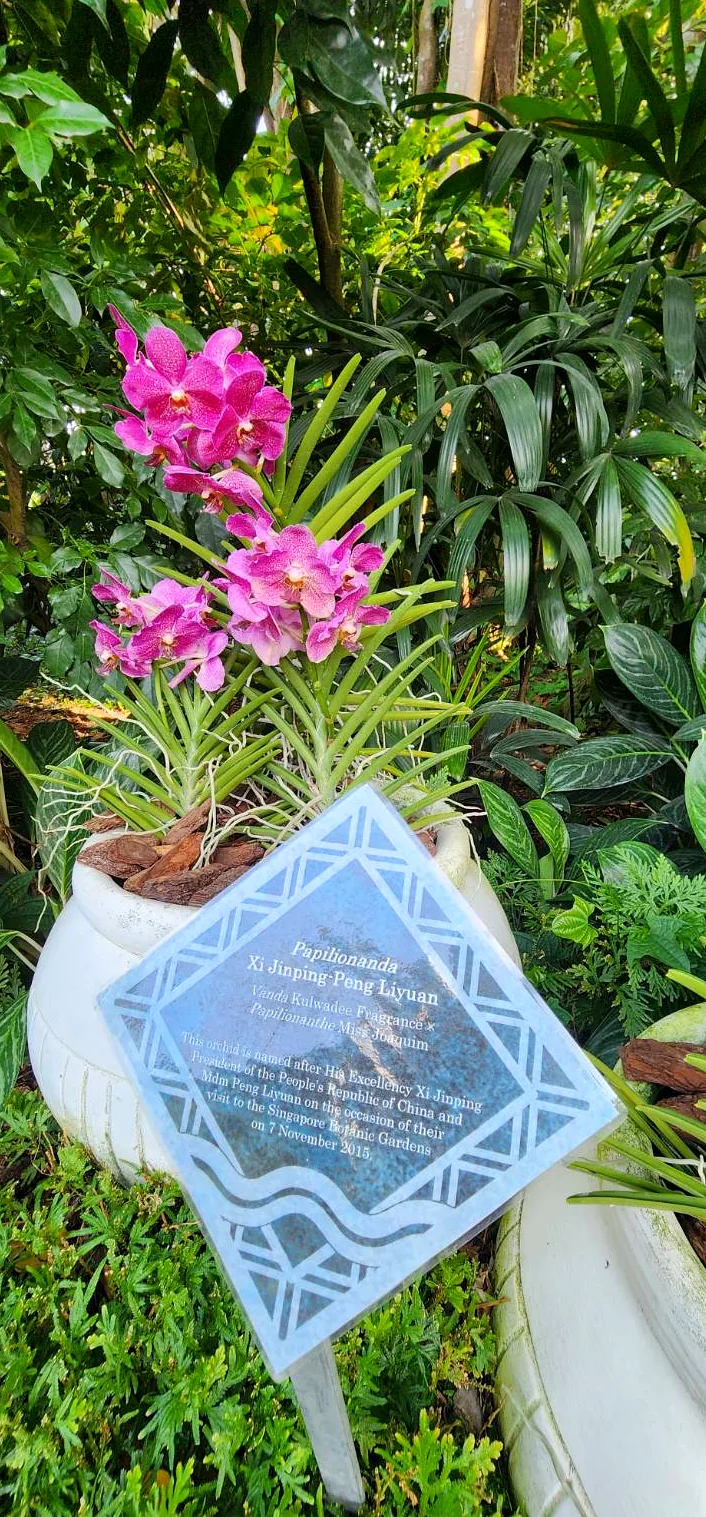
A Living Botanical Tribute
The vibrant pink flowers provide a living counterpart to the historical exhibition panel, connecting the diplomatic occasion with Singapore’s horticultural expertise.
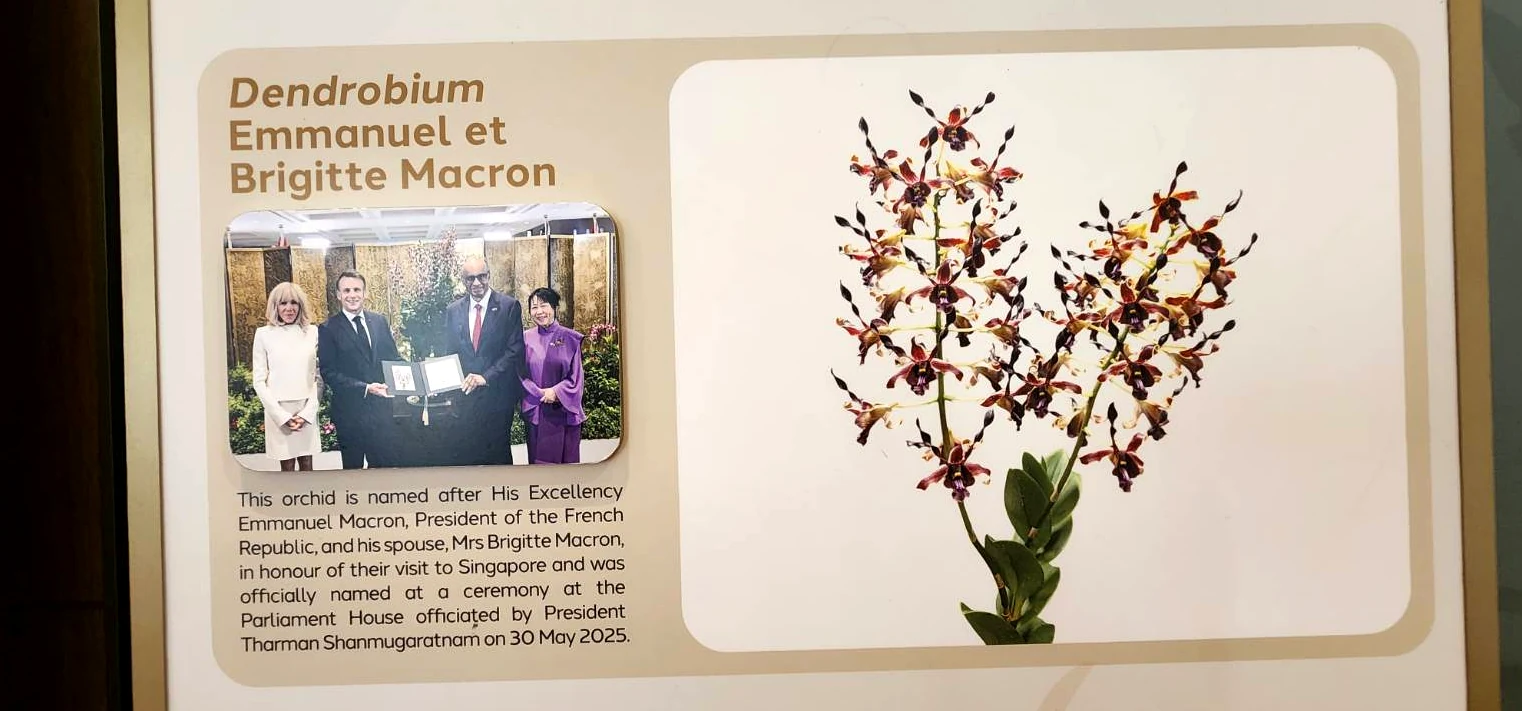
Dendrobium Emmanuel et Brigitte Macron
Named on 30 May 2025 in honour of French President Emmanuel Macron and Mrs Brigitte Macron. The exhibition records a ceremony at Parliament House officiated by President Tharman Shanmugaratnam.
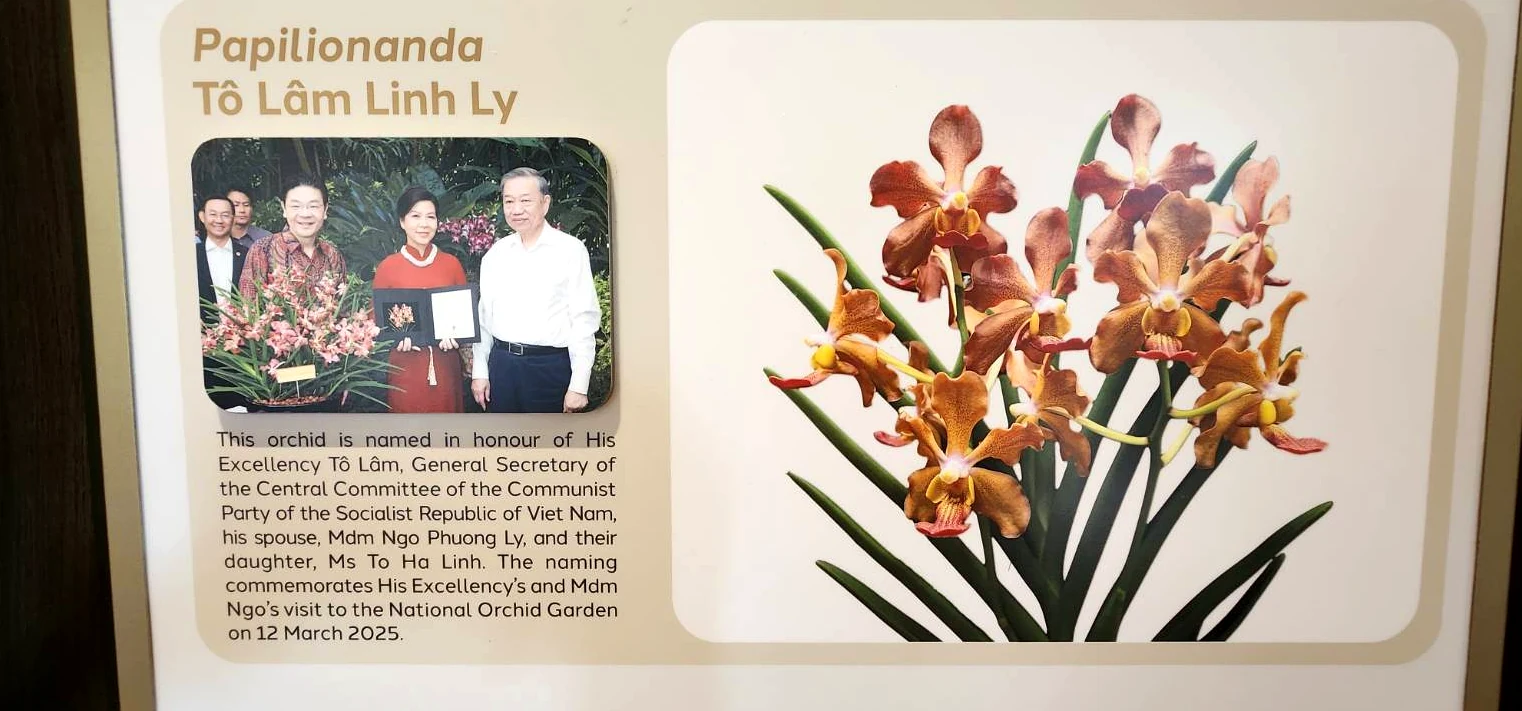
Papilionanda Tô Lâm Linh Ly
This orchid commemorates Vietnamese leader Tô Lâm and his family’s visit to the National Orchid Garden on 12 March 2025.
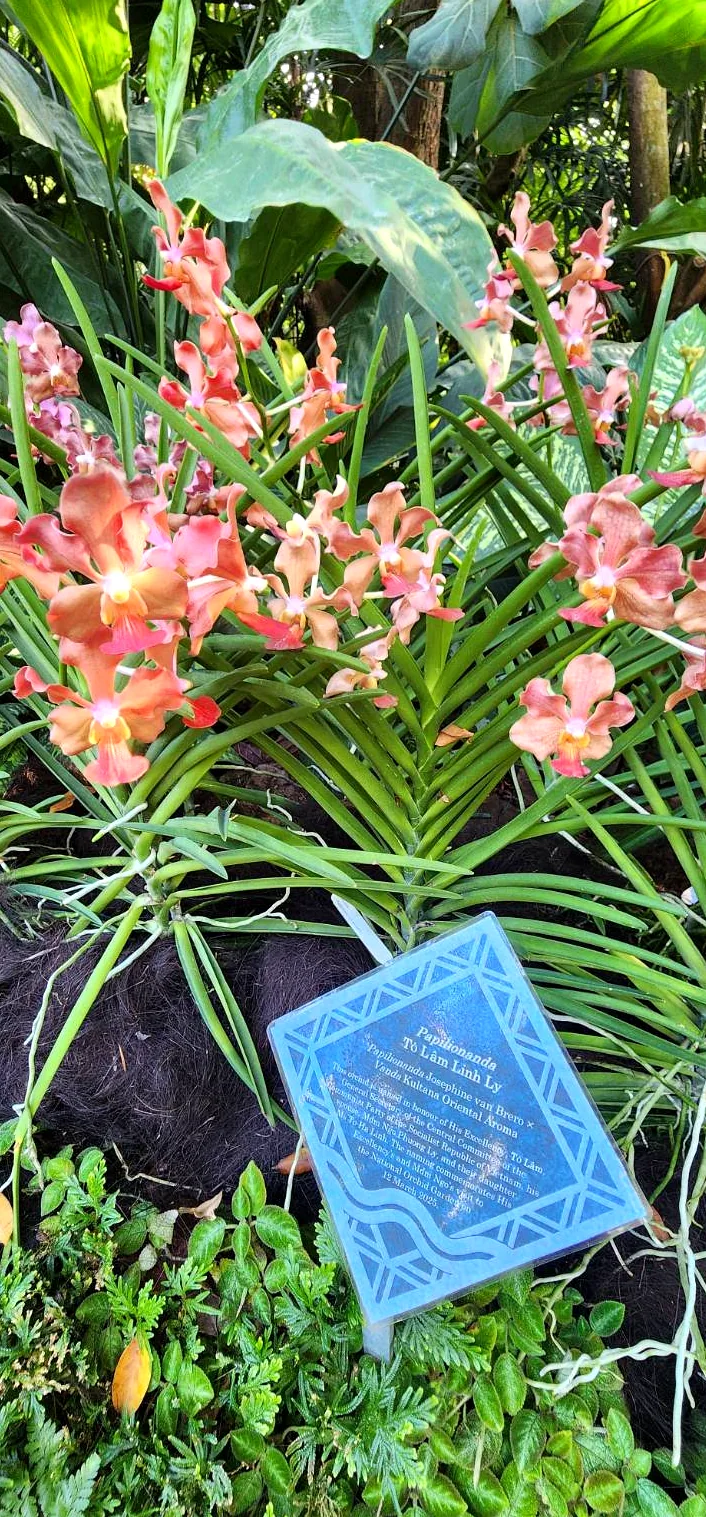
Singapore and Vietnam
The living orchid reflects the continuation of diplomatic and people-to-people relationships within Southeast Asia.
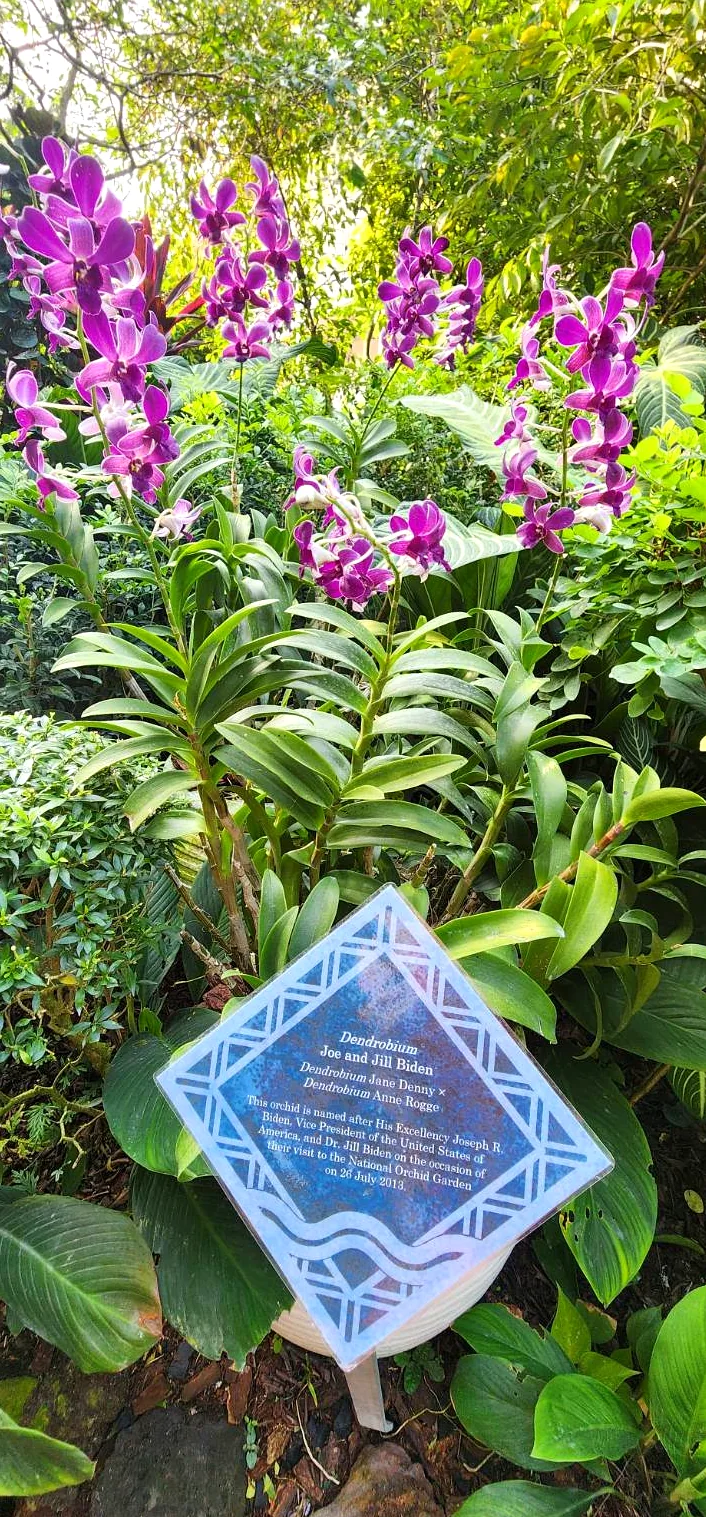
Dendrobium Joe and Jill Biden
Named during their July 2013 visit, when Joe Biden served as Vice President of the United States, this orchid records another chapter in Singapore–US relations.
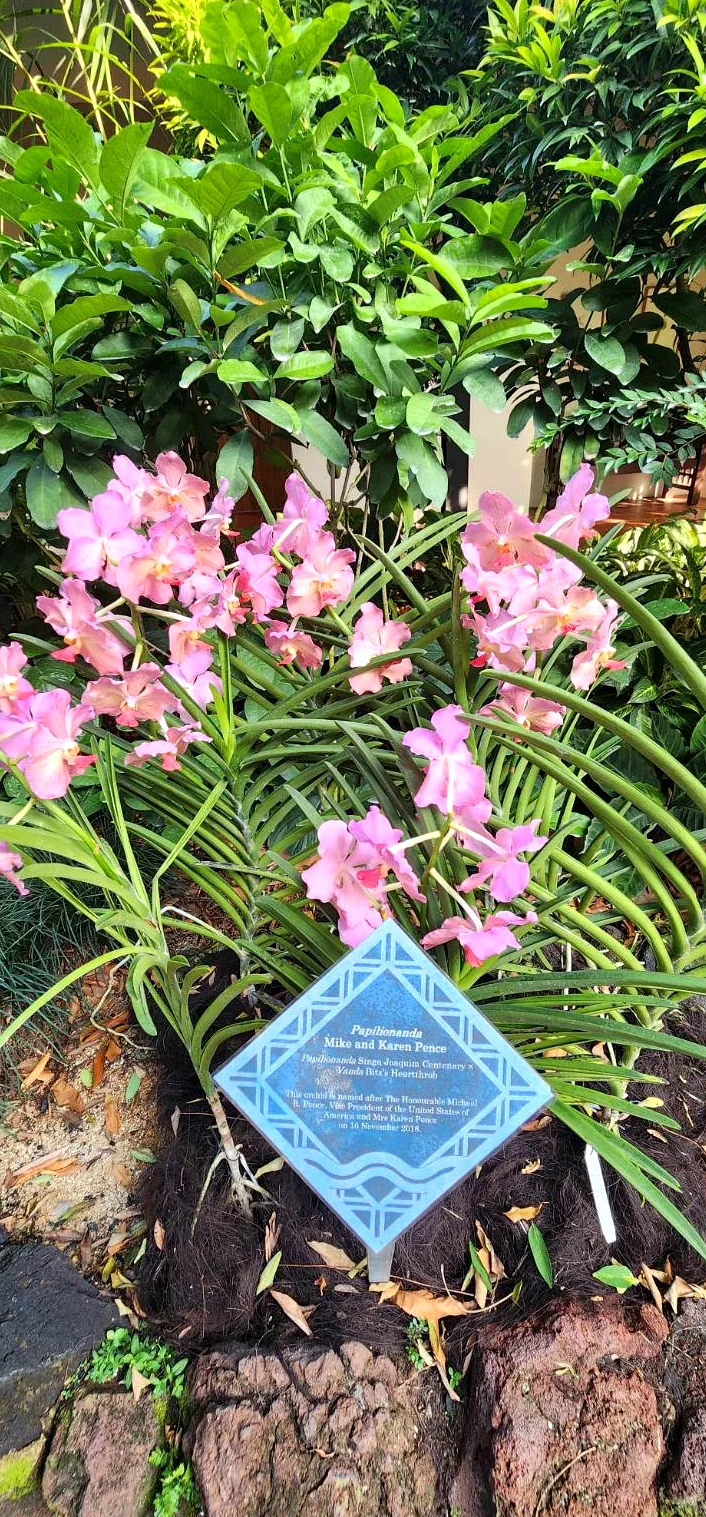
Papilionanda Mike and Karen Pence
Commemorating the November 2018 visit of then US Vice President Mike Pence and Mrs Karen Pence, this orchid illustrates the continuity of diplomatic relationships across administrations.
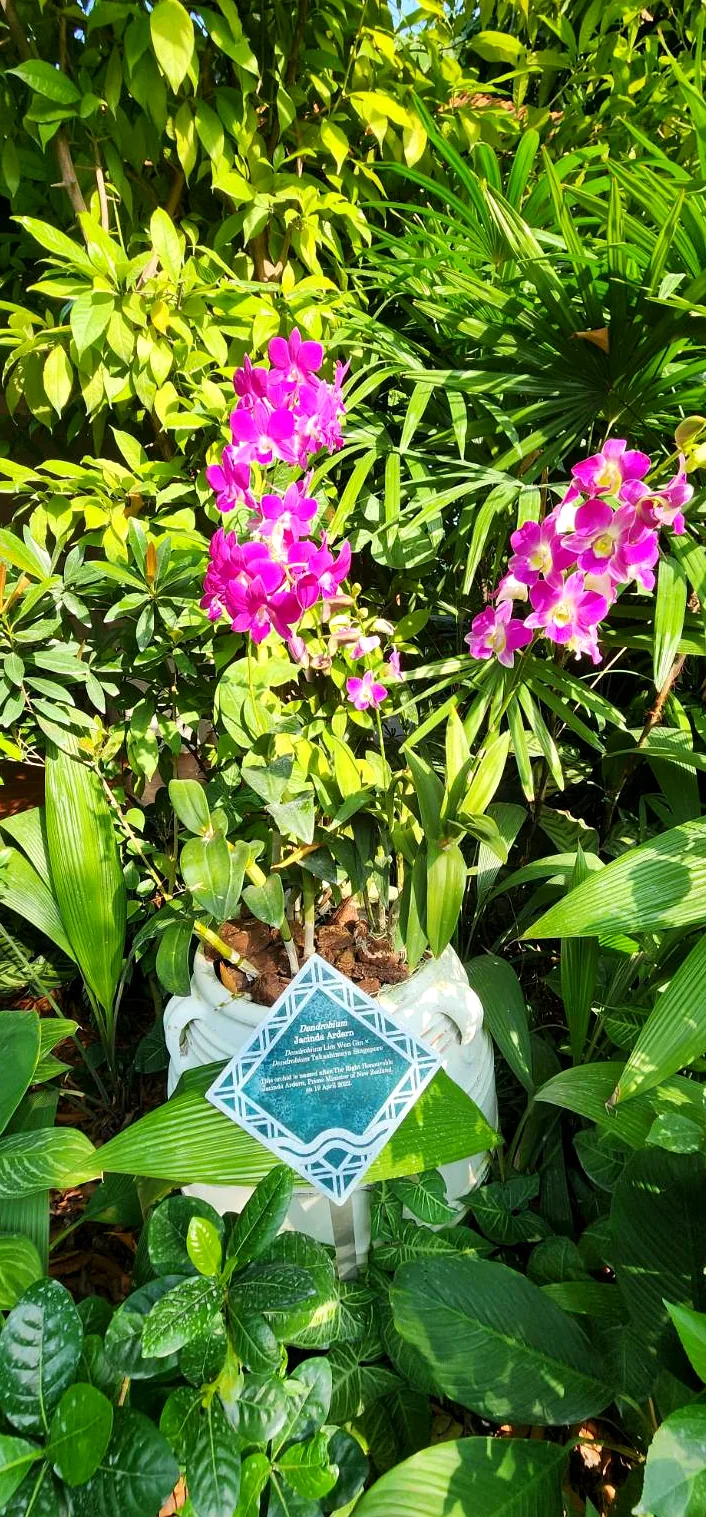
Dendrobium Jacinda Ardern
Named during the former New Zealand Prime Minister’s April 2022 visit, this orchid reflects another longstanding partnership in the Asia-Pacific region.
Global Cooperation, Leadership and Remembrance
Orchid diplomacy extends beyond bilateral relationships. It also records encounters with international figures and organisations.
Together, these displays remind visitors of the breadth of Singapore’s global connections.
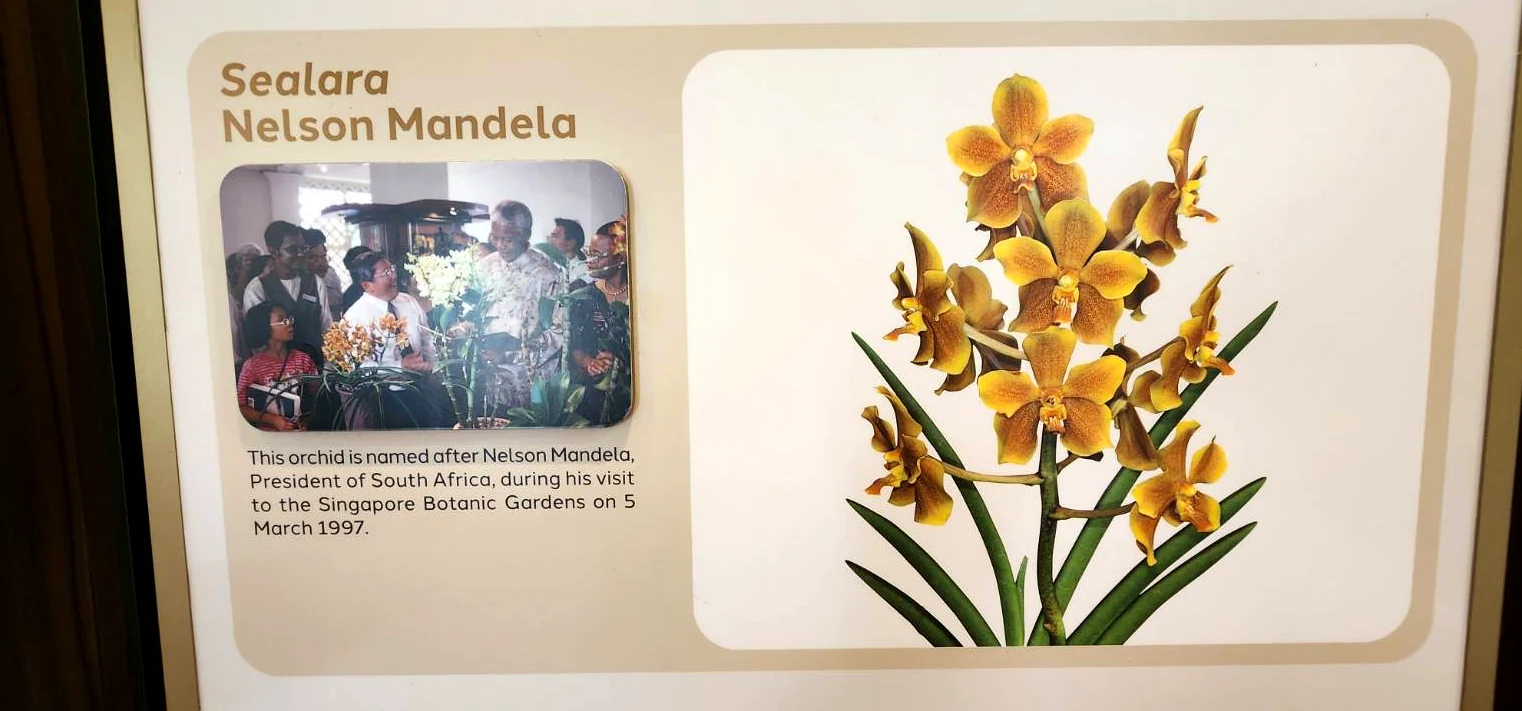
Sealara Nelson Mandela
Named during Nelson Mandela’s March 1997 visit, this orchid commemorates a leader internationally associated with the struggle against apartheid and the pursuit of reconciliation.
His life invites reflection on perseverance, leadership and the challenges of building a more inclusive society.
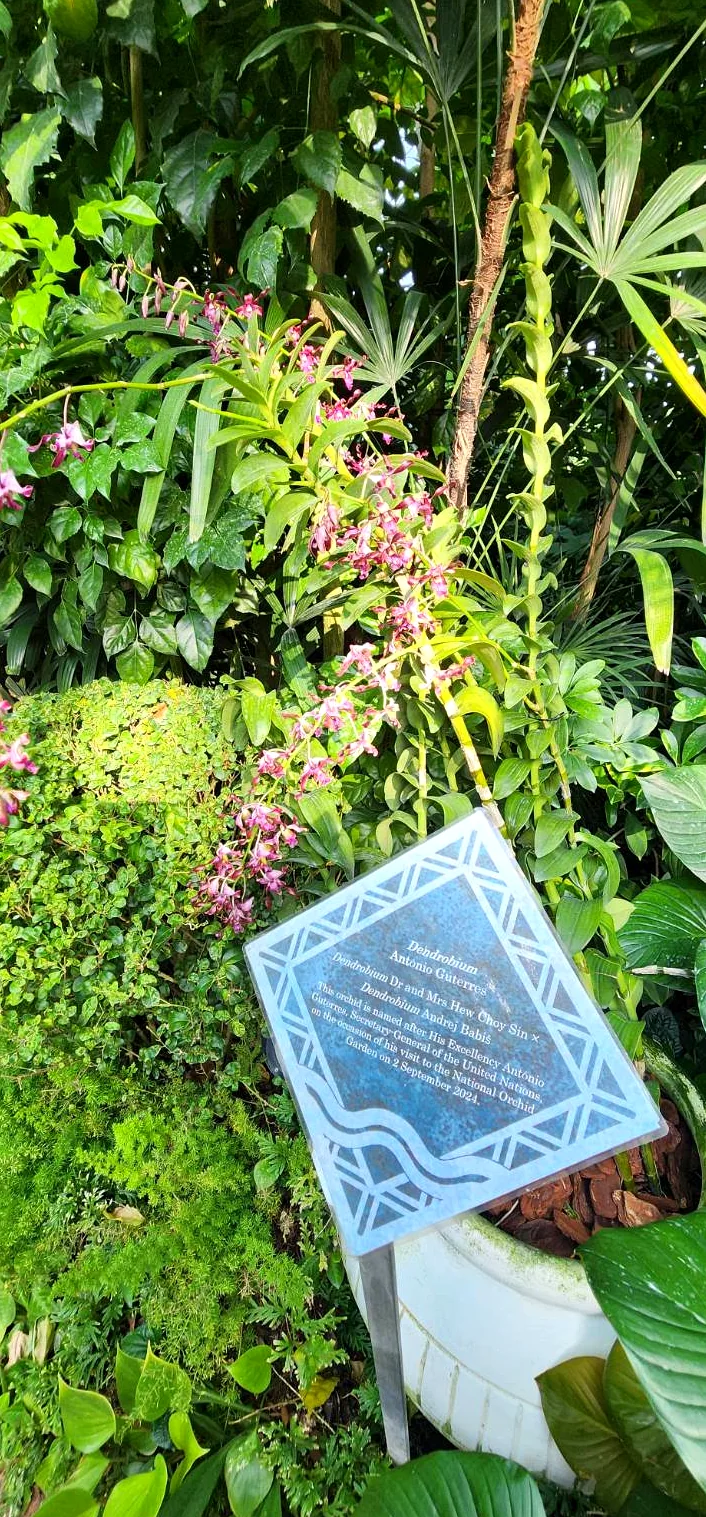
Dendrobium António Guterres
Named during the United Nations Secretary-General’s September 2024 visit, this orchid highlights Singapore’s engagement with international institutions and multilateral cooperation.
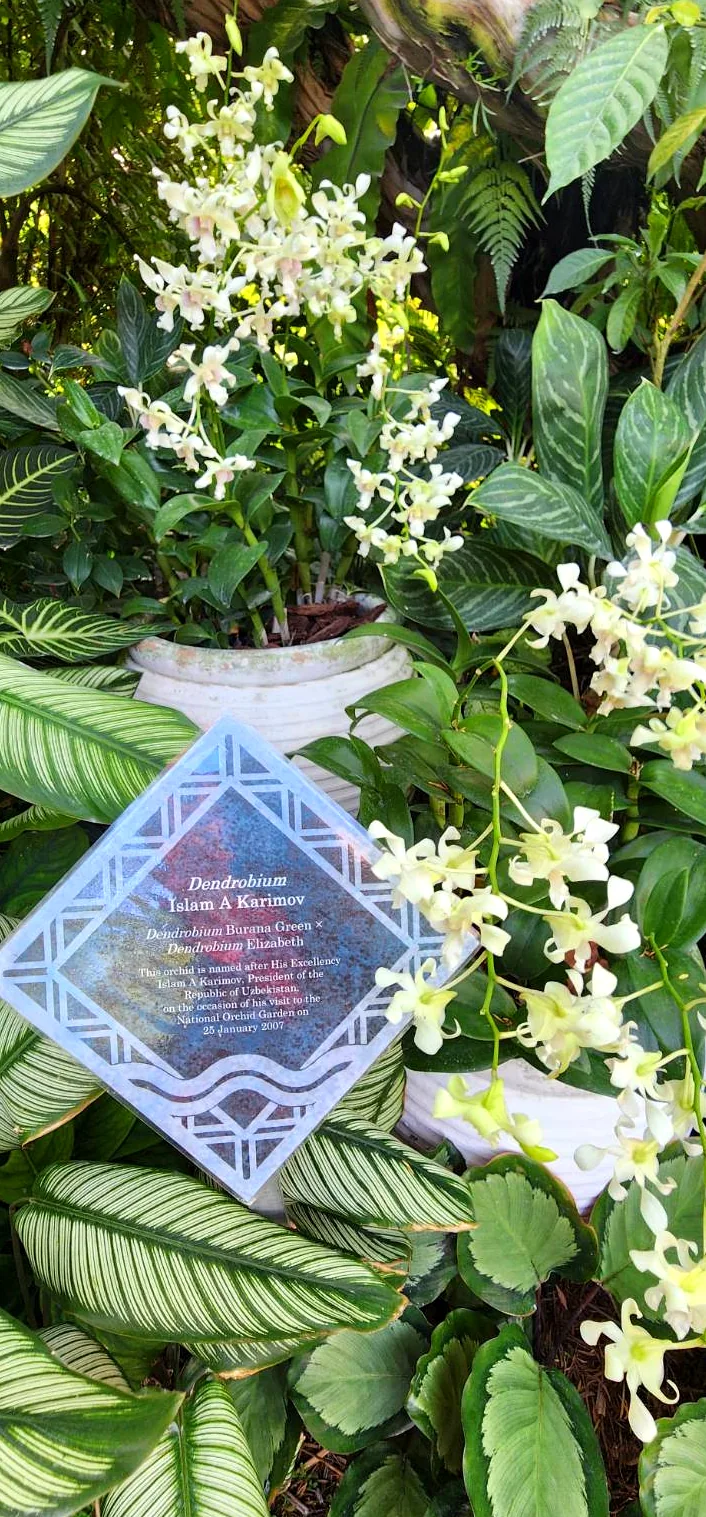
Dendrobium Islam A Karimov
This orchid records the January 2007 visit of Uzbekistan’s former President Islam Karimov.
It illustrates the geographical reach of Singapore’s orchid-naming tradition.
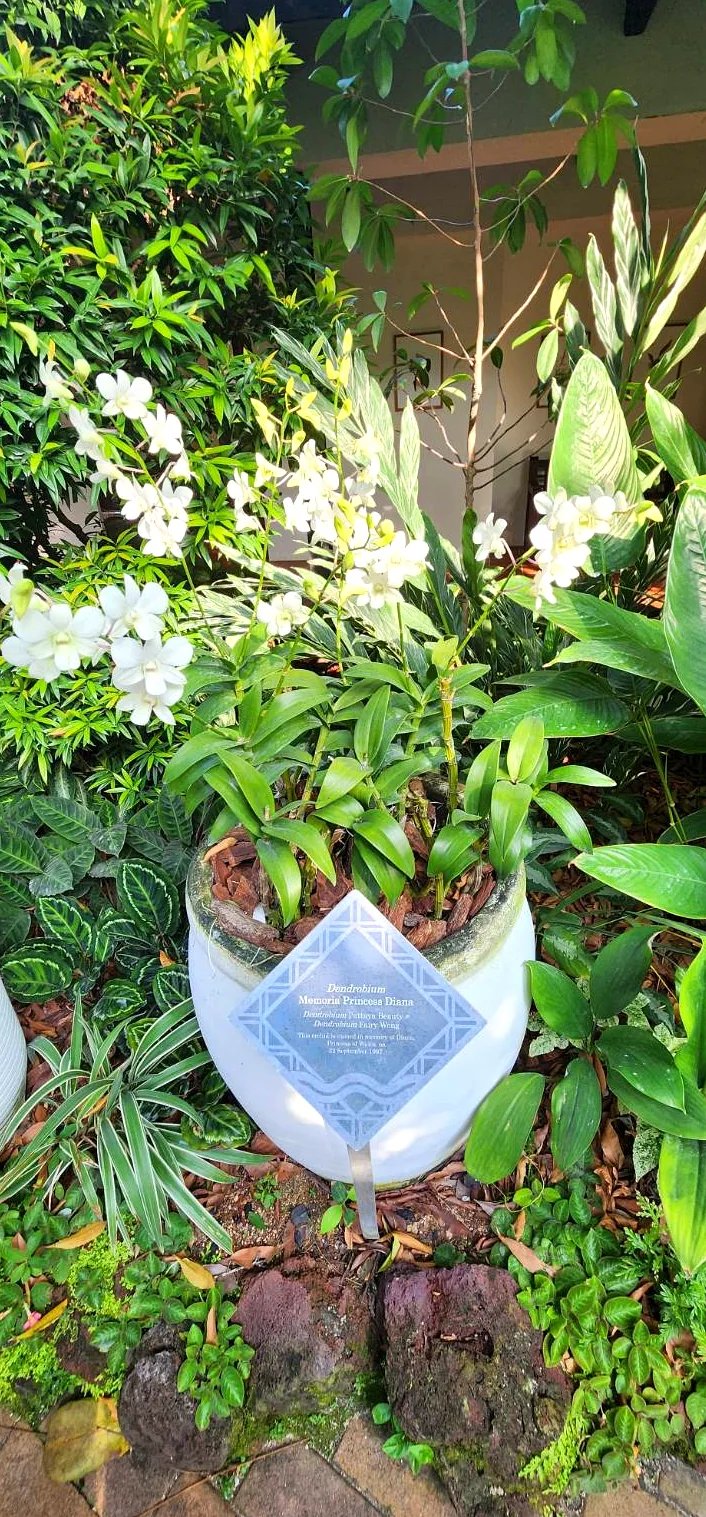
Dendrobium Memoria Princess Diana
This commemorative orchid honours Diana, Princess of Wales.
Its name reminds us that flowers can represent not only diplomatic occasions but also remembrance and enduring public affection.
A flower may carry a name, but the story behind that name connects people across time and generations.
Burkill Hall: A Window Into Singapore’s Past
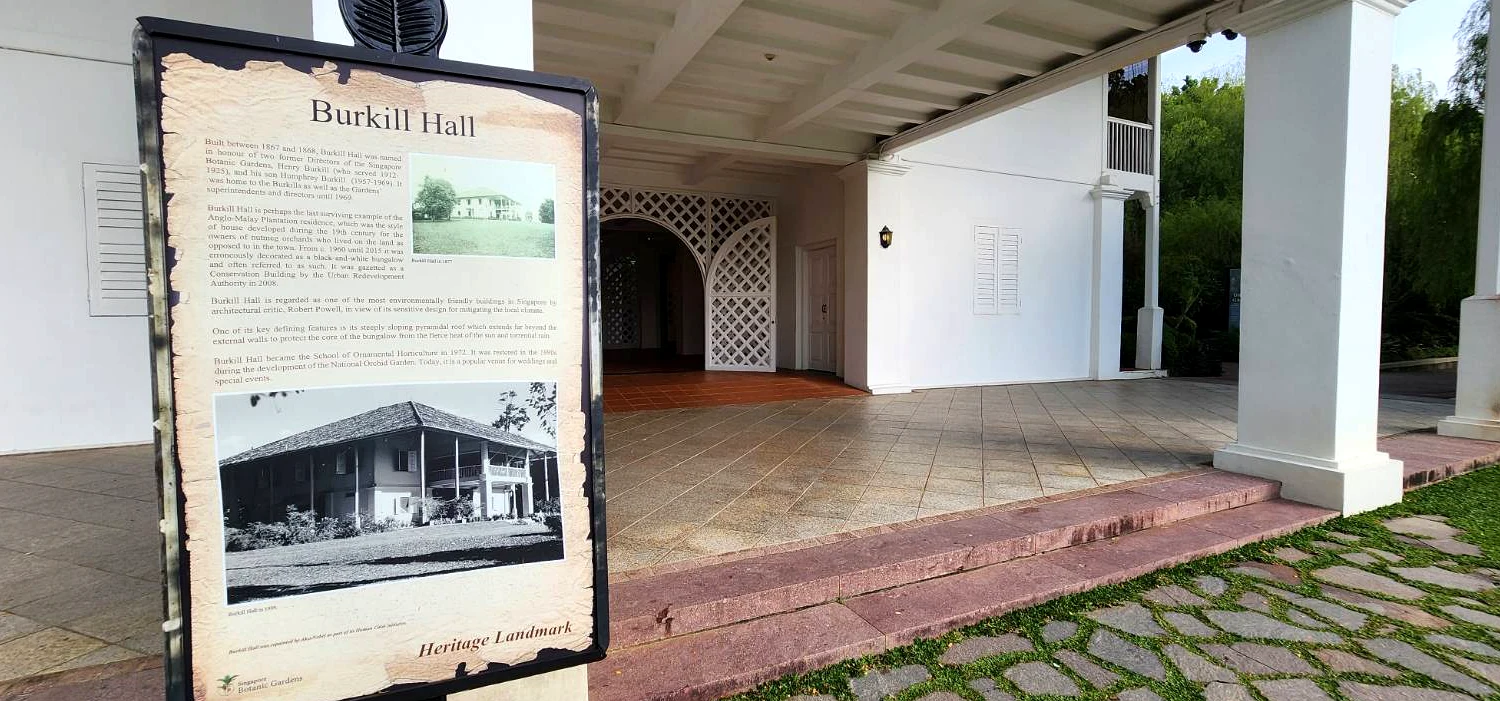
Nestled within the National Orchid Garden, Burkill Hall is a reminder of the Singapore Botanic Gardens’ nineteenth-century history.
Built between 1867 and 1868, the building served as a residence for the Gardens’ superintendents and directors.
Its distinctive architecture reflects an earlier period in Singapore’s development.
Today, the preserved building offers visitors a connection between historical architecture, botanical research and the development of the Gardens.
It is a valuable reminder that Singapore’s heritage is not limited to monuments and museums.
It can also be found in the landscapes and buildings that generations have cared for.
When Nature Inspires Art and Craftsmanship
Orchids have inspired more than horticultural research and diplomatic traditions.
Their extraordinary forms have also influenced decorative art and craftsmanship.
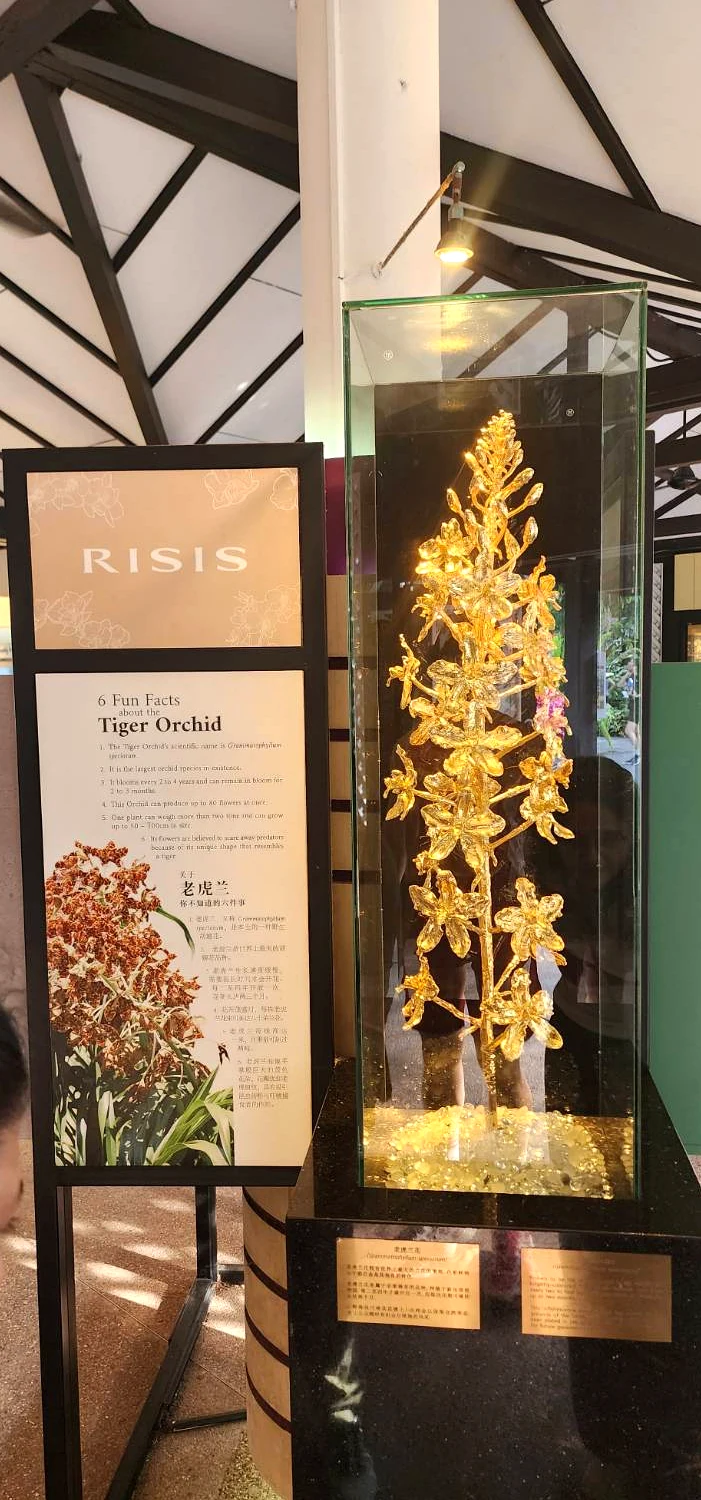
This RISIS gold-plated Tiger Orchid display celebrates the beauty of botanical forms through artistic preservation.
The Tiger Orchid, Grammatophyllum speciosum, is known for its impressive size and striking flowers.
The display offers another perspective on how Singapore’s botanical heritage connects nature, science, design and creativity.
Aranthera Anne Black
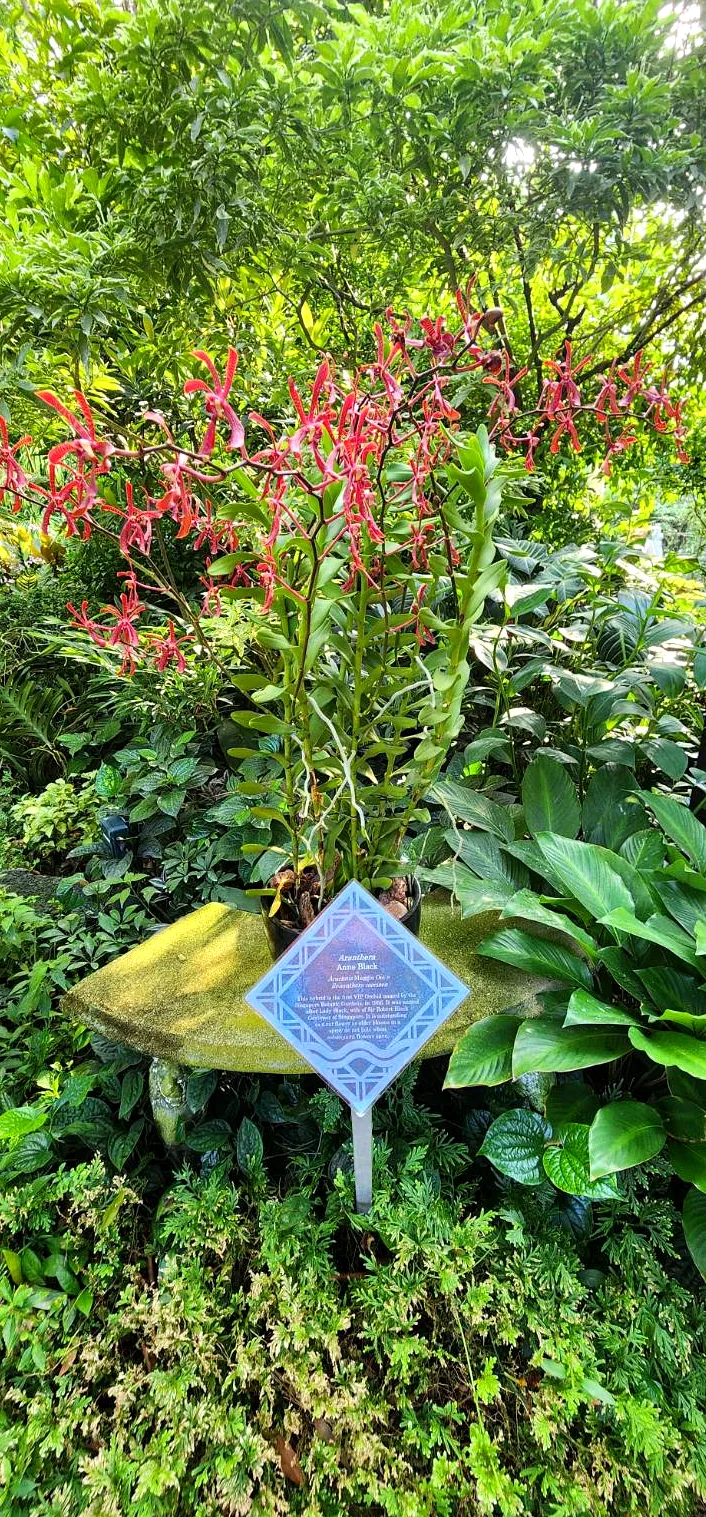
Among the orchids photographed, this one has special historical significance.
Named after Lady Anne Black in 1956, it marks the beginning of Singapore’s VIP orchid-naming tradition.
From that early beginning, the practice developed into a distinctive expression of Singapore’s cultural and diplomatic identity.
A single orchid name became the starting point for a tradition that would connect Singapore with distinguished visitors from around the world.
Why Singaporeans Can Be Proud of Our Botanical Heritage
Singapore’s transformation into a garden city did not happen by chance.
It reflects decades of planning, scientific research, horticultural dedication, public investment and community appreciation.
The National Orchid Garden is one expression of that long-term commitment.
Through orchid breeding and botanical conservation, Singapore has developed expertise recognised internationally.
Through orchid diplomacy, we have found a distinctive way to celebrate friendship and international engagement.
And through the preservation of the Singapore Botanic Gardens, we have protected a place where history, science, education and everyday life come together.
These achievements deserve to be understood and appreciated by future generations.
National pride is not only about celebrating what Singapore has achieved. It is also about appreciating the people, knowledge and care that made those achievements possible.
Our gardens belong to Singapore’s shared heritage.
Their value lies not only in their beauty today, but also in what they can teach tomorrow’s generations.
A Place to Learn, Walk, Discover and Connect
Beyond its historical and diplomatic significance, the National Orchid Garden offers meaningful experiences for people of different ages.
Children can discover the diversity of plants, learn about botanical science and explore world geography through the orchid names.
Families can enjoy conversations that connect nature with history.
Older adults can appreciate the surroundings at a comfortable pace, taking time to observe, reflect and enjoy companionship.
A garden visit does not need to be complicated or expensive to be meaningful.
Sometimes the simplest experience walking together, noticing a flower or sharing a conversation can become a treasured memory.
Beyond the Orchids: The Beauty of Moments Shared
As I look through these photographs, I am reminded that the National Orchid Garden is more than a place of botanical beauty.
It is a place where history is remembered, friendships are celebrated and generations can discover the stories that connect Singapore to the wider world.
There is much for us to be proud of.
Yet beyond the names of presidents, royalty and world leaders, I find myself appreciating something much simpler.
The people who share these beautiful places with us.
I was fortunate to enjoy this walk with my beloved wife, Lynn, with whom I shared 22 years of marriage.
Like many of our outings, it was not about doing anything extraordinary.
It was about spending time together, discovering something interesting, taking photographs and enjoying the beauty around us.
Looking through these images today, I am reminded how meaningful those ordinary moments have become.
We often photograph flowers, buildings and landscapes because we want to remember what we have seen.
But sometimes, without realising it, we are also preserving the feeling of being there with someone we love.
That is the beauty of memories.
They allow a familiar place to remain special, even as life changes.
Perhaps there is something we can all learn from the orchids.
Beautiful things require patience, care and nurturing. The same is true of friendships, families, communities and relationships between nations.
Singapore’s orchid diplomacy celebrates those connections on an international stage.
Our own lives celebrate them in quieter, more personal ways.
So the next time you visit the Singapore Botanic Gardens, I hope you will do more than admire the flowers.
Take time to appreciate the stories behind them.
Feel proud of the heritage that generations of Singaporeans have helped build.
And, most importantly, enjoy the company of the people walking beside you.
Because years from now, what you may remember most is not simply the beauty of the flowers, but the joy of having shared that moment.
A flower may bloom for a season. The friendship, love and memories it represents can last a lifetime.
With gratitude for Singapore’s living heritage, and in loving memory of Lynn — my companion through so many beautiful moments.
Visiting Singapore’s National Orchid Garden
The National Orchid Garden is located within the Singapore Botanic Gardens at 1 Cluny Road, Singapore.
Visitors can explore orchid collections, historical displays, botanical landscapes and the surrounding heritage environment.
The National Orchid Garden is a ticketed attraction, while general admission to the wider Singapore Botanic Gardens is free.
Opening hours, admission concessions, temporary closures and accessibility arrangements should be checked on the official website before visiting.
For families and seniors, allow sufficient time to explore at a comfortable pace and consider the tropical weather, walking distances and individual mobility needs.
Frequently Asked Questions
What is Singapore’s orchid diplomacy?
It is the tradition of naming specially cultivated orchid hybrids after distinguished international visitors and other honourees as a gesture of goodwill.
When did Singapore’s VIP orchid naming begin?
The tradition began in 1956 with Aranthera Anne Black, named after Lady Anne Black.
Where can I see orchids named after world leaders?
The VIP orchid displays are located within the National Orchid Garden at the Singapore Botanic Gardens. Individual plants and displays may change over time.
Is the National Orchid Garden a UNESCO World Heritage Site?
The National Orchid Garden is part of the wider Singapore Botanic Gardens, which was inscribed as a UNESCO World Heritage Site in 2015.
When was the National Orchid Garden opened?
It was officially opened on 20 October 1995 by Senior Minister Lee Kuan Yew.
Are the orchids named after VIPs naturally occurring?
Many VIP orchids are specially developed hybrids produced through orchid breeding. Singapore’s orchid hybridisation programme began in 1928.
Is the National Orchid Garden suitable for families and seniors?
It is a popular educational and recreational attraction. Visitors should consider walking distances, terrain, weather and individual mobility requirements.
A Living Story That Continues
Singapore’s orchid diplomacy is not simply a historical tradition. It continues to evolve with new diplomatic visits and commemorative occasions.
As additional orchids are named and new stories emerge, this photographic feature can be expanded to document further chapters of Singapore’s living heritage.
Future additions may include Princess Aiko of Japan’s visit to Singapore, subject to verified official details and accompanying photographs.
In this way, the article can remain a growing educational resource for readers interested in Singapore’s heritage, botanical achievements and international friendships.
References and Further Reading
This independent heritage feature draws on official botanical and historical resources, together with information documented in the photographed exhibition panels at the National Orchid Garden.
- Singapore Botanic Gardens — National Orchid Garden
- Singapore Botanic Gardens — Orchid Hybridisation Programme
- Singapore Botanic Gardens — Our History
- UNESCO World Heritage Centre — Singapore Botanic Gardens
- National Parks Board Singapore
Photographic Credits
All 19 photographs in this article were taken by Andrew Koh at the Singapore Botanic Gardens and National Orchid Garden.
Photographs © Andrew Koh. All rights reserved.
Editorial clarification: Photographs of exhibition panels document the displays seen during the visit and should not be interpreted as original photographs of the diplomatic naming ceremonies.
This is an independent educational and personal heritage feature. It is not an official publication of NParks, the Singapore Botanic Gardens or the Singapore Government. Botanical displays, nomenclature and visitor information may change over time.