People Behind Our Champs · MindChamps Chinese PreSchool @ Thomson
Meet Auntie Bobo at MindChamps Chinese PreSchool @ Thomson
The children know Auntie Bobo for her pancakes. At this Chinese preschool in Thomson, she starts her day with something they rarely see. Before she prepares any food, she checks that the kitchen is clean.
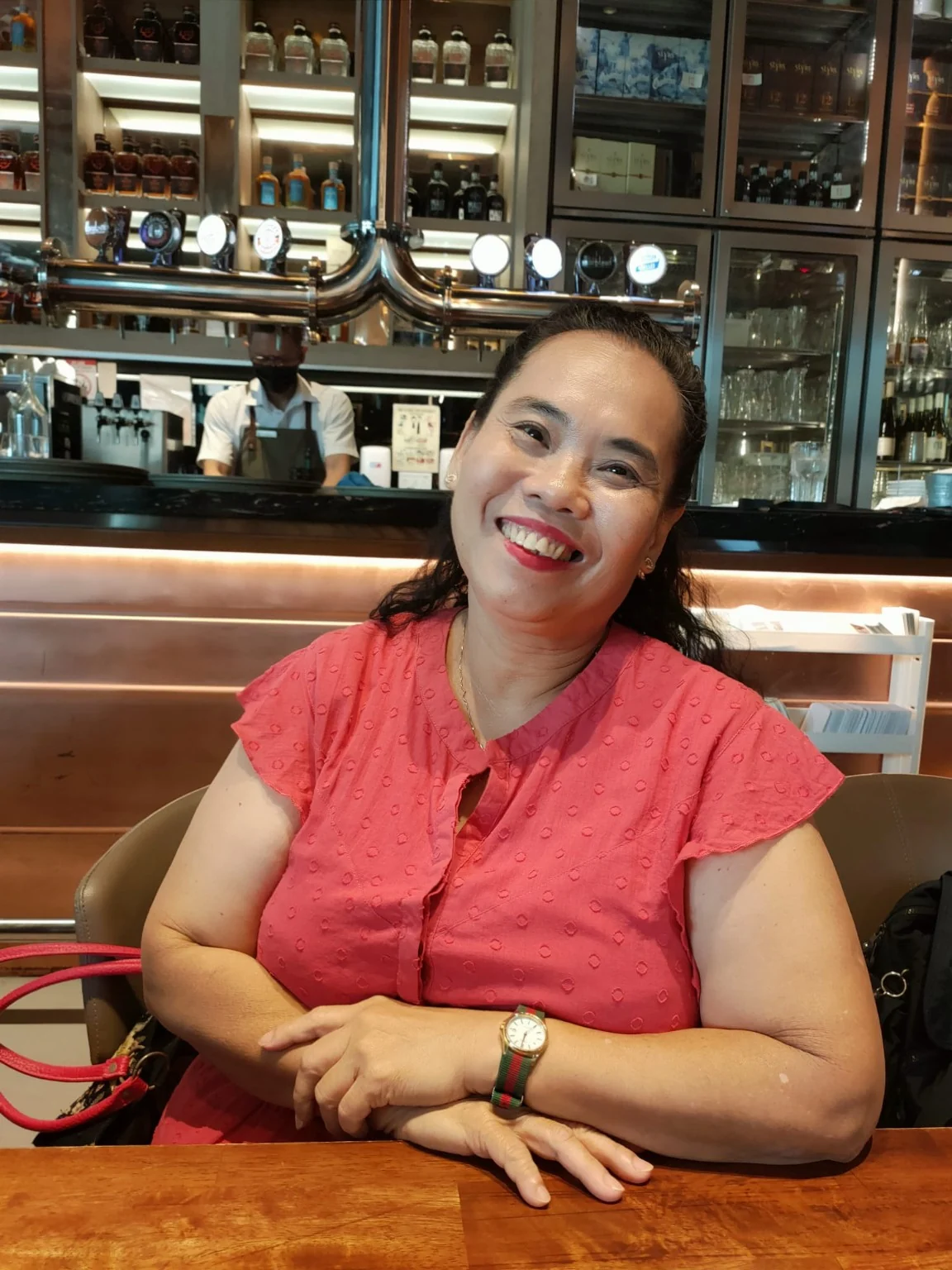
The woman behind the pancakes
“I focus on cleanliness.”
Auntie Bobo came to Thomson after working in food and beverage. She prepares meals, looks after kitchen hygiene and spends time with the children when she can. If a dish doesn’t go down as well as her pancakes, she asks the teachers what they noticed and talks with them about how she could improve it.
One of her favourite memories started with an idea of her own. She arranged for a Barney mascot to visit the preschool and remembers how happy the children were. It’s a glimpse of what she enjoys about her work here. She gets to know the children she cooks for, and they get to know her.
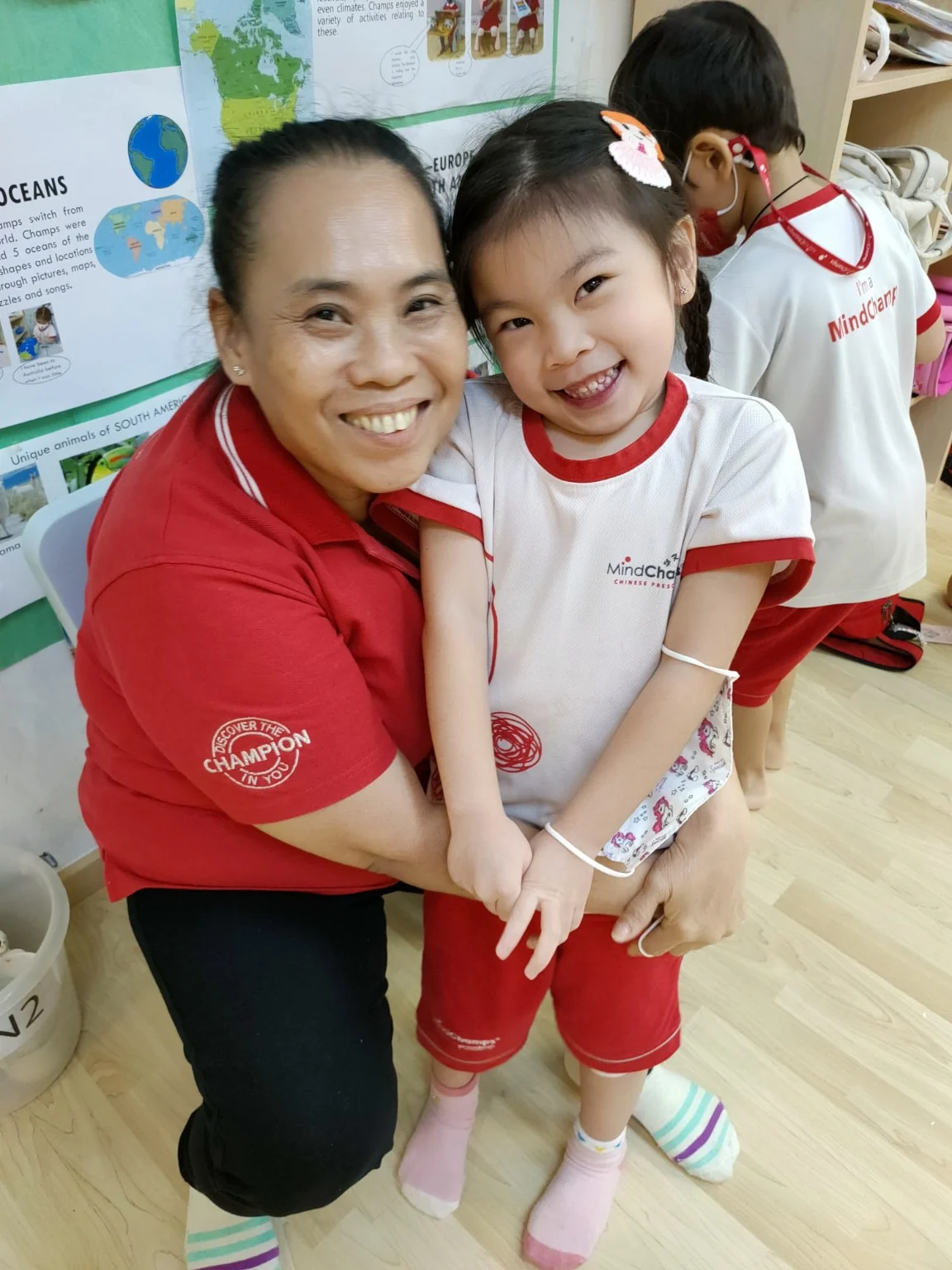
What children learn about food
A familiar dish can help a child look forward to mealtime. A varied menu gives them chances to become familiar with different foods and textures, whether that’s a grain, a vegetable, a fruit or a protein food such as tofu or eggs. A child who leaves a food on the plate today may need more time to get used to it. For Auntie Bobo, the teachers’ observations help her decide what she might prepare or serve differently next time.
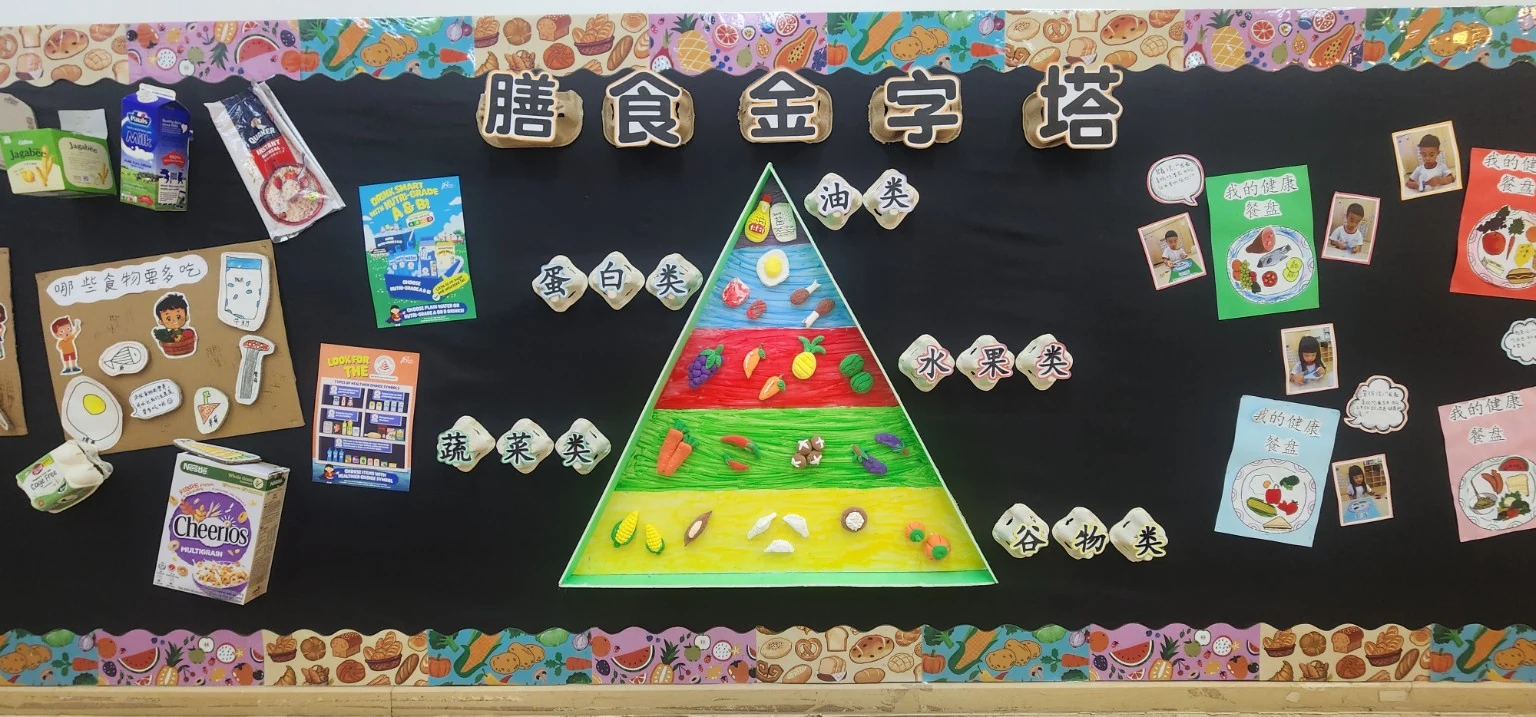
In the classroom, food becomes a way to learn Mandarin. The 膳食金字塔 (food pyramid) display names groups such as 蔬菜类 (vegetables), 水果类 (fruit) and 谷物类 (grains). Alongside it are the children’s 我的健康餐盘 (My Healthy Plate) drawings. A child can point to a familiar food, learn its Chinese name and recognise that word again at the table.
When Auntie Bobo needed the team
When Auntie Bobo was diagnosed with cancer and needed chemotherapy, the principal and management arranged flexible work so she could fit her schedule around treatment. Her boss checked in and offered encouragement, and her colleagues worked together to help her.
Today, Auntie Bobo is a cancer survivor. She remembers who stood by her and what it felt like to have colleagues she could count on. When asked what she wants parents to understand about her role, she talks about making sure every child is well fed and her hope that they grow up healthy.
独一无二的你 · You Are One of a Kind
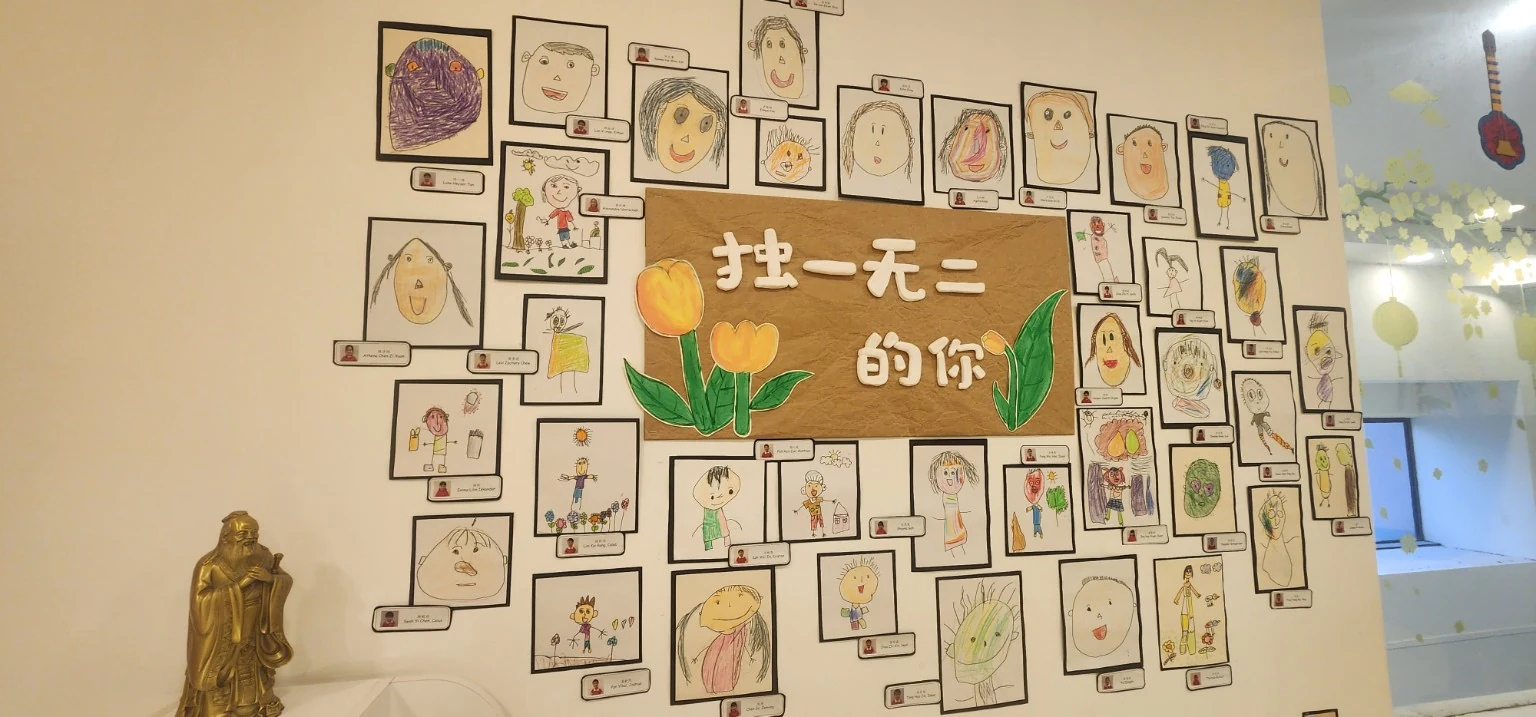
On another wall at Thomson, the children’s self-portraits surround the words 独一无二的你, or You Are One of a Kind. Each child has drawn themselves a little differently. The drawings give children a reason to find the words to tell someone what makes them, them.
That’s one way to picture a day in a Chinese preschool. A child might use Mandarin to name a food on their plate, then use it again to describe a detail in their drawing. At Thomson, Chinese is the main language of instruction in Playgroup and Nursery 1, with two enrichment exceptions. From Nursery 2 onwards, the programme is bilingual.
Values children can see from day one
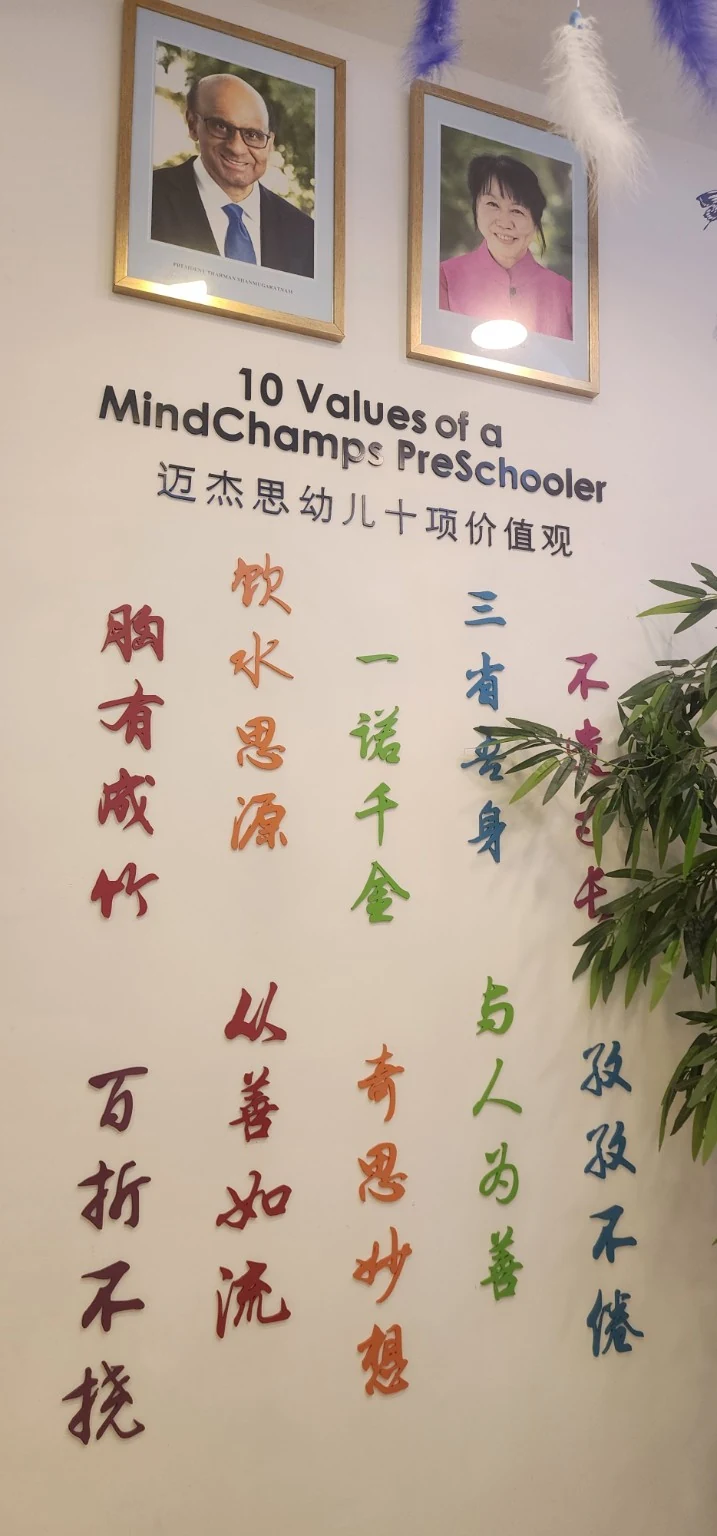
At Thomson, the “10 Values of a MindChamps PreSchooler” are written in Chinese calligraphy beneath portraits of President Tharman Shanmugaratnam and Ms Jane Ittogi. From a child’s first days at the centre, we want those words to have a meaning they can recognise in the way adults treat each other.
When Auntie Bobo asks teachers how she could make a dish better, she gives us an example of 从善如流, being open to good advice. When her team helped arrange work around treatment, they showed 与人为善, treating someone with kindness. When Auntie Bobo remembers the people who helped her, another phrase comes to mind: 饮水思源, remember the source of the good you’ve received.
At Thomson, we ask everyone to take responsibility for their role. Auntie Bobo does that when she checks the kitchen, listens to teachers and acts on what she learns. Our kitchen, classroom and office colleagues also come together at team-building events and company trips. Back at school, that relationship makes it easier to have the everyday conversations that improve a child’s experience.
Visiting the preschool from Thomson Road or Toa Payoh
MindChamps Chinese PreSchool @ Thomson is at 512A Thomson Road, #02-01, SLF Podium, Singapore 298137, near SJI International and within walking distance of Caldecott MRT (CC17/TE9). Caldecott connects the Circle Line and Thomson–East Coast Line.
- Thomson Road and Toa Payoh. If coming along Thomson Road, set your destination to SLF Podium. From the Toa Payoh side, use Caldecott MRT as a landmark and look for Exit 1 towards the SLF Building.
- Upper Thomson, Marymount and Bishan. Families comparing preschools in these areas can consider the train connection to Caldecott. Upper Thomson is on the Thomson–East Coast Line, while Marymount and Bishan connect via the Circle Line.
- Novena and Barker Road. These are nearby areas to consider if Thomson Road fits your home or work commute. Try the route at your usual drop-off time to see how it works for your family.
Ask the centre about the best entrance for your route, drop-off arrangements and school bus availability for your address.
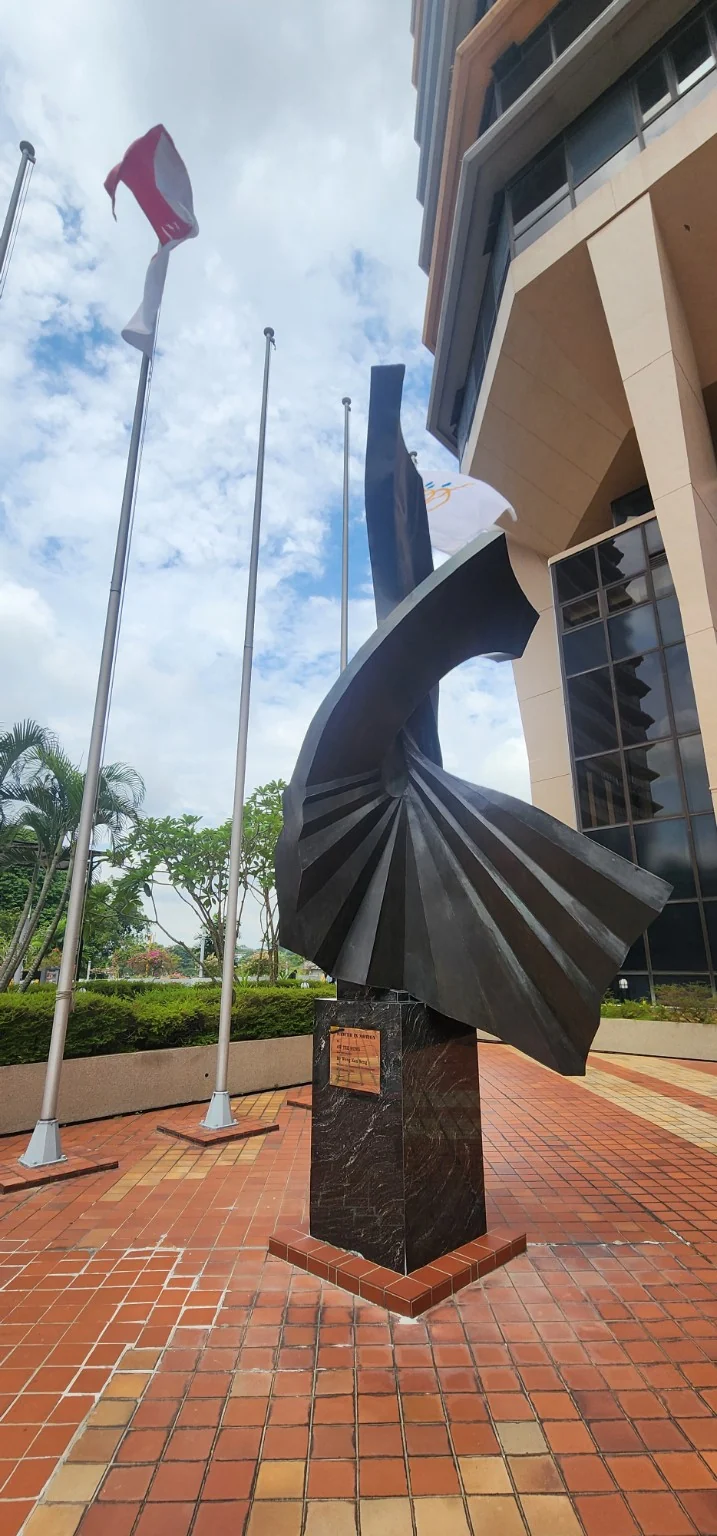
I like how the separate folds give the sculpture its sense of movement. It reminds me of Auntie Bobo’s story. A teacher shares what she noticed at lunch, Auntie Bobo tries a different way of preparing a dish, and when Auntie Bobo needed help, the people she worked with each did what they could.
Come and see a day at Thomson
If you’re comparing preschools around Thomson or Toa Payoh, ask the team what mealtimes look like, how Mandarin is used at your child’s level and which visit slot lets you see the children’s regular activities.
Keep reading Principal Jocelyn Goh’s story. Check programme details on the official MindChamps Thomson page and plan your train journey with the LTA rail network guide.
Have a question about Strategic Living, property guidance, active ageing, community initiatives, collaboration or speaking?
Message Andrew directly below.