
Archives February 2026

Zyon Grand Showflat showing the model

Introducing Zyon Grand: A New Benchmark in Luxury Living by CDL and Mitsui Fudosan – Andrew Koh

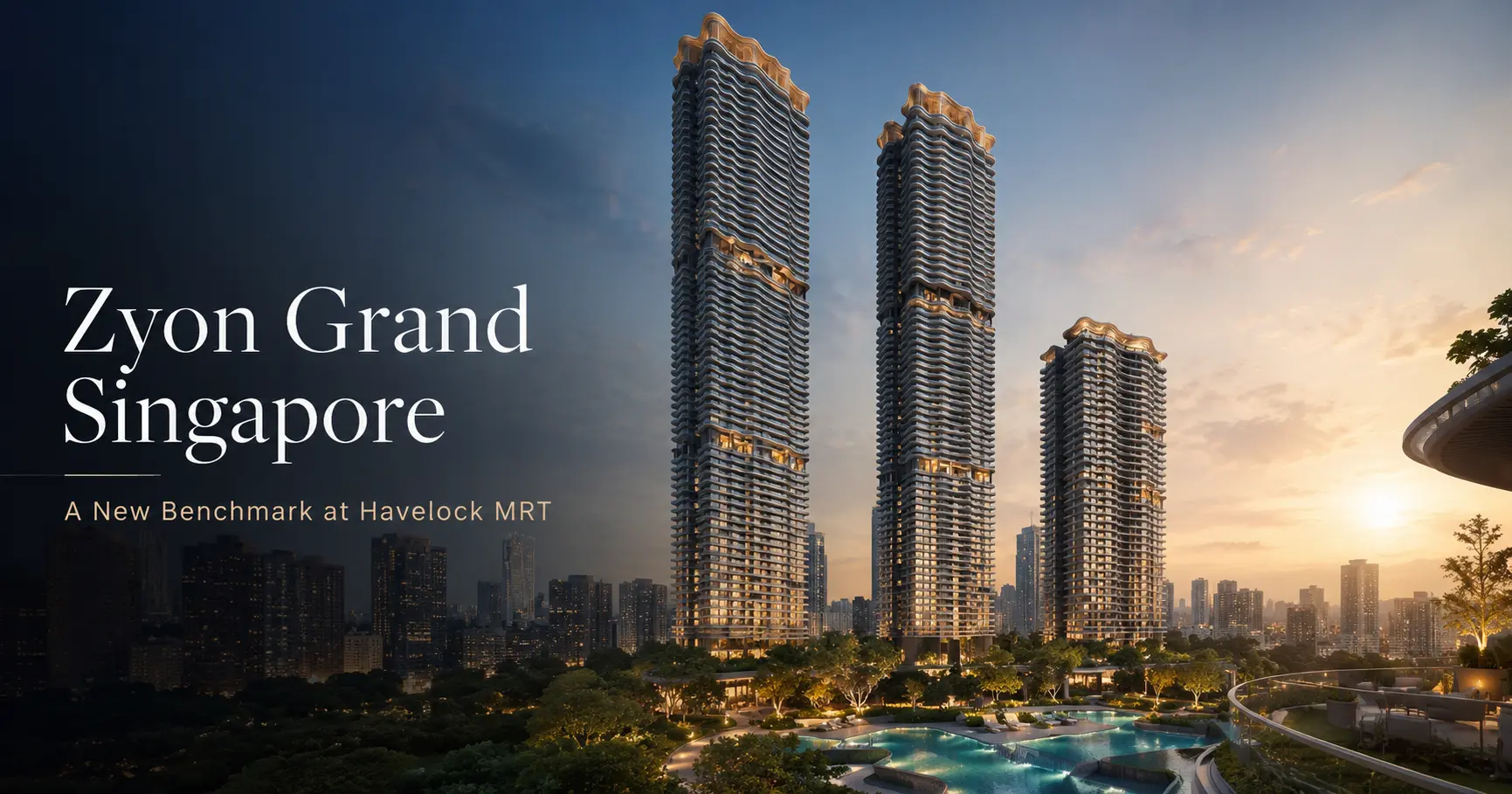
Zyon Grand Singapore: A New Benchmark in Luxury Living

When City Developments Limited (CDL) and Mitsui Fudosan come together to create a residential landmark, the conversation shifts from typical new launch excitement to something more substantive a recalibration of what luxury living means in Singapore’s evolving property landscape.

Zyon Grand Singapore represents this shift. Not as another addition to the luxury condo market, but as a deliberate statement about long-term value, strategic positioning, and the integration of property into broader life planning.

This isn’t about chasing the next hot launch. It’s about understanding why certain projects become reference points for decades to come.

Why Zyon Grand Signals a Shift in Singapore’s Luxury Property Landscape

The Partnership That Changes the Equation

The collaboration between CDL and Mitsui Fudosan isn’t merely a joint venture on paper. It’s the convergence of two philosophies that prioritize generational thinking over quarterly results.

CDL brings decades of Singapore market intelligence, an understanding of local aspirations, and a track record that includes some of the island’s most enduring addresses. Mitsui Fudosan contributes Japanese precision, long-term capital discipline, and a design sensibility that values timelessness over trends.

When developers of this caliber commit capital to a prime district project, they’re making a statement about Singapore’s trajectory not just for the next sales cycle, but for the next 20 to 30 years.

Zyon Grand showflat in Singapore

Beyond the Aesthetics: Brand Credibility as Foundation

Brand credibility in Singapore’s property market isn’t built through marketing campaigns. It’s earned through delivered quality, post-handover satisfaction, and the lived experience of residents years after TOP.

Zyon Grand by CDL carries the weight of institutional reputation. For multi-generational planners and strategic investors, this matters more than launch-day promotions. It’s the difference between buying a product and investing in a proven system.

Long-Term Positioning vs Short-Term Hype

Singapore’s property market has always rewarded patience and punished panic. Zyon Grand Mitsui Fudosan is positioned for the former.

This is a project designed with 2035 in mind, not 2026. The question isn’t whether it will appreciate in the next upturn that’s almost a given for prime district property with this pedigree. The question is whether it will remain relevant, desirable, and architecturally distinguished when the next generation inherits or upgrades.

That’s the benchmark conversation.

Strategic Location Analysis, More Than Just an Address

Connectivity as a Strategic Asset

Location analysis for luxury property investment Singapore goes deeper than proximity to MRT stations or schools. It’s about understanding nodal points places where infrastructure, commercial activity, and residential desirability converge and compound over time.

Zyon Grand Singapore sits within this convergence. The location offers immediate connectivity while benefiting from planned infrastructure that will further enhance accessibility in the coming decade.

For professionals who think in terms of life stages career progression, family expansion, eventual retirement planning this connectivity becomes a lifestyle multiplier, not just a convenience factor.

Surrounding Transformation: The 10-Year Lens

Prime district Singapore property appreciates not just because of scarcity, but because the surrounding ecosystem evolves upward. New commercial developments, upgraded transport links, cultural amenities, these aren’t random. They follow capital flows and planning intent.

The area surrounding Zyon Grand is on an upward trajectory that’s backed by both private investment and government planning. This isn’t speculative. It’s observable, documented, and playing out in real time.

Strategic property investment Singapore requires looking at these transformation patterns, not just current amenities.

Intergenerational Positioning: Thinking Beyond Ourselves

One of the most overlooked aspects of property selection is intergenerational relevance. Will this address still command respect in 2040? Will it age gracefully or become dated?

Zyon Grand by CDL is positioned in a district that has historically retained relevance across generations. The families who bought prime district property in the 1990s didn’t just preserve wealth they gave their children a foundation that appreciated in both capital and social terms.

This is the same conversation today.

Design Philosophy & Architectural Intent

Lifestyle Integration, Not Just Floor Plans

The design philosophy behind Zyon Grand Singapore goes beyond unit configurations and facility lists. It’s about creating an environment where daily routines become elevated experiences.

Luxury isn’t about marble lobbies. It’s about how space makes you feel when you return home after a demanding day. It’s about whether the design supports your family’s rhythms, work, rest, connection, privacy.

Mitsui Fudosan’s involvement brings a Japanese sensibility to spatial planning: efficiency without compromise, simplicity without sterility, and a deep respect for how people actually live, not how brochures imagine they live.

The Luxury Experience: Subtle, Not Showy

True luxury in 2025 isn’t about ostentation. It’s about thoughtfulness details that you don’t notice immediately, but can’t imagine living without once you experience them.

Acoustic separation. Natural light management. Material quality that ages beautifully. Service systems that anticipate rather than react.

This is where new launch condo Singapore projects often fall short. They prioritize launch appeal over long-term liveability. Zyon Grand takes the opposite approach.

Sustainability and Future-Proofing

Sustainability in luxury property isn’t a marketing checkbox. It’s a financial and lifestyle imperative. Buildings that aren’t designed for energy efficiency, climate resilience, and evolving environmental standards will face obsolescence faster than their owners expect.

Zyon Grand integrates sustainability as foundational infrastructure, not as add-on features. This matters for maintenance costs, resale value, and long-term regulatory compliance as Singapore tightens environmental building standards.

Future-proofing isn’t glamorous, but it’s what separates strategic assets from depreciating liabilities.

Who Should Consider Zyon Grand?

Multi-Generational Planners

If you’re thinking about property as a family cornerstone something that serves you now, accommodates your parents if needed, and eventually transfers to your children Zyon Grand Singapore fits this framework.

The location, developer credibility, and design longevity align with multi-generational holding strategies. This isn’t a flip play. It’s a family estate play.

Strategic Investors with 10+ Year Horizons

For investors who understand that prime district Singapore property is a wealth preservation tool, not a speculation vehicle, Zyon Grand represents institutional-grade residential real estate.

The profile here is clear: stable capital appreciation, rental resilience during downturns, and a tenant pool that values quality over price sensitivity.

This isn’t about maximizing rental yield in year one. It’s about holding an appreciating asset that performs across economic cycles.

Professionals Upgrading Lifestyle Strategically

Mid-career professionals who’ve accumulated wealth and are ready to upgrade from “good enough” to “right for the next 20 years” should evaluate Zyon Grand by CDL as part of their lifestyle architecture.

This is the upgrade that you make once not because you can’t afford to move again, but because you’ve found the equilibrium between location, quality, and long-term fit.

Families Thinking 10+ Years Ahead

Young families planning for school years, teenage independence, and eventual multi-generational living need property that adapts without requiring relocation.

Zyon Grand’s design flexibility, location stability, and brand backing make it suitable for families who want to plant roots, not just occupy space temporarily.

Luxury as Strategy, Not Status

Property as Part of Long-Term Life Design

The highest expression of property strategy isn’t owning the most expensive address. It’s owning the address that integrates seamlessly with your financial plan, family goals, and lifestyle evolution.

Zyon Grand Singapore fits into a broader conversation about how property serves life design not the other way around.

This means evaluating it not in isolation, but as part of your wealth allocation: how it complements your investment portfolio, supports your family’s needs, and aligns with your retirement timeline.

Integration with Wealth Preservation

For high-net-worth individuals and families, luxury condo Singapore purchases aren’t consumption decisions, they’re allocation decisions.

Prime district property serves as a hedge against inflation, a store of value during volatility, and a tangible asset that can be leveraged, rented, or passed down.

Zyon Grand Mitsui Fudosan checks the boxes that institutional investors use: developer strength, location scarcity, design quality, and long-term demand fundamentals.

Alignment with Future Planning

The question isn’t just “Can I afford Zyon Grand?” It’s “Does Zyon Grand align with where I’m going?”

If your next 10 years involve career advancement, family expansion, and wealth consolidation, this project positions you for that trajectory.

If you’re thinking about retirement planning, rental income sustainability, or legacy building, the fundamentals are equally strong.

Strategic conversations begin with clarity. If you’re evaluating Zyon Grand as part of your long-term property strategy, reach out for a structured discussion.


Andrew Koh
Strategic Property Advisory
WhatsApp: +65 8717 8000
CEA-licensed (R018334F). Long-term thinking. Singapore context.

Singapore skyline at dusk, reflecting the city's blend of heritage, modern living and long term growth

Singapore Real Estate Evolution: Blending Human Connection with Cutting-Edge Technology to Redefine the Market

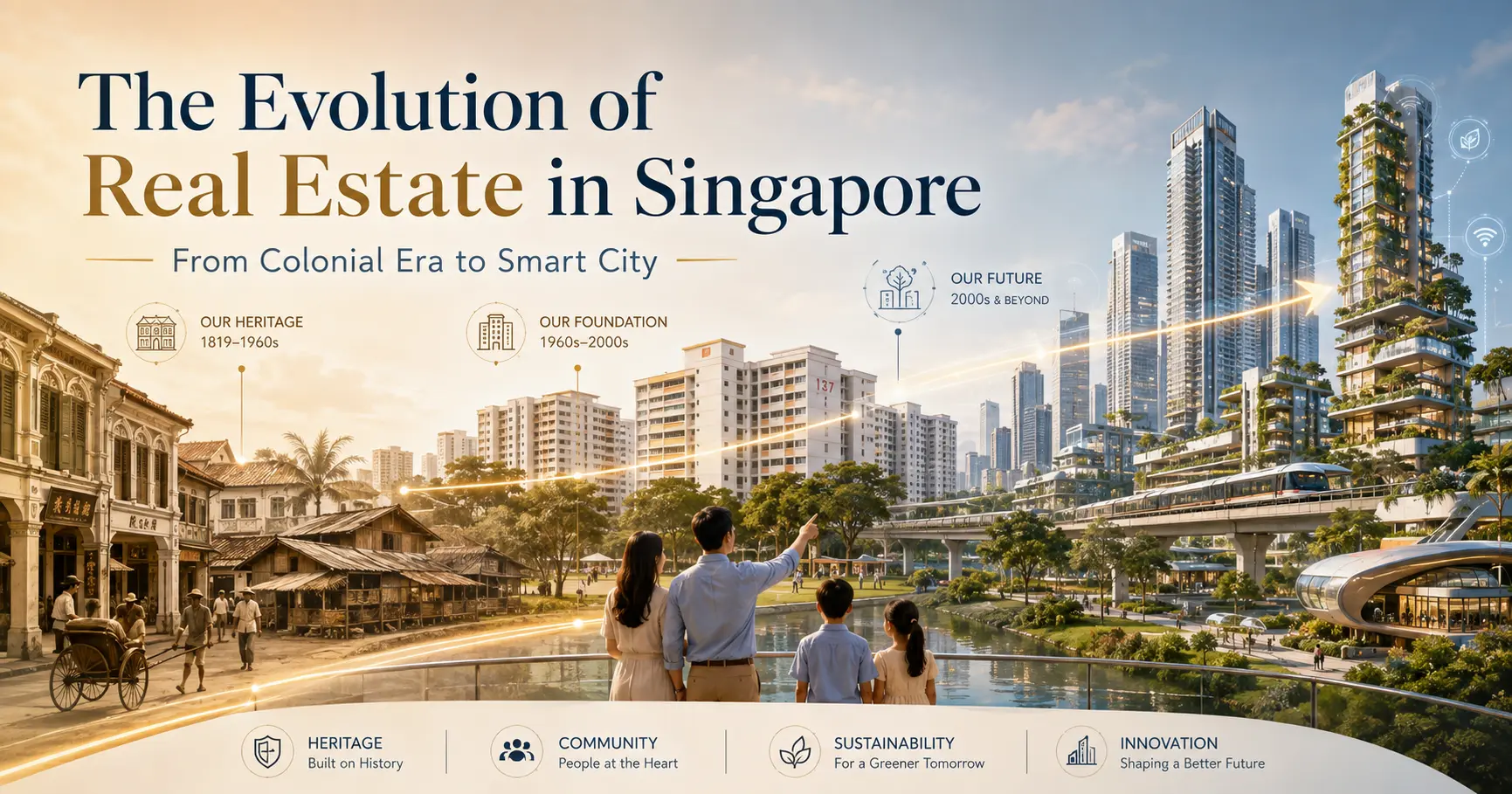
The Evolution of Real Estate in Singapore: From Colonial Era to Smart City 

Singapore’s real estate landscape has undergone a remarkable transformation over the decades, mirroring the city-state’s rapid economic growth and urban development. From humble beginnings as a strategic trading port to becoming a global property hub, the evolution of real estate in Singapore offers fascinating insights into visionary urban planning, progressive policies, and dynamic market forces. Today’s market is vastly different from the past—traditional methods of simply listing properties and waiting for buyers no longer suffice. Success now hinges on a strong human connection combined with technology-driven insights and rapid, precise collaboration.

Early Beginnings: Colonial Era and Post-War Development 

In the early 19th century, Singapore was a strategic trading port under British colonial rule. Real estate was primarily concentrated around the port and the central business district, with colonial-style shophouses and warehouses dominating the skyline. Residential areas were limited, and much of the population lived in kampongs (traditional villages) or simple terrace houses.

After World War II, Singapore faced severe housing shortages due to rapid population growth and urban migration. The government took decisive steps to address these challenges, marking the beginning of large-scale public housing initiatives that would fundamentally reshape the nation’s real estate landscape.

The Rise of Public Housing: HDB’s Transformative Role 

The Housing & Development Board (HDB), established in 1960, revolutionized Singapore’s real estate sector by providing affordable, quality public housing to the masses. HDB flats, built with efficiency and durability in mind, helped eradicate squatter settlements and dramatically improved living standards for millions of Singaporeans.

Over the decades, HDB estates evolved from basic housing blocks into vibrant, self-contained neighborhoods complete with essential amenities like schools, parks, healthcare facilities, and shopping centers. This integrated approach fostered strong community bonds and created a uniquely Singaporean living experience that remains the foundation of the nation’s housing success story.

Private Property Market: Luxury, Innovation, and Growth 

Parallel to public housing development, Singapore’s private property market flourished, particularly from the 1980s onwards. The government introduced carefully calibrated policies to regulate the market, ensuring sustainable growth while preventing speculative bubbles that plagued other Asian economies.

Singapore became internationally renowned for innovative architecture and integrated developments that seamlessly combine residential, commercial, and recreational spaces. Iconic projects like Marina Bay Sands, the Pinnacle@Duxton, and Reflections at Keppel Bay exemplify the city-state’s architectural ambition and design excellence, attracting global investors and establishing Singapore as a premier real estate destination.

The Digital Transformation: Technology Reshaping Real Estate 

With over 36,058 salespersons operating in Singapore today, competition in the real estate industry is fierce. Leading property portals such as PropertyGuru, 99.co, EdgeProp, and SRX are continuously evolving to stay relevant by integrating advanced data analytics, virtual tours, AI-powered property matching, and user-friendly platforms.

The role of real estate agents is fundamentally shifting from traditional commission-based salespeople to service-oriented advisors who prioritize client needs. Modern agents leverage technology to provide personalized, efficient, and transparent experiences—combining CRM systems, market analytics, and digital marketing tools with the irreplaceable human touch that builds trust and long-term relationships.

Smart Urban Planning and Sustainability 

In recent years, Singapore has embraced smart urban planning and environmental sustainability as core pillars of real estate development. The Urban Redevelopment Authority (URA) focuses on creating liveable, green, and well-connected spaces that enhance quality of life while minimizing environmental impact.

Key initiatives include stringent green building standards (Green Mark certification), smart home technologies, vertical greenery integration, and efficient public transportation links seamlessly connected with residential and commercial developments. These forward-thinking approaches position Singapore as a global leader in sustainable urban development.

Challenges and Future Outlook 

Despite its impressive successes, Singapore’s real estate market faces ongoing challenges including land scarcity, housing affordability concerns, an aging population, and changing demographic preferences. The government continues to implement cooling measures to maintain market stability and explores innovative solutions such as underground developments, reclaimed land projects, and higher-density mixed-use developments.

Looking ahead, Singapore aims to balance continued growth with enhanced quality of life. The future of real estate lies in leveraging artificial intelligence, blockchain for property transactions, advanced building technologies, and sustainable practices to maintain the nation’s status as a global real estate leader while ensuring homes remain accessible to all Singaporeans.

Key Takeaways: Singapore’s Real Estate Journey 

Visionary planning matters: From HDB’s establishment to URA’s masterplans, strategic government intervention shaped Singapore’s property success.

Public-private balance: The coexistence of affordable HDB housing and premium private developments creates a comprehensive real estate ecosystem.

Innovation drives growth: Architectural excellence and integrated developments distinguish Singapore in the global property market.

Technology transforms the industry: Digital platforms, data analytics, and service-oriented agents define modern real estate practice.

Sustainability is essential: Green building standards and smart urban planning ensure long-term livability in a land-scarce environment.

Adaptation is continuous: From colonial shophouses to smart homes, Singapore’s ability to evolve keeps its real estate sector competitive.

Core insight: The evolution of real estate in Singapore is a testament to visionary planning, technological adaptability, and resilience—transforming a small island into a dynamic, sustainable metropolis where real estate remains a vital pillar of growth and innovation.

Bridging Tradition and Innovation: The Human-Tech Partnership 

As Singapore’s real estate market continues its digital transformation, an important question emerges: Will technology replace the human element that has long defined successful property transactions? The answer lies in understanding that technology and personal connection are not opposing forces but complementary strengths. While advanced platforms can analyze thousands of data points in seconds, they cannot replicate the empathy needed to understand a family’s dream home or the trust required to navigate complex negotiations. Smart agents recognize this balance—using AI to identify the best properties while leveraging their relationship skills to guide clients through emotional decisions. This synergy between innovation and human values represents the true evolution of Singapore’s real estate sector, where efficiency meets emotional intelligence, and where data-driven insights enhance rather than diminish the personal advisory role that clients value most.

Wrapping Up with Key Insights 

Human connection remains central: Trust, empathy, and personalized service continue to define successful real estate transactions, with technology serving to strengthen—not replace—meaningful client relationships.

Tech-powered transformation: AI-driven analytics, virtual reality tours, blockchain transactions, and Big Data are streamlining processes, improving transparency, and enabling smarter decision-making for buyers, sellers, and investors.

Smart and sustainable living: IoT-enabled smart homes and eco-friendly green developments reflect Singapore’s commitment to innovation and environmental sustainability in urban living.

Data-driven advantage: Advanced analytics provide accurate property valuations, demand forecasting, and investment insights, empowering both consumers and real estate professionals to make informed decisions.

Balancing challenges: While issues like data privacy concerns and digital inequality exist, Singapore’s strong regulatory frameworks and educational initiatives help ensure inclusivity, security, and trust across the market.

The future outlook: The fusion of human values with cutting-edge technology is setting new global benchmarks—making Singapore’s real estate market more customer-centric, efficient, transparent, and future-ready.

Core insight: Singapore’s real estate evolution demonstrates that the most successful approach combines the best of both worlds—leveraging technology for efficiency and insights while maintaining the irreplaceable human touch that turns transactions into trusted relationships and houses into homes.