Scams in Singapore:
When Trust Becomes the Trap
Scams are no longer only phone calls. They can begin from a video, a fake ad, a WhatsApp group, a Telegram chat, a job offer, a “sure win” investment, or a message that makes someone feel they are missing out.
Scams are not only about money. They are about fear, urgency, false trust, secrecy and emotional pressure. The safest response is simple: pause, check, verify, and never rush into a transfer.
Why even educated adults can still be scammed
People do not fall into scams only because they are careless. Many scams are designed to target normal human behaviour: fear, hope, loneliness, greed, trust in authority, family pressure, social proof and the fear of missing out.
In today’s digital world, scammers can appear through social media videos, fake investment groups, online advertisements, messaging apps, fake websites, fake apps and impersonation messages. A professional-looking video or platform does not automatically mean it is safe.
Fear
“Your account is frozen.” “You are under investigation.” Fear pushes people to act before thinking.
Urgency
“Act now.” “Limited time only.” Urgency removes the space needed for proper verification.
False Trust
“I am from the bank.” “I am from the police.” Real verification must happen through official sources.
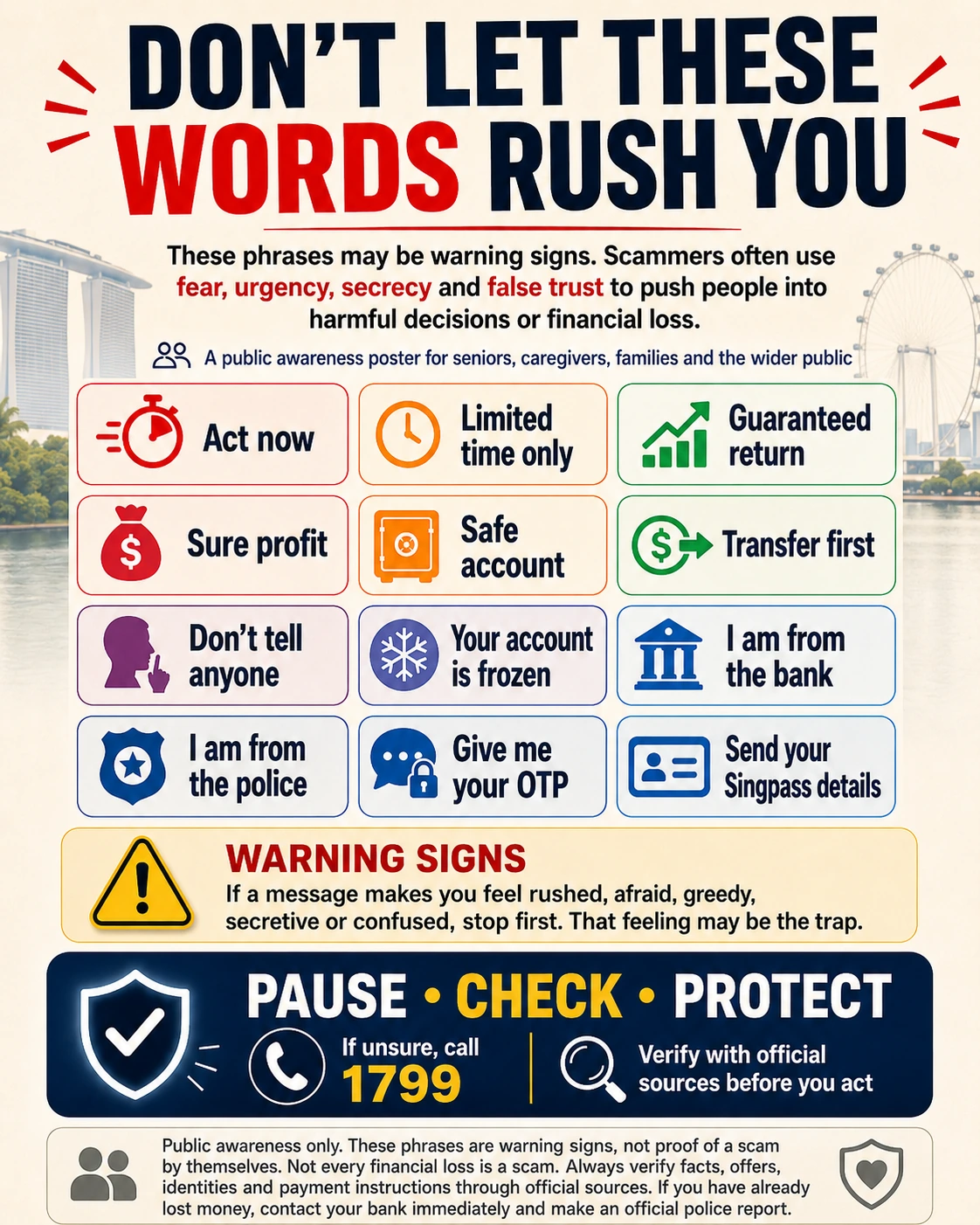
Trap words that should make us pause
These phrases are not proof of a scam by themselves. But when they appear together with pressure, secrecy, payment requests or unusual instructions, they should be treated as warning signs.
WARNING SIGNS
If a message makes you feel rushed, afraid, greedy, secretive or confused, stop first. That feeling may be the trap.
Scams, bad investments and the line between risk and deception
Not every financial loss is a scam. A poor investment outcome, market downturn or unexpected crisis is not automatically fraud. The important difference is whether there was deception, impersonation, concealment of material facts, dishonest inducement or pressure to transfer money without proper verification.
This distinction matters especially in property and investment discussions. Responsible planning means understanding both risks and red flags without turning every loss into an accusation or ignoring real deception when it occurs.
PAUSE • CHECK • PROTECT
If unsure, call the ScamShield Helpline
1799Verify with official sources before you click, transfer, invest or believe.
CHECKAndrewKoh.sg does not replace official agencies. This page is created as an independent public-awareness guide to help readers navigate trusted resources, recognise warning signs and make calmer decisions.
Have a question about Strategic Living, property guidance, active ageing, community initiatives, collaboration or speaking?
Message Andrew directly below.