

From Buffet Tables to Supermarket Aisles: Active Ageing, One Grocery Trip at a Time

Health & Movement • Active Ageing

From Buffet Tables to Supermarket Aisles: Active Ageing, One Grocery Trip at a Time

We often think active ageing begins in the gym, at the clinic, or during a health screening. But sometimes, it begins somewhere quieter in the supermarket aisle, in the wet market, and in the simple act of choosing what we bring home.

Some people see grocery shopping as a routine chore.

I no longer do.

Over the years, I have come to realise that where we shop, what we buy, and the habits we build around food may quietly shape how we live and how we age. What looks ordinary on the surface may actually reveal something much deeper about our knowledge, our discipline, our lifestyle, and even our future health.

For me and my family, grocery shopping is not just about filling the fridge. It is part of our routine, part of our bonding, and part of the way we care for ourselves. Whether it is NTUC FairPrice, Sheng Siong, Cold Storage, Giant, Little Farms, Huber’s or the wet market, we still prefer to go in person. We seldom do online grocery shopping because we believe there is still something meaningful about seeing, touching, comparing, and choosing for ourselves.

Perhaps that is why grocery shopping has become more than an errand to me.

It has become a quiet lesson in living.

Packaged bananas displayed for sale at a supermarket produce section
Fresh avocados displayed in crates at a supermarket produce section

My family and I have always loved food. We enjoy buffets too, from Marina Bay Sands, Hilton, Hyatt, Ritz-Carlton, St Regis, Parkroyal, Conrad, Paradox, InterContinental, Grand Copthrone and Shangri-La to more familiar places like Swensen’s. We have enjoyed the variety, the atmosphere, and the beauty of seeing so many cultures of taste brought together in one place.

I am blessed to have good cooks in our family, and even some close friends who are wonderful cooks too. Food has never just been about eating. It has been about warmth, care, sharing, hospitality, memory, and love.

I have always loved spicy food, especially Peranakan flavours, as well as Mediterranean and Italian cuisine. But over time, I have noticed a change in myself. Today, I naturally turn more towards vegetarian choices, more greens, and more fruits than before. These are now the foods I increasingly prefer. Perhaps age teaches us that enjoyment and wisdom do not have to compete. They can grow together.

Packaged fresh strawberries displayed in clear plastic containers at a supermarket
Fresh pineapples displayed in protective foam sleeves at a supermarket

And over time, I have also come to see food differently.

Beyond the indulgence, a buffet reminds me that every dish begins somewhere. Behind every beautiful spread is the same foundation: ingredients, groceries, preparation, and choices. Before food becomes presentation, flavour, and enjoyment, it begins quietly in the market, in the supermarket aisle, and in the hands of someone deciding what to bring home.

That thought stayed with me.

If we love to eat, perhaps we should also learn to choose wisely. Perhaps we should build the habit of buying better, cooking more, and understanding more deeply what goes into our bodies. Eating out is part of life, and there is joy in it. But I have also seen enough to know that when health begins to change, food is no longer only about taste.

One important lesson I have learnt from nutritionists and dietitians is the value of reading nutritional information and ingredients properly. It is not enough to look only at the front of a package or be attracted by branding and marketing. We need to understand what is really going into the stomach and, over time, into the body.

Sugar levels, sodium, fats, additives, preservatives, and ingredient lists all matter more than many people realise. The label at the back often tells a more truthful story than the words at the front.

Nutrition facts and ingredients label on wafer crackers packaging

What goes into the trolley often goes into the stomach, and what goes into the stomach may shape health over time.

That awareness has changed the way I look at food.

It has taught me that what we eat is not just about filling hunger. It is about understanding what we are feeding our body with, what we are asking our digestive system to process, and what kind of long-term support or burden we may be creating for ourselves.

For many facing health struggles, food must be viewed through another lens. It becomes about comfort, tolerance, digestion, inflammation, energy, and support. A person may still want to enjoy food, but now has to ask harder questions. Can I take this? Will this worsen my condition? Is this nourishing me, or only satisfying me for a moment?

That is where awareness begins.

I have met enough people facing health challenges to know that the freedom to eat easily should never be taken for granted. Some can no longer tolerate the foods they once loved. Some must avoid certain textures. Some must reduce sugar, salt, oil, processed foods, or certain ingredients altogether. Some discover that even a simple meal now requires careful thought.

That is why I have come to respect food differently.

Food is not only pleasure.
It is support.
It is memory.
It is culture.
It is healing for some.
And for others, it becomes a daily challenge.

The more I observe, the more I feel that active ageing is not built only through exercise, movement, and health screenings. It is also built quietly, one grocery trip at a time.

One particular encounter stayed with me.

We were standing in the aisle, comparing pasta sauces and looking through the different options, when a voice from behind suddenly said, “Barilla is the best.”

Barilla pasta sauces and other jarred sauces displayed on supermarket shelves

We turned around and met a friendly and eloquent lady who shared that she had worked on a cookbook for Mrs Lee. She spoke with the calm confidence of someone who truly understood food, not in a loud or showy way, but with the ease of someone deeply familiar with ingredients, flavour, and quality. She even pointed us towards a canned item that was not easily found elsewhere.

It was such a simple exchange, but it stayed with me.

Sometimes, the supermarket becomes more than a place of transaction. It becomes a place where knowledge is shared, where taste is refined, and where unexpected human encounters leave a quiet but lasting impression.

That day reminded me once again that grocery shopping is not a small thing.

It is part of how people live.

It is part of memory.

It is part of culture.

It is part of health.

It is part of ageing well.

When I look at the foods I am drawn to now, ginger, avocados, bananas, strawberries, pineapples, olive oil, simple sauces, and ingredients that allow us to prepare meals at home, I realise I am not just choosing what to eat for today. I am also choosing the kind of support I want to give my body over time.

Fresh ginger roots displayed in mesh bags at a supermarket produce section
Bertolli olive oil bottles displayed on a supermarket shelf

This does not mean life must become rigid or joyless. It does not mean we can never enjoy a buffet, never eat out, or never indulge in what we love. It simply means that with age and experience, we begin to see that our repeated choices matter more than we think.

Health is rarely shaped in one dramatic moment.

It is shaped quietly, repeatedly, and often invisibly, in what we buy, what we cook, what we ignore, what we learn, and what we normalise over the years.

That is why I believe a person’s knowledge, perception, and lifestyle may influence much about their later health. The one who only chases taste may one day be forced to chase tolerance. The one who learns balance earlier may perhaps stand a better chance of ageing with greater strength, dignity, and awareness.

As I grow older, and as I continue meeting people from all walks of life, I find myself looking at the supermarket differently.

It is no longer just a place to shop.

It is a place of observation.

A place of choice.

A place of discipline.

A place of culture.

A place of reflection.

And perhaps, for many of us, it is also one of the places where active ageing quietly begins.

From buffet tables to supermarket aisles, I have come to believe that the roots of health often begin with what we choose to bring home.

Share this reflection

If this story speaks to you, share it with someone who values ageing well.

Where My Running Journey Began: Sundays at Botanic Gardens and Taman Serasi

Health and Movement

Where My Running Journey Began: Sundays at Botanic Gardens and Taman Serasi

A reflective return to Singapore Botanic Gardens where childhood Sunday jogs, family ritual, teh tarik, roti John, and today’s kopi kosong come together in a story about memory, discipline, ageing, and carrying forward a culture of movement.

Featured image: White swan on calm water at Singapore Botanic Gardens, a quiet reminder that movement, stillness, and reflection can coexist.

Some places remain with us not only because they are beautiful, but because they quietly helped shape who we became. For me, Singapore Botanic Gardens is one of those places.

Since the age of seven, Sunday mornings there had already become part of my life. I would jog with my uncle and my dad, and afterwards we would head to the old Taman Serasi Hawker Centre just outside the Gardens for teh tarik and, at times, roti John. At that age, I did not think about discipline, endurance, or active ageing. I only knew that this was part of our rhythm, part of our routine, and part of a memory that felt simple and good.

National Orchid Garden entrance at Singapore Botanic Gardens
Returning to Singapore Botanic Gardens always feels like returning to a place that has quietly shaped memory, movement, and reflection across the years.

Looking back now, I realise those mornings may have given me more than fond childhood memories. They may well have helped build the foundation for my long-distance running, and for the 800m and 1500m events that I later came to dominate during sports day. What felt ordinary then was quietly preparing me for something greater.

Long before I understood training, discipline, or active ageing, Botanic Gardens had already become part of my foundation.
Learning Forest emblem on the pathway at Singapore Botanic Gardens
Some paths do more than guide our steps. They quietly invite us into memory, movement, and reflection.

Where movement first became memory

There is something powerful about early exposure to movement. Not harsh training. Not pressure. Just consistent activity, repeated over time, rooted in family and familiarity. In many ways, that is how lasting habits are formed. Before we even call it exercise, it becomes a way of life.

Today, things have changed. The teh tarik of those younger days has changed to kopi kosong. But in many ways, I am still carrying forward the same culture, a culture of movement, routine, discipline, and quiet reflection. What began as Sunday jogs with my uncle and dad has remained with me through the years, even as age, habits, and perspective have changed.

Welcome to the Learning Forest sign at Singapore Botanic Gardens
Returning now, I see Botanic Gardens not only as a place of beauty, but also as a place of memory, learning, and quiet reflection.

Slowing down enough to notice

Returning to Botanic Gardens now feels different. The beauty is still there. The calm paths, the towering trees, the quiet greenery, the reflective waters, and the sense of stillness in the middle of a fast-moving city. Yet what has changed most is my perspective.

As we grow older, we often begin to notice what we once walked past too quickly. The Gardens reward those who slow down enough to notice the smaller details, where even a simple plant display or a sign about stingless bees can become part of the learning journey.

Plant display with ginger-like roots in the Learning Forest at Singapore Botanic Gardens
The Gardens reward those who slow down enough to notice not only beauty, but also usefulness. Ginger has long been traditionally appreciated for its comforting qualities, from helping to ease bloating to bringing warmth and relaxation through a simple foot bath.
Stingless bees sign in the Learning Forest at Singapore Botanic Gardens

Most of us know bees by their sting, yet here in Singapore Botanic Gardens I was reminded that nature is often more nuanced than we think. Stingless bees, small and easily missed, became another quiet detail rewarding those willing to slow down and observe.

Rain forest sign and path at Singapore Botanic Gardens
Some paths do more than lead us through nature. They lead us back into memory, reflection, and a quieter pace of life.

Ageing, discipline, and the importance of maintenance

In youth, movement often feels natural. The body responds quickly, recovers quickly, and carries us with a certain ease. As we age, that changes. When I jog now, I know it is no longer what it was in my twenties.

That realisation is not discouraging. It is clarifying. It reminds me that if we stop training, the body will naturally slow down with age. That is why maintaining movement matters. It is no longer only about performance. It is about discipline, function, and lifestyle. To maintain is not to settle for less. To maintain is to respect the body and to keep showing up.

That is also why I believe movement must remain part of life, just as strength training should remain part of life. Jogging, walking, and strength work each have their place. One supports endurance and cardiovascular health. The other helps preserve muscle, stability, and function. Both become increasingly important as we grow older.

Elderly woman resting on a bench at Singapore Botanic Gardens
A quiet moment in the Gardens reminded me that ageing well is not only about movement, but also about finding peace, breath, and dignity in green spaces like these.

During this visit, I noticed an elderly woman seated quietly, simply enjoying the fresh green surroundings. It was a simple sight, but a meaningful one. It reminded me that places like these are not only for exercise or sightseeing. They are also spaces where one can slow down, breathe, reflect, and age with grace.

Age may change our pace, but it should not take away our discipline to keep moving.

Foundations, continuity, and carrying the culture forward

Perhaps that is why places like Botanic Gardens matter so much. They are not only green spaces. They are spaces where memories are formed, values are passed on, and foundations are quietly built. A child may simply see a morning outing. Only later does he realise he was learning consistency, endurance, and the importance of movement without even knowing it.

Today, I return with older eyes. I see not just a beautiful place, but a part of my own beginning. A place where family, discipline, and movement came together long before I understood their full meaning. A place that reminds me that health is not built only through ambition, but through repetition, routine, and a willingness to keep moving across the years.

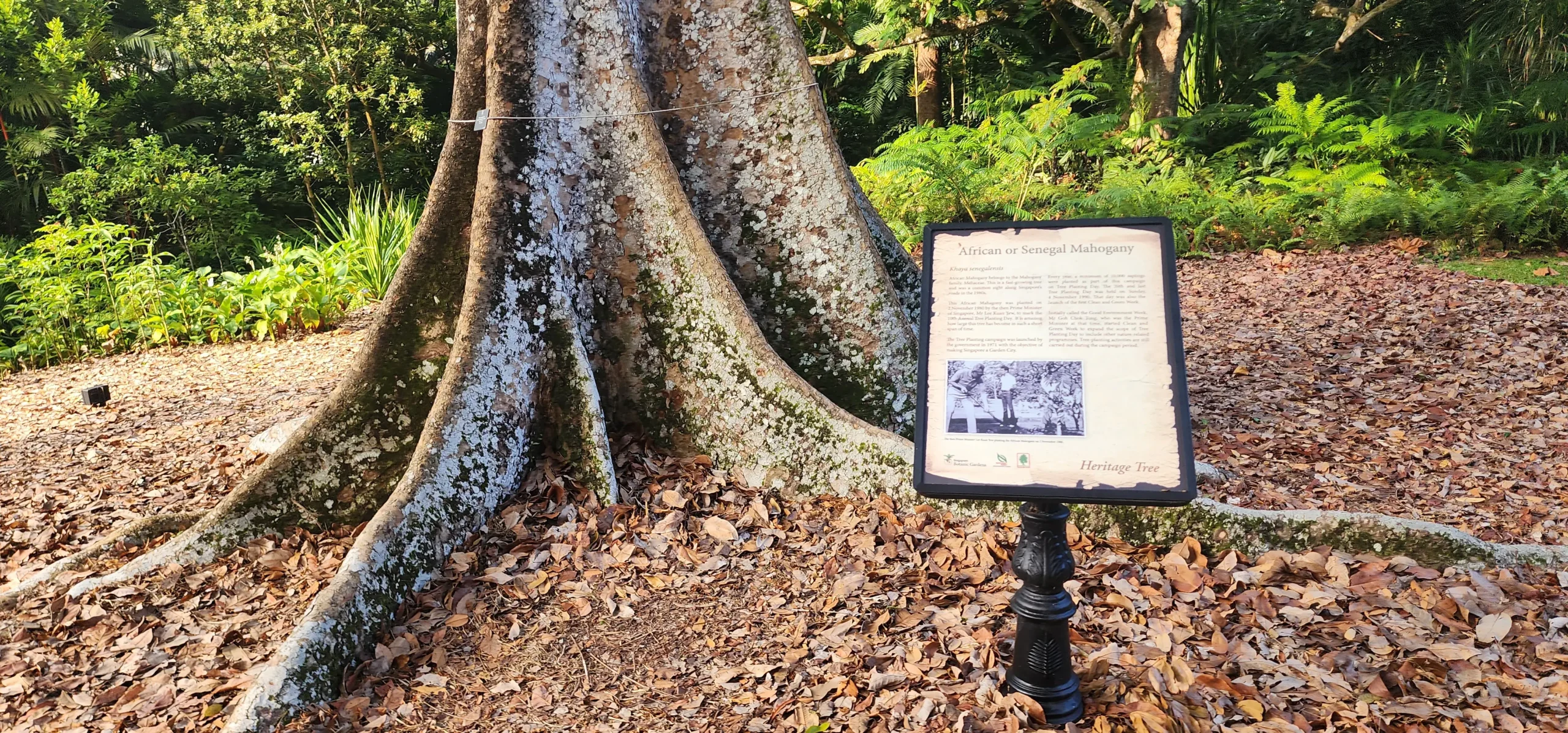
Heritage tree sign in the Learning Forest at Singapore Botanic Gardens
Some foundations endure quietly through time. So do the values, habits, and disciplines that shape a life.
Strangling fig in the Learning Forest at Singapore Botanic Gardens
Nature does not stand still, and neither do we. Growth, adaptation, and endurance are part of every stage of life.

The body may no longer move like it did in youth. But that is precisely why discipline matters. Sometimes, the strongest foundations in life begin with something simple, a Sunday jog with family, teh tarik and roti John at Taman Serasi in younger days, and kopi kosong, roti prata with eggs in the present, all part of a culture I continue to carry forward.

Forest boardwalk steps in the Learning Forest at Singapore Botanic Gardens
The journey continues not always with the speed of youth, but with the discipline to keep moving forward.

Some places stay with us not only because they are beautiful, but because they quietly helped shape who we became. For me, Singapore Botanic Gardens is one of those places. What began as childhood Sunday jogs with my uncle and dad, followed by teh tarik and roti John at Taman Serasi, has become something deeper over time a culture of movement, routine, reflection, and discipline that I still carry forward today.

The drink may have changed from teh tarik to kopi kosong. The body may no longer move with the ease of youth. But the rhythm remains. And sometimes, that is what matters most.

Botanic Gardens Singapore Botanic Gardens Learning Forest Health and Movement Active Ageing Running Taman Serasi Teh Tarik Roti John Kopi Kosong Discipline Nature Walk

Share this reflection

If this story on movement, memory, and active ageing resonated with you, share it with someone who may appreciate a quieter reminder to keep moving.

Follow Andrew Koh Singapore

Stay connected for more reflections on health and movement, heritage and community, and strategic living in Singapore.

Mandai Boardwalk: A Walk Through Nature, Memory and Wellness

Health and Movement

Mandai Boardwalk: A Walk Through Nature, Memory and Wellness

What began for many Singaporeans as childhood memories of the zoo now feels like something larger, a place where walking, greenery, wildlife and intergenerational movement come together in a more restorative and meaningful way.

Like many Singaporeans, some of my earliest memories of Mandai were tied to family visits to the zoo. Back then, the outing was simple: go there, see the animals, enjoy the experience, and head home with those images staying in your mind for years.

Returning today, Mandai feels very different. It no longer feels like just a zoo destination. It now carries the atmosphere of a larger integrated nature precinct, where wildlife, public spaces, greenery, family-friendly design and movement all seem to come together in one setting.

We completed the walk from the start all the way to the exit towards River Wonders, and what stayed with me was this: the experience was not only scenic. It quietly became a story about health and movement.

Health does not always need to begin in a gym. Sometimes it begins with a walk that invites the body to move, the mind to slow down, and the senses to reconnect with nature.

Why This Walk Felt Different

There was something restorative about the entire route. The boardwalk, the reservoir, the thick greenery, the changing light and the sense of openness made movement feel natural rather than forced. It did not feel like exercise in the strict sense. It felt like a return to something more basic and sustainable: walking, breathing, observing and simply continuing forward.

I also noticed how the space welcomed different generations. I saw young schoolchildren on the route, families moving at their own pace, and even seniors walking the stretch. That, to me, is what makes a place meaningful from a health and movement perspective. A good movement space is one that does not exclude. It is accessible, inviting and able to support people across different stages of life.

In that sense, Mandai Boardwalk is more than a leisure path. It is a gentle public reminder that movement can still be simple, inclusive and closely connected to place.

Photo Story

Schoolchildren walking along Mandai Boardwalk beside the reservoir and dense greenery
Seeing schoolchildren on the boardwalk was a quiet reminder that meaningful movement spaces can nurture curiosity, health and connection with nature from a young age.
Lush courtyard garden at Mandai Wildlife Reserve with greenery, pond and walkways
The lush courtyard shows how Mandai has evolved into more than a wildlife destination, blending greenery, design and movement into one shared experience.
Upper Seletar Reservoir view from Mandai Boardwalk with calm water and surrounding greenery
The calm waters of the reservoir gave the walk a restorative quality, turning simple movement into a moment of reflection.
Mandai Rainforest Resort by Banyan Tree nestled across the reservoir amid dense greenery at Mandai Wildlife Reserve
Looking across the reservoir, I could not help but wonder what it must feel like to wake up each day facing jungle, water and stillness, a different rhythm of living shaped by nature.
Take-a-picture spot overlooking Upper Seletar Reservoir at Mandai Boardwalk A small photo point along the boardwalk, inviting visitors to pause, take in the reservoir view and enjoy the walk a little longer.

A More Integrated Mandai

For those who remember older Mandai, the change is striking. The area now feels more cohesive, more thoughtfully connected, and in some ways closer to the scale of an integrated destination experience. Yet what makes it different is that the identity here is still rooted in nature.

Even the built spaces seem to soften into the landscape. The courtyards, elevated walkways, water views and dense planting all contribute to an atmosphere that encourages people to keep moving without feeling rushed. This is where the health and movement angle becomes especially meaningful. The environment itself does part of the work. It invites walking. It encourages pause. It lowers the mental resistance that people often feel toward exercise.

That is why this walk stayed with me. It was not only about distance covered. It was about how space, design and nature can shape healthier behaviour in a quiet and sustainable way.

More Moments From the Walk

Closing Reflection

For many of us, Mandai began as a childhood memory. Today, it offers something more. Not just a place to visit animals, but a place to rediscover movement, nature and wellness in a way that feels shared, accessible and quietly restorative.

What stayed with me most was not only the scenery, but the simple truth behind the experience: some of the best forms of exercise are not always the most intense, but the most sustainable walking, observing, breathing, reflecting, and simply continuing to move.

Mandai is no longer just about visiting animals. It is also about walking, wellness, reflection and rediscovering movement in a way that feels sustainable.

 
Share this article

Help this story reach more readers

Share this reflection on health, movement, heritage and purposeful living in Singapore. A meaningful article often travels further when one reader chooses to pass it on.

Link copied successfully.
Stay connected

Receive new reflections by email

Subscribe for thoughtful updates on health and movement, heritage and community, and purposeful living in Singapore.

By subscribing, you agree to receive occasional updates from AndrewKoh.sg. You may unsubscribe anytime.
Prefer social? Follow AndrewKoh.sg across platforms and share stories that speak to health, movement, heritage, community and purposeful living.

Why More Parents in Singapore Should Know About This Adaptive Fitness Initiative at Impact Hong Lim

Volunteers and participants at adaptive fitness session at Impact Hong Lim in Singapore

Know a parent, caregiver, or volunteer who should see this? Share this article.

Why This Adaptive Fitness Initiative at Impact Hong Lim Matters for Children With Special Needs and Their Parents

Sometimes, when we speak about health and movement, we think mainly about exercise in the usual sense strength, fitness, endurance, or performance. But for children with special needs, movement can mean something much deeper. It can be about participation, confidence, routine, encouragement, and being supported in an environment that is patient and inclusive.

This is one of the reasons I felt this initiative at Impact Hong Lim deserves more awareness.

Having returned to volunteer here over the years, I have come to see that what makes this place meaningful is not just the guided exercise programme itself. It is also the environment, the people behind the effort, and the heart of the initiative. Instructors and volunteers from different backgrounds come together to support children with special needs through movement in a structured and encouraging way. At the same time, parents are also given something meaningful a complimentary yoga session from 10.30am, which offers them a chance to relax, breathe, and experience a brief moment of respite.

To me, that is what makes this initiative especially thoughtful. It is not just about the child alone. It is about supporting the family too.

Health and movement should include every child

Movement should never be seen as something reserved only for those who fit the usual mould of fitness. Every child deserves the opportunity to move, participate, and be encouraged in a way that respects their needs and abilities.

For children with special needs, the right environment can make a great difference. A supportive space with patient guidance can help movement become less intimidating and more meaningful. It becomes a place where effort is recognised, progress is celebrated, and participation matters.

This is why adaptive fitness initiatives are worth paying attention to. They remind us that health and movement should be inclusive, and that every child deserves a space where they are seen and supported.

The benefits of guided exercise for children with special needs

From what I have observed, guided exercise in a supportive setting can offer important benefits for children with special needs.

It can help support movement, coordination, body awareness, and confidence. It can also encourage routine, participation, and social interaction. Just as importantly, it creates a setting where children are not left to struggle alone. They are guided, encouraged, and given the opportunity to engage at their own pace.

Not every child progresses in the same way, and not every benefit can be measured quickly or visibly. But sometimes, even the willingness to participate, to try, or to return again is already meaningful progress.

That is why I believe such programmes matter. They are not simply about exercise for the sake of exercise. They are about creating opportunities for development, confidence, and inclusion through movement.

Group of volunteers and participants at adaptive fitness programme in Impact Hong Lim Singapore

Why the environment and people make a difference

A programme is only as meaningful as the people and environment behind it.

At Impact Hong Lim, what stood out to me was not just the space itself, but the energy of the people involved. There is a sense that those behind the sessions genuinely want to make a difference. Instructors, organisers, and volunteers from all kinds of backgrounds step forward to create a setting that feels encouraging and welcoming.

That matters.

For children with special needs, the human side of the environment is often just as important as the exercise itself. The patience shown, the guidance given, and the willingness to meet each child where they are can make all the difference to how a session feels.

Sometimes, the success of a session is not only found in what was done physically, but in whether the child felt supported, included, and willing to come back again.

Supporting parents matters too

What also touched me about this initiative is that it does not only think about the child.

It also recognises the parent or caregiver.

Many parents of children with special needs carry responsibilities that are physical, emotional, and ongoing. Much of this is not always seen by others. Their days can be shaped by routines, appointments, constant supervision, and a level of care that rarely pauses.

This is why I found the complimentary yoga session for parents from 10.30am especially meaningful.

While their children are engaged in the guided exercise programme, parents are given an opportunity to pause, stretch, breathe, and relax. To some, that may sound like a small thing. But for caregivers, even a brief period of respite can mean a lot.

Sometimes, care must include the caregiver too.

To me, this is one of the most thoughtful aspects of the initiative. It acknowledges that supporting the child and supporting the parent should not be seen as separate matters. When parents are given space to reset, even briefly, that too is part of a healthier support system.

Wide group photo of adaptive fitness participants and volunteers at Impact Hong Lim Singapore

More than just a fitness space

Another interesting aspect of Impact Hong Lim is that it is not defined by only one community.

It is also known as a training space where many come to build strength and prepare for fitness challenges such as HYROX. Yet within the same space, there is also room for adaptive fitness, inclusion, and community care.

That says something meaningful.

It shows that a fitness environment does not have to be exclusive to one type of person or one style of training. A truly strong community can hold different needs, different journeys, and different purposes under one roof.

That, in itself, is a powerful message.

Why I wanted to raise awareness

I started volunteering in this space a couple of years ago, and one of the reasons I keep coming back is because of the meaning behind it.

Sometimes, we come across initiatives that quietly do important work without enough awareness. This feels like one of them.

More parents in Singapore with children who have special needs may benefit simply from knowing that such a place and initiative exist. A place where guided exercise, support, patience, and community come together. A place where volunteers and instructors show up with heart. And a place where parents, too, are given a moment to breathe.

That is why I felt this was worth highlighting.

Closing reflection

Sometimes, the value of a health and movement initiative is not just in the exercises being done. It is found in the environment being created, the encouragement being given, and the care shown to both the child and the family.

At Impact Hong Lim, what I observed was more than a session. I saw an initiative that supports children with special needs through guided movement, while also recognising the importance of respite for parents through a complimentary yoga session from 10.30am.

In a society where many families quietly carry heavy responsibilities, such thoughtful efforts deserve to be seen, appreciated, and shared.

Sometimes, raising awareness is the first step in helping the right family discover the right place.

Know a parent, caregiver, or volunteer who should see this? Share this article.

Top Fitness Routines to Keep You in Good Health

Top Fitness Routines to Keep You in Good Health: A Complete Guide

Maintaining good health requires consistent physical activity and a well-rounded fitness approach. Discover the top fitness routines that deliver maximum health benefits and help you build a stronger, healthier body.

1. Cardiovascular Training for Heart Health

Regular cardio exercises are fundamental fitness routines for keeping your cardiovascular system strong. Running, cycling, swimming, and brisk walking improve heart function, lower blood pressure, and reduce the risk of chronic diseases. Aim for at least 150 minutes of moderate-intensity cardio weekly to maintain optimal health.

2. Strength Training for Longevity

Strength training is one of the most important fitness routines for good health at any age. Lifting weights, using resistance bands, or performing bodyweight exercises builds muscle mass, strengthens bones, and boosts metabolism. Include 2-3 strength sessions per week to preserve muscle as you age and maintain functional fitness.

3. Flexibility and Stretching Exercises

Yoga, Pilates, and dedicated stretching routines enhance flexibility, improve joint mobility, and prevent injuries. These gentle fitness routines reduce muscle tension, alleviate back pain, and promote better posture—essential components of good health and quality of life.

4. High-Intensity Interval Training (HIIT)

HIIT has become one of the top fitness routines for busy individuals seeking maximum health benefits in minimal time. These efficient workouts alternate intense exercise bursts with recovery periods, improving cardiovascular endurance, burning stubborn fat, and enhancing insulin sensitivity.

5. Low-Impact Workouts for Joint Health

Swimming, water aerobics, elliptical training, and walking are excellent low-impact fitness routines that protect your joints while delivering significant health benefits. These activities are perfect for beginners, older adults, or anyone managing joint concerns.

6. Core Strengthening Exercises

A strong core is essential for good health, supporting proper posture, preventing lower back pain, and improving balance. Incorporate planks, bridges, and Pilates-based movements into your fitness routine to build a stable, functional core.

7. Balance and Stability Training

Often overlooked, balance exercises are crucial fitness routines for preventing falls and maintaining independence as you age. Tai chi, single-leg exercises, and stability ball workouts enhance coordination and proprioception.

Creating Your Personalized Fitness Routine

The best fitness routine for good health combines multiple exercise types. Start with 3-4 weekly sessions mixing cardio, strength, and flexibility work. Listen to your body, progress gradually, and stay consistent. Remember, the most effective fitness routine is one you’ll stick with long-term.

Health Benefits of Regular Fitness Routines

Committing to these top fitness routines provides comprehensive health benefits including improved cardiovascular health, stronger muscles and bones, better mental health, enhanced immune function, quality sleep, and increased energy levels throughout your day.

Wrapping Up with Key Insights

Balance is key: A mix of cardio, strength, and flexibility exercises supports overall health and performance.

HIIT for efficiency: Short, intense workouts maximize calorie burn and endurance gains in less time.

Low-impact options matter: Swimming and brisk walking provide accessible, joint-friendly choices for all fitness levels.

Consistency drives results: Regular, varied routines keep workouts engaging, boost energy, and build long-term wellness.

Core takeaway: Staying active daily with diverse, enjoyable routines is the most effective way to sustain a healthier lifestyle.

Community Building Through Mindful Living 

Community Building Through Mindful Living: Creating Connection in Modern Singapore 

In today’s fast-paced and increasingly fragmented world especially here in bustling Singapore. The concept of community building has gained renewed significance for our well-being. Throughout my journey working with seniors and diverse communities across Singapore, I’ve witnessed firsthand how community building combined with mindful living creates powerful connections that enhance relationships, promote empathy, and nurture collective wellness.

The Essence of Community Building: What I’ve Learned 

At its core, community building is about creating spaces where people feel genuinely valued, heard, and supported. In my work facilitating senior wellness programs and community initiatives, I’ve learned that building strong communities involves intentional efforts to cultivate trust, collaboration, and mutual respect.

The key elements I always emphasize include open and honest communication, shared goals that unite us, genuine inclusivity that welcomes everyone, and active participation from all members. A strong community becomes more than just a group, it transforms into a vital support system offering emotional, social, and practical resources that help each member thrive.

Mindful Living: The Foundation for Authentic Connection 

Mindful living has become central to my approach in working with communities. It emphasizes awareness, presence, and intentionality in our everyday actions and interactions. I encourage individuals to be fully engaged in each moment, to listen deeply without judgment, and to respond thoughtfully rather than react impulsively.

This practice has profound effects: it fosters genuine empathy, reduces unnecessary conflict, and enhances our ability to regulate emotions. When community members practice mindfulness together as I’ve seen in my senior wellness classes they become more likely to appreciate diverse perspectives, communicate with authentic kindness, and contribute positively to the group dynamic.

The Powerful Connection Between Mindful Living and Community Building 

Through years of facilitating community programs in Singapore, I’ve observed how mindfulness strengthens communities in specific, measurable ways:

Enhanced Communication: Mindfulness helps individuals listen actively and speak thoughtfully. In my classes, I’ve watched how this simple shift strengthens understanding and dramatically reduces misunderstandings within the community.

Increased Empathy: By cultivating self-awareness and compassion, mindful living encourages members to genuinely appreciate others’ experiences and challenges. This creates naturally supportive environments where people feel safe to be vulnerable.

Constructive Conflict Resolution: Mindfulness promotes calmness and mental clarity, enabling communities to address conflicts constructively and find common ground. I’ve mediated many situations where mindful breathing alone transformed tense moments into opportunities for understanding.

Inclusivity and Acceptance: Being present and non-judgmental helps communities embrace diversity authentically. In Singapore’s multicultural landscape, this is particularly powerful mindfulness helps us create inclusive spaces where everyone feels welcome regardless of age, background, or ability.

Collective Well-being: Mindful practices contribute significantly to individual mental and emotional health, which in turn supports the resilience and vitality of the entire community. Healthy individuals build healthy communities.

Practical Steps I Use to Foster Community Building Through Mindful Living 

Based on my experience conducting wellness programs across Singapore, here are proven strategies that work:

Encourage Mindful Communication: I actively promote practices such as active listening exercises, reflective speaking circles, and intentional pauses during conversations. These simple techniques enhance clarity and deepen connection among participants.

Create Mindfulness Spaces: In my classes and community gatherings, I establish quiet areas or dedicated moments for meditation, reflection, or simple breathing exercises. Even five minutes can transform group energy.

Host Workshops and Events: I regularly organize sessions focused on practical mindfulness techniques, emotional intelligence development, and exploring shared community values. These create safe spaces for learning and growth.

Cultivate Shared Rituals: I help communities develop meaningful traditions that emphasize presence and gratitude whether it’s starting meetings with a moment of silence or ending classes with appreciation sharing. These rituals strengthen collective identity.

Lead by Example: As a facilitator, I embody mindful behavior in every interaction, setting a tone of respect, patience, and genuine attentiveness. I’ve learned that communities mirror the energy their leaders bring.

Real Impact: What I’ve Witnessed in Singapore Communities 

The transformation I’ve seen in Singapore’s senior communities through mindful living practices has been profound. Participants who initially felt isolated or lacked confidence have blossomed into engaged, supportive community members. I’ve watched strangers become friends, skeptics become advocates, and individuals discover renewed purpose through meaningful connection.

One participant told me, “Andrew, for the first time in years, I feel truly seen and heard.” That’s the power of mindful community building, it restores our fundamental human need for belonging.

Building Singapore’s Future Through Mindful Communities 

As Singapore continues to evolve as a bustling metropolis, the need for intentional community building becomes even more critical. Our fast-paced urban lifestyle can easily fragment us, but mindful living practices offer an antidote a way to slow down, connect authentically, and support one another.

My vision is to continue expanding these mindful community initiatives across Singapore, reaching not just seniors but people of all ages who seek deeper connection and purpose. Together, we can create neighborhoods and communities that are genuinely compassionate, resilient, and inclusive.

Key Insights from My Community Building Journey 

Community is intentional: Strong connections don’t happen accidentally they require conscious effort, commitment, and mindful practices.

Mindfulness transforms relationships: Simple practices like active listening and present-moment awareness dramatically improve how we relate to others.

Everyone benefits: Mindful community building enhances both individual well-being and collective resilience simultaneously.

Start small, think big: Even brief mindfulness moments during gatherings can spark significant positive changes in group dynamics.

Leadership matters: When facilitators and community leaders model mindful behavior, it naturally spreads throughout the group.

Inclusivity is essential: Mindful, non-judgmental awareness helps communities embrace diversity and create truly welcoming spaces.

Well-being is collective: Individual mental and emotional health directly impacts community vitality we thrive together or struggle together.

Core message from Andrew Koh: Community building through mindful living is more than just a strategy or program, it’s a way of being that honors our fundamental interconnectedness as human beings. By integrating mindfulness into how we gather, communicate, and support one another, we create environments that are genuinely compassionate, resilient, and inclusive. This approach doesn’t just enhance individual well-being. It cultivates a shared sense of purpose and belonging that’s essential for thriving communities in modern Singapore and beyond. I’m honored to continue this mission, one mindful moment and meaningful connection at a time.


Andrew Koh leading senior community wellness and active ageing session in Singapore


Wrapping Up with Key Insights Key Insights

The Bigger Picture: Community building through mindful living is not a one-time effort but a lifelong practice that fosters belonging and collective well-being in an increasingly fragmented world.

Community thrives on connection: Intentional trust, respect, and inclusivity form the foundation of a supportive network.

Mindfulness strengthens bonds: Practicing awareness, empathy, and presence fosters deeper understanding and reduces conflict.

Synergy in action: When mindful living and community building merge, they create spaces where individuals feel safe, valued, and motivated to contribute.

Practical pathways: Small, consistent practices such as mindful communication, shared rituals, and reflective gatherings can transform groups into resilient, compassionate communities.