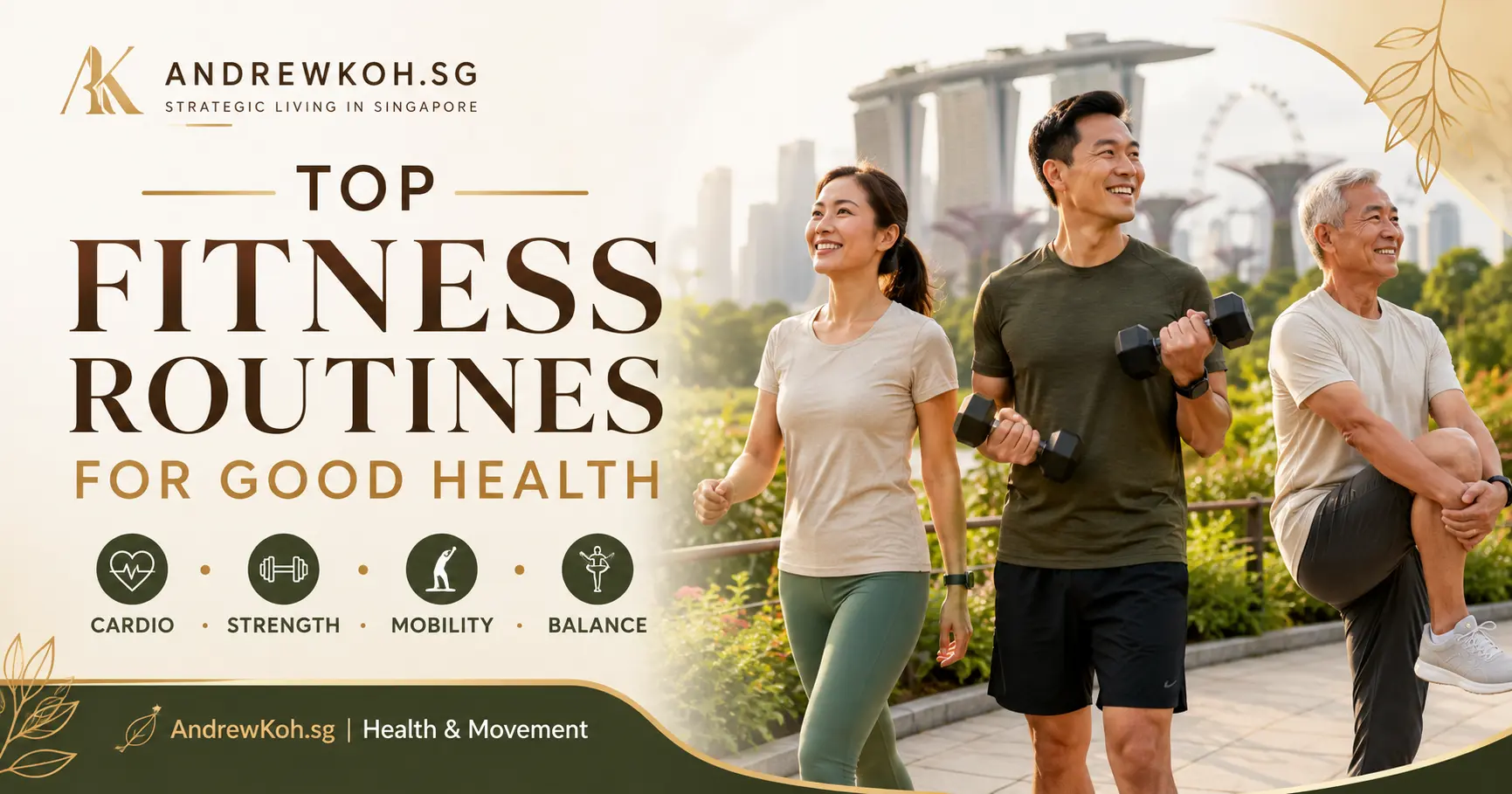
Fitness Is Independence
Seven evidence informed ways to build strength, balance, mobility and confidence for life, and why responsible fitness should begin with suitability rather than intensity.
At 20, fitness can feel like performance. At 40, it may become about energy, weight, strength or keeping up with work and family. Later in life, the questions can become much more personal.
That is the kind of fitness that matters for life.
My own relationship with fitness began through performance sport and bodybuilding. Over time, professional coaching changes the questions you ask. The conversation becomes less about how impressive an exercise looks and more about what a person needs their body to keep doing five, ten or twenty years from now.
That question matters in Singapore. The Ministry of Health says Singapore is projected to attain “super aged” status in 2026 and that by 2030, one in four citizens will be aged 65 and above.[1]
Living longer is an achievement. The next challenge is helping more people live those years with mobility, strength, social participation and as much independence as reasonably possible. This is why I see movement as part of Strategic Living, not simply as a workout.
Walking Matters. But Walking Alone Is Not the Whole Programme.
HealthHub recommends 150 to 300 minutes of moderate intensity aerobic activity per week and muscle strengthening on at least two days for adults.[3] Singapore’s guidance for older adults goes further: multicomponent physical activity should emphasise strength and functional balance on at least three days each week.[2]
The World Health Organization likewise recommends regular aerobic activity, muscle strengthening and, for older adults, multicomponent activity that emphasises functional balance and strength to support functional capacity and help prevent falls.[4]
Build the Physical Capacity That Everyday Life Requires
The goal is not to collect exercises. The goal is to build useful physical capacity that can transfer into daily living.
Build an Aerobic Base
Brisk walking, cycling, swimming and other aerobic activity can build stamina and cardiovascular capacity. A practical moderate intensity guide is the talk test: you can usually speak, but singing comfortably becomes difficult.[5]
Protect Your Strength
Strength contributes to standing from a chair, climbing stairs, carrying items, maintaining posture and controlling movement. Resistance can come from bodyweight, bands, dumbbells, machines or appropriately selected functional exercises.
Train Balance Early
Balance work can include supported narrow stance, tandem standing, weight shifting, stepping patterns and other drills matched to ability. HealthHub notes that regular exercise builds strength and improves balance as part of reducing fall risk.[6]
Maintain Mobility
Mobility helps us access movement. Strength helps us control it. Useful areas may include the ankles, hips, thoracic spine, shoulders and posture, depending on the individual.
Practise Functional Movement
Training can include sit to stand, stepping, carrying, reaching, pushing, pulling, getting down and up, turning and other tasks that resemble the demands of daily life.
Use Low Impact Options Intelligently
Walking, cycling, swimming, water exercise and chair supported work can be valuable for beginners, older adults or people who benefit from a more gradual starting point. Low impact does not mean low value.
Respect Recovery and Progression
Progress does not require every session to be maximal. Exercise volume, resistance, complexity, frequency and intensity can increase as capacity improves. Sustainable training challenges the body enough to adapt without making the programme unnecessarily difficult to maintain.
What about HIIT?
High intensity interval training can be useful for suitable individuals, but it is a training method rather than a universal requirement. The more important question is not whether HIIT is “good”, but whether that type and intensity of exercise is appropriate for the individual now.
UFitness Does Not Begin With a Workout. It Begins With Suitability.
The fitness industry often begins with the programme. UFitness tries to begin with the person: present activity, goals, exercise history, movement confidence, pain or limitations, relevant health changes, fall concerns and whether healthcare review may be appropriate before exercise is progressed.
This thinking is built into the UFitness Safe Start Fitness Pathway.
Readiness before intensity.
Suitability before selling.
Progression before pressure.
Start with goals, activity history and relevant safety considerations.
That may be gradual activity, professional guidance, further discussion or healthcare review.
When suitable, training can develop strength, balance, mobility and functional capacity over time.
Credentials Should Create Responsibility, Not Just Marketing.
The NTUC Freelancer Professional Directory currently lists Andrew’s fitness practice, qualifications, senior and active ageing focus and professional credentials.[7]
View independent professional profile →A certificate does not automatically make someone a good coach. But professional standards matter because exercise professionals make decisions involving technique, progression, risk recognition, communication and professional boundaries.
- ACE Certified Medical Exercise Specialist
- ACSM certified fitness professional
- Specialist Diploma in Sport Science and Wellness
- Professional Certificate in Community Care for Seniors
- NROC and NREP accreditation listed on the public professional profile
- Senior and active ageing focus including strength, balance, mobility and fall prevention programmes
What UFitness Is, and What It Is Not
Clear professional boundaries are part of responsible fitness practice.
UFitness supports
- Fitness coaching and movement education
- Strength and functional fitness
- Balance and mobility work
- Active ageing fitness
- Appropriate progressive exercise for suitable individuals
UFitness does not replace
- Medical diagnosis or treatment
- Physiotherapy or occupational therapy
- Medical rehabilitation
- Emergency assessment
- Healthcare clearance when it is clinically required
People with concerning symptoms, recent surgery or hospitalisation, severe dizziness, repeated falls, significant unexplained pain, unstable medical conditions or other substantial health concerns should seek appropriate healthcare advice before starting or materially changing an exercise programme.
Why This Is Also a Strategic Living Question
Physical capacity affects much more than gym performance. It can influence how confidently someone manages stairs, uses public transport, moves through the home, participates in community life and maintains everyday routines.
That is why health, movement, housing, caregiving and ageing can eventually meet at the same point: how well can we continue living with dignity, choice and confidence?
Explore the wider Strategic Living framework on AndrewKoh.sg, or visit UFitness.sg for dedicated fitness and active ageing resources.
Your First Step Does Not Need to Be a Fitness Package.
If you are considering exercise for yourself, an ageing parent or a family member, begin by understanding readiness and the most appropriate next step.
No pressure to choose a package first. Suitability and the appropriate next step come before progression.
Public Health and Professional References
- Ministry of Health Singapore. “Ageing in the community.” Current MOH information on Age Well SG and Singapore’s ageing outlook. Read source.
- Health Promotion Board / HealthHub. “Singapore Physical Activity Guidelines for Older Adults (65 Years & Above).” Guidance on aerobic activity, muscle strengthening and multicomponent strength and functional balance. Read guideline.
- HealthHub Singapore. “Aim for at least 150 Minutes of Physical Activity Every Week.” Adult recommendations for aerobic and muscle strengthening activity. Read source.
- World Health Organization. “Physical activity.” Recommendations and evidence relating to physical activity, health and older adults. Read source.
- HealthHub Singapore. “Physical Activity Is Key to Active Ageing.” Older adult activity examples and practical moderate intensity talk test guidance. Read source.
- HealthHub Singapore. “Healthy Ageing Hub: Preventing Falls.” Public guidance on exercise, strength, balance and fall risk. Read source.
- NTUC Freelancer Professional Directory. Public professional profile for Andrew Koh, including current listed qualifications, experience and fitness practice focus. View profile.
AndrewKoh.sg • Strategic Living in Singapore • UFitness.sg