Truths, Mystery and Memory: Why the National Gallery Singapore Still Fascinates Me
By Andrew Koh · Published

In Singapore, I have always been fascinated by truths, mystery and curiosity. Since young, I have loved exploring places that carry stories deeper than what the eye first sees. Over the years, the National Gallery Singapore has remained one of my favourite places for that reason. It is not just a gallery of art. To me, it is a place where architecture, memory, identity and community quietly meet, inviting us to look again at how Singapore became what it is today.
Each visit feels like stepping into layers of Singapore. The grand civic building, with its columns, stone facade and sense of weight, reminds me that this place once stood at the centre of public life. Today, it carries a different role, but no less meaningful. It is now a home for art, reflection and memory. That alone says something extraordinary about heritage in Singapore. We do not simply preserve old spaces and leave them behind glass. We give them new life, new purpose and new relevance.
One of the first works that immediately caught my attention was SINGAPORAMA by Navin Rawanchaikul, and I loved it the moment I saw it. It was impossible to ignore. Monumental in scale, vibrant in detail and full of life, it felt far more than an artwork hanging in a large space. Knowing that it is the largest artwork ever produced by Navin Rawanchaikul and his studio makes it even more remarkable. Created in less than six months, the monumental canvases were entirely hand-painted in a realist style, marked by meticulous detail and extraordinary scale. Complemented by video interviews and a travelogue film, the project reflects an immense collective effort, bringing together painting, moving image and storytelling in a way that feels both ambitious and deeply human.
Set against the grand facade of the National Gallery, SINGAPORAMA felt like a living collage of Singapore. The historic building behind it carried the weight of civic memory, while the artwork in front seemed to pulse with faces, stories, voices and shared experience. That contrast stayed with me. If the building preserves history in stone, SINGAPORAMA seems to preserve it in people. In that moment, it felt as though the past and present were speaking to each other one holding the structure of history, the other carrying the lived and breathing energy of community.
What moved me most about SINGAPORAMA was its collective spirit. Heritage is rarely created by one person alone. Community, identity and memory are built through many hands, many encounters and many lives. That is why this work felt so fitting within the National Gallery. It did not just impress visually. It expressed something essential about Singapore that our story is layered, collaborative and always larger than any one individual.
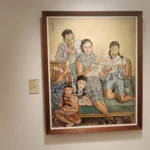
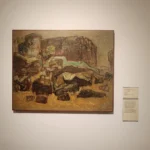

Over the years, I have probably lost count of how many times I have chanced upon the works of Xu Beihong, Georgette Chen, Chen Wen Hsi, Liu Kang, Lim Tze Peng and many others. Yet each encounter still feels fresh. There is something timeless about old art. I have always been drawn to that world, from classical paintings and calligraphy to abstract art that leaves room for thought, interpretation and feeling. Good art has a way of meeting you differently at different stages of life. What once looked beautiful may later feel meaningful. What once seemed distant may suddenly feel personal.
That is one reason why the National Gallery keeps drawing me back. It is not just about seeing artworks. It is about revisiting familiar names and finding new meaning in them each time. Art, to me, preserves more than beauty. It preserves mood, culture, memory and the quiet spirit of a people. In a fast-moving city like Singapore, these works remind us that our story was never built only through steel, policy and progress. It was also shaped through imagination, expression, struggle, tenderness and human observation.

One work that caught my attention again was Ng Eng Teng’s Mother and Child. There is something warm and enduring about it. Beyond its form, what fascinates me is that the sculpture itself has had a journey over the years. In some ways, that feels symbolic of heritage in Singapore too. Memory is not always fixed in one place. Sometimes it is carefully moved, preserved and given a new home, so that another generation can continue to encounter it afresh. A work like this reminds me that heritage is not static. It travels with us, and we continue to reinterpret it through time.

I was also drawn to the installations that showcased the conservation story of the Gallery itself. Looking at old photographs, restoration details and architectural elements, I was reminded that the National Gallery is not only a place that houses heritage. It is itself part of heritage. The former City Hall and old Supreme Court are not just impressive buildings. They are part of Singapore’s civic memory. Seeing how the space was carefully transformed deepened my appreciation for the idea that conservation is not merely about protecting walls, but about preserving meaning.
Even the wider experience of the Gallery adds to this sense of layered culture. The presence of heritage dining within the building, including Violet Oon’s restaurant, reinforces the idea that Singapore’s story is not only found in art and statehood, but also in food, memory and lived culture. In one space, architecture, art and culinary heritage quietly speak to one another.

Another part that stayed with me was the display of Singapore’s Constitution, state symbols and early nationhood materials. Standing before these exhibits, I felt that heritage was no longer only about culture and aesthetics. It became something deeper, about responsibility, belonging and the shared journey of nationhood. The Constitution, the state flag and the state crest were not just objects behind glass. They were reminders that Singapore’s identity had to be shaped, defined and carried forward with intention.
The section on citizens’ duties struck me too. In modern Singapore, we often speak about rights, convenience, progress and opportunity. Yet heritage also reminds us that citizenship carries responsibility. A nation does not become strong only through development and economic growth. It depends on whether people understand their role in society, whether they contribute, whether they care, and whether they choose to be part of something larger than themselves. That was a powerful reminder that community is not accidental. It is built.

One of the exhibits that moved me most was the electoral display linked to Singapore’s early self-government period. Looking closely, these were not merely old campaign posters and candidate sheets. They represented a generation of political figures standing at a defining point in our history, including those who would later be remembered among Singapore’s founding generation. What struck me was that before they became names etched into national memory, they were first candidates before the people, seeking trust at a time when Singapore’s future was still unfolding.
That made the experience feel deeply human. History often presents great figures as if they were always larger than life. But exhibits like these remind us that nationhood begins in very real and ordinary ways, through participation, responsibility, trust and choice. It begins with citizens who vote, leaders who step forward, and a society willing to shape its own destiny together. In that moment, heritage did not feel distant. It felt alive in the faces, decisions and uncertainties of the past.
Perhaps that is why the National Gallery Singapore continues to fascinate me after so many visits. It speaks to the part of me that has always been curious since young, always wanting to know more, look closer and uncover the stories beneath the surface. Every corner seems to reveal another truth, another question, another layer of memory. Sometimes it is found in an old master’s painting. Sometimes in a sculpture. Sometimes in a constitutional display, an election poster, a conservation installation or a monumental work like SINGAPORAMA that gathers people, memory and imagination into one visual field.
To me, the National Gallery is more than a favourite place to visit. It is one of those rare spaces in Singapore where art, history and nationhood do not feel separate. They come together and remind us that heritage is not just about the past. It is about how we see ourselves today, and what kind of community we want to continue building for tomorrow.
In a city that moves quickly, places like this matter. They slow us down. They ask us to remember. They invite us to reflect. And perhaps most importantly, they remind us that behind every institution, every milestone and every national symbol, there were always people, stories and shared hopes that made Singapore what it is.
That is why I keep returning.
A Quiet Reminder in Stone
Before leaving, I found myself looking up once more at the facade of the building. It was not only the grandeur of the columns or the weight of history that caught my attention, but something quieter. Looking closely, some parts did not seem fully reinstated. I took these photographs because that detail stayed with me.
To me, it felt like more than an architectural detail. It felt like a reminder. Not everything in heritage needs to be polished back into perfection. Sometimes, what remains visible speaks more deeply than what has been renewed. The building seems to carry memory in silence, reminding us that Singapore’s story was shaped not only by progress and success, but also by hardship, disruption and endurance. In a fast-moving city, such traces matter. They invite us to pause, reflect and remember that the past was not without scars. Perhaps that is one of the deeper meanings of heritage: not everything is meant to be erased. Some marks remain, so that memory can remain too.
And in that quiet reminder, the building still speaks of Singapore.


We use essential cookies to keep AndrewKoh.sg secure and working. With your permission, we also use analytics and third-party cookies to understand website use and improve your experience. Select Accept all, Reject or Choose preferences. You can change your choice at any time.
Have a question about Strategic Living, property guidance, active ageing, community initiatives, collaboration or speaking?
Message Andrew directly below.