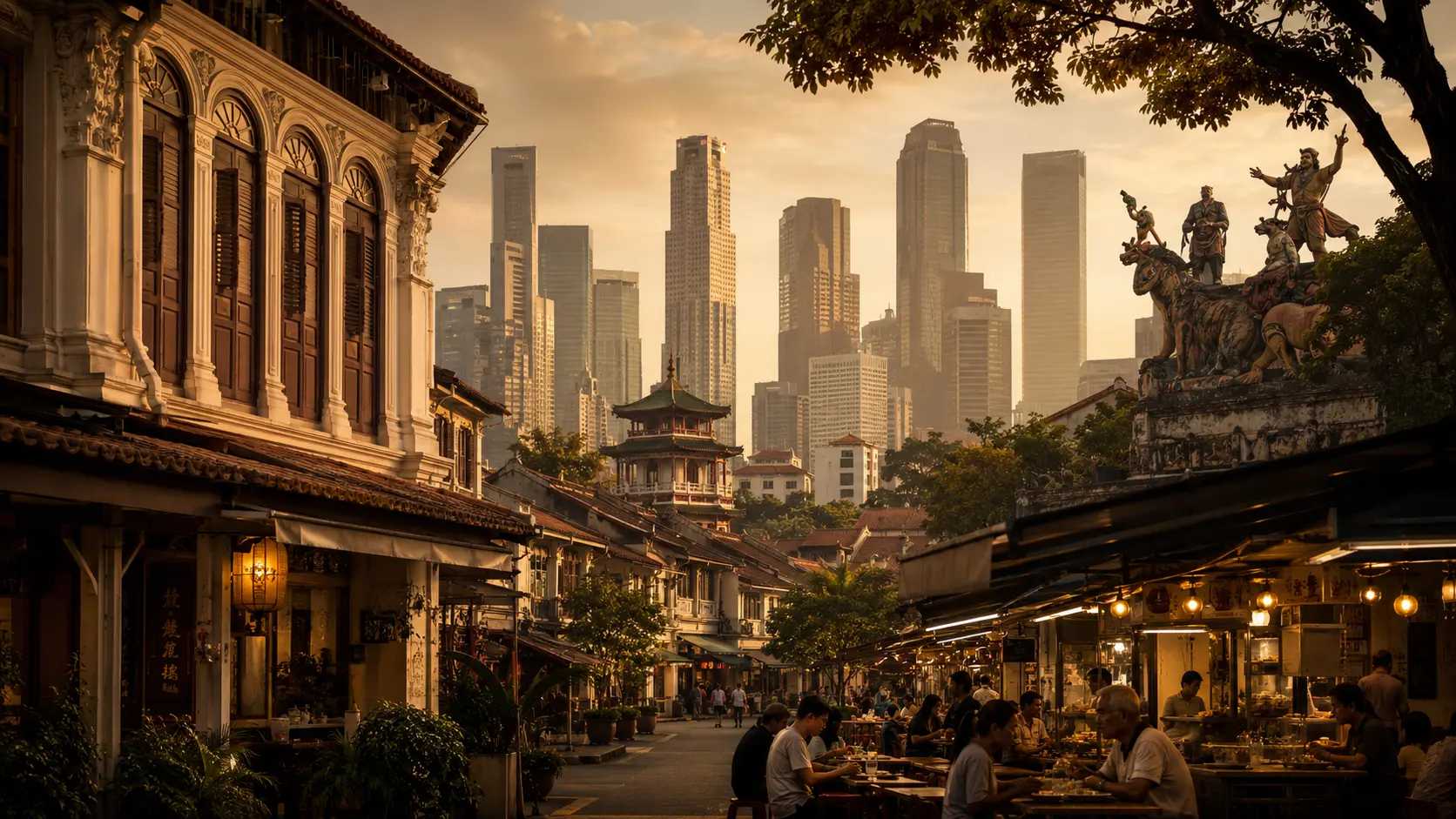

Unearthing Singapore’s Heritage: A Journey Through Time

Unearthing Singapore’s heritage is a journey through identity.

Beneath the skyline of glass towers and modern infrastructure lies a living tapestry of cultures, traditions, and histories that shaped the nation. From conserved shophouses and colonial architecture to vibrant districts like Chinatown, Kampong Glam, and Little India, each space reflects resilience, diversity, and transformation.

Heritage in Singapore is not confined to museums or monuments. It lives in everyday rhythms — the conversations in multiple dialects at hawker centres, the rituals passed through generations, the shared celebrations of Deepavali, Hari Raya, and Chinese New Year. These moments form the cultural heartbeat of the city.

Institutions such as the National Museum of Singapore and the National Gallery Singapore deepen this understanding. Exhibitions like City of Others: Asian Artists in Paris, 1920s–1940s challenge conventional narratives and highlight overlooked perspectives. They remind us that Singapore’s story, too, is shaped by layered influences and evolving identities.

Some heritage spaces carry personal meaning. Haw Par Villa, once a childhood curiosity of mythical figures and moral tales, reveals deeper significance with time. What once seemed fantastical now reflects enduring lessons about values, consequence, and character. Heritage evolves as we do.

To unearth heritage is not to dwell in nostalgia. It is to understand who we are, where we came from, and how those foundations inform our future. Singapore’s story is still unfolding. The way we preserve, reinterpret, and honour our past will shape the legacy we pass on.

Looking Ahead: What Heritage Truly Means

Heritage is not a static archive of the past; it is a living continuum. As Singapore evolves, the question is not whether modernity replaces tradition, but how the two coexist. Our skyline may rise higher each decade, yet beneath it remains a foundation built on memory, migration, and shared experience.

Understanding heritage requires both reflection and participation. It invites us to move beyond admiration into stewardship — to see ourselves not merely as observers of history, but as contributors to its ongoing narrative.


Key Reflections

Heritage is living, not static
It thrives in daily rituals, spoken dialects, festive celebrations, and shared community spaces — not only in curated exhibits.

Museums and galleries deepen understanding
Institutions like the National Museum of Singapore and the National Gallery Singapore provide context, interpretation, and broader regional perspectives that enrich our appreciation.

Personal experiences give heritage meaning
Childhood memories at Haw Par Villa or encounters with exhibitions such as City of Others remind us that heritage evolves as we mature. Its lessons reveal themselves differently over time.

Preservation is collective responsibility
Safeguarding traditions, conserving built environments, and honouring cultural practices require shared commitment across generations.

Heritage shapes identity and direction
By understanding our foundations, we gain clarity about who we are  and confidence in where we are heading.


Singapore’s heritage is not about dwelling in nostalgia. It is about grounding progress in memory, aligning modern ambition with cultural continuity, and ensuring that development never disconnects us from identity.