

Archives March 2026

Why More Parents in Singapore Should Know About This Adaptive Fitness Initiative at Impact Hong Lim

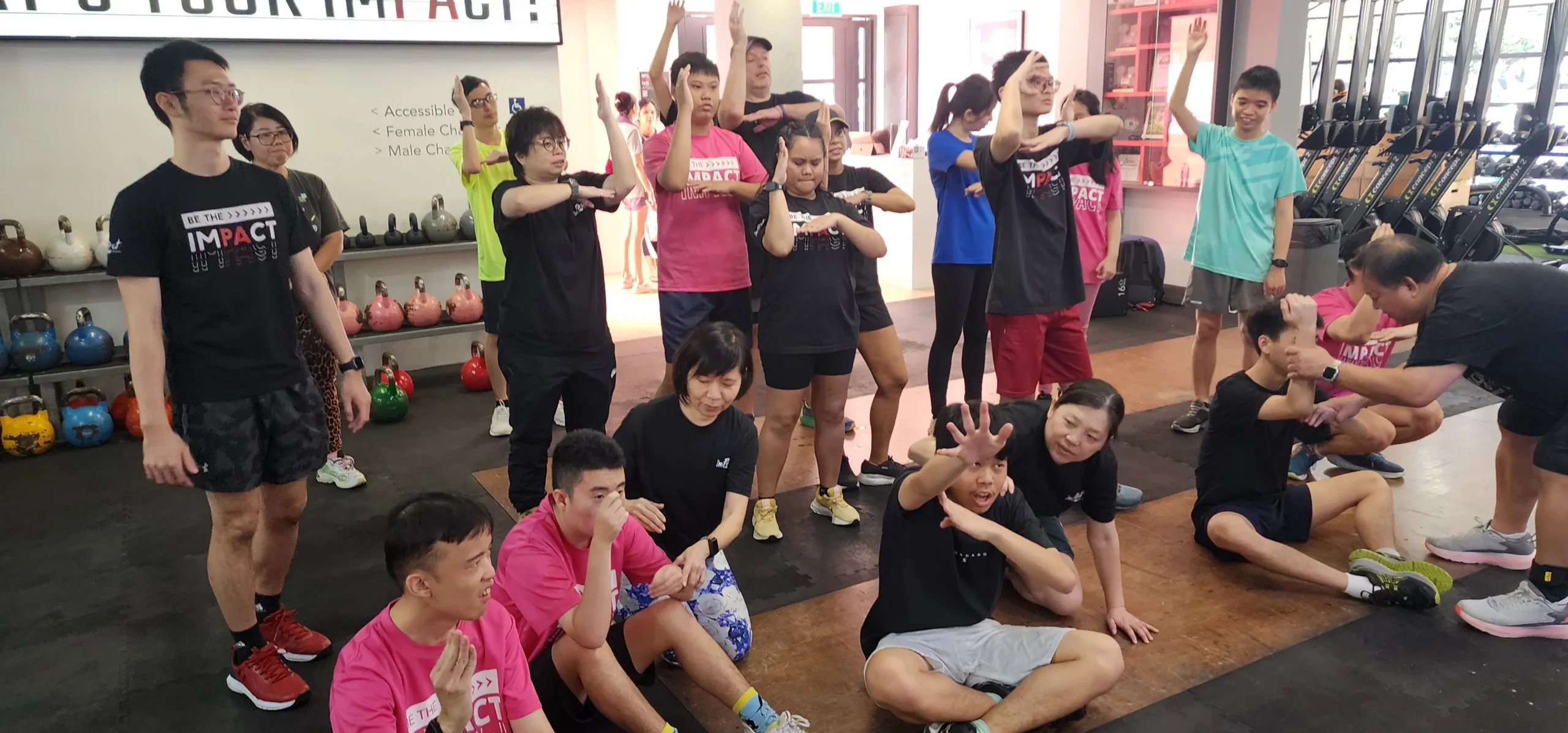
Volunteers and participants at adaptive fitness session at Impact Hong Lim in Singapore

Know a parent, caregiver, or volunteer who should see this? Share this article.

Why This Adaptive Fitness Initiative at Impact Hong Lim Matters for Children With Special Needs and Their Parents

Sometimes, when we speak about health and movement, we think mainly about exercise in the usual sense strength, fitness, endurance, or performance. But for children with special needs, movement can mean something much deeper. It can be about participation, confidence, routine, encouragement, and being supported in an environment that is patient and inclusive.

This is one of the reasons I felt this initiative at Impact Hong Lim deserves more awareness.

Having returned to volunteer here over the years, I have come to see that what makes this place meaningful is not just the guided exercise programme itself. It is also the environment, the people behind the effort, and the heart of the initiative. Instructors and volunteers from different backgrounds come together to support children with special needs through movement in a structured and encouraging way. At the same time, parents are also given something meaningful a complimentary yoga session from 10.30am, which offers them a chance to relax, breathe, and experience a brief moment of respite.

To me, that is what makes this initiative especially thoughtful. It is not just about the child alone. It is about supporting the family too.

Health and movement should include every child

Movement should never be seen as something reserved only for those who fit the usual mould of fitness. Every child deserves the opportunity to move, participate, and be encouraged in a way that respects their needs and abilities.

For children with special needs, the right environment can make a great difference. A supportive space with patient guidance can help movement become less intimidating and more meaningful. It becomes a place where effort is recognised, progress is celebrated, and participation matters.

This is why adaptive fitness initiatives are worth paying attention to. They remind us that health and movement should be inclusive, and that every child deserves a space where they are seen and supported.

The benefits of guided exercise for children with special needs

From what I have observed, guided exercise in a supportive setting can offer important benefits for children with special needs.

It can help support movement, coordination, body awareness, and confidence. It can also encourage routine, participation, and social interaction. Just as importantly, it creates a setting where children are not left to struggle alone. They are guided, encouraged, and given the opportunity to engage at their own pace.

Not every child progresses in the same way, and not every benefit can be measured quickly or visibly. But sometimes, even the willingness to participate, to try, or to return again is already meaningful progress.

That is why I believe such programmes matter. They are not simply about exercise for the sake of exercise. They are about creating opportunities for development, confidence, and inclusion through movement.

Group of volunteers and participants at adaptive fitness programme in Impact Hong Lim Singapore

Why the environment and people make a difference

A programme is only as meaningful as the people and environment behind it.

At Impact Hong Lim, what stood out to me was not just the space itself, but the energy of the people involved. There is a sense that those behind the sessions genuinely want to make a difference. Instructors, organisers, and volunteers from all kinds of backgrounds step forward to create a setting that feels encouraging and welcoming.

That matters.

For children with special needs, the human side of the environment is often just as important as the exercise itself. The patience shown, the guidance given, and the willingness to meet each child where they are can make all the difference to how a session feels.

Sometimes, the success of a session is not only found in what was done physically, but in whether the child felt supported, included, and willing to come back again.

Supporting parents matters too

What also touched me about this initiative is that it does not only think about the child.

It also recognises the parent or caregiver.

Many parents of children with special needs carry responsibilities that are physical, emotional, and ongoing. Much of this is not always seen by others. Their days can be shaped by routines, appointments, constant supervision, and a level of care that rarely pauses.

This is why I found the complimentary yoga session for parents from 10.30am especially meaningful.

While their children are engaged in the guided exercise programme, parents are given an opportunity to pause, stretch, breathe, and relax. To some, that may sound like a small thing. But for caregivers, even a brief period of respite can mean a lot.

Sometimes, care must include the caregiver too.

To me, this is one of the most thoughtful aspects of the initiative. It acknowledges that supporting the child and supporting the parent should not be seen as separate matters. When parents are given space to reset, even briefly, that too is part of a healthier support system.

Wide group photo of adaptive fitness participants and volunteers at Impact Hong Lim Singapore

More than just a fitness space

Another interesting aspect of Impact Hong Lim is that it is not defined by only one community.

It is also known as a training space where many come to build strength and prepare for fitness challenges such as HYROX. Yet within the same space, there is also room for adaptive fitness, inclusion, and community care.

That says something meaningful.

It shows that a fitness environment does not have to be exclusive to one type of person or one style of training. A truly strong community can hold different needs, different journeys, and different purposes under one roof.

That, in itself, is a powerful message.

Why I wanted to raise awareness

I started volunteering in this space a couple of years ago, and one of the reasons I keep coming back is because of the meaning behind it.

Sometimes, we come across initiatives that quietly do important work without enough awareness. This feels like one of them.

More parents in Singapore with children who have special needs may benefit simply from knowing that such a place and initiative exist. A place where guided exercise, support, patience, and community come together. A place where volunteers and instructors show up with heart. And a place where parents, too, are given a moment to breathe.

That is why I felt this was worth highlighting.

Closing reflection

Sometimes, the value of a health and movement initiative is not just in the exercises being done. It is found in the environment being created, the encouragement being given, and the care shown to both the child and the family.

At Impact Hong Lim, what I observed was more than a session. I saw an initiative that supports children with special needs through guided movement, while also recognising the importance of respite for parents through a complimentary yoga session from 10.30am.

In a society where many families quietly carry heavy responsibilities, such thoughtful efforts deserve to be seen, appreciated, and shared.

Sometimes, raising awareness is the first step in helping the right family discover the right place.

Know a parent, caregiver, or volunteer who should see this? Share this article.

Afraid of Needles, But I Still Donated Blood

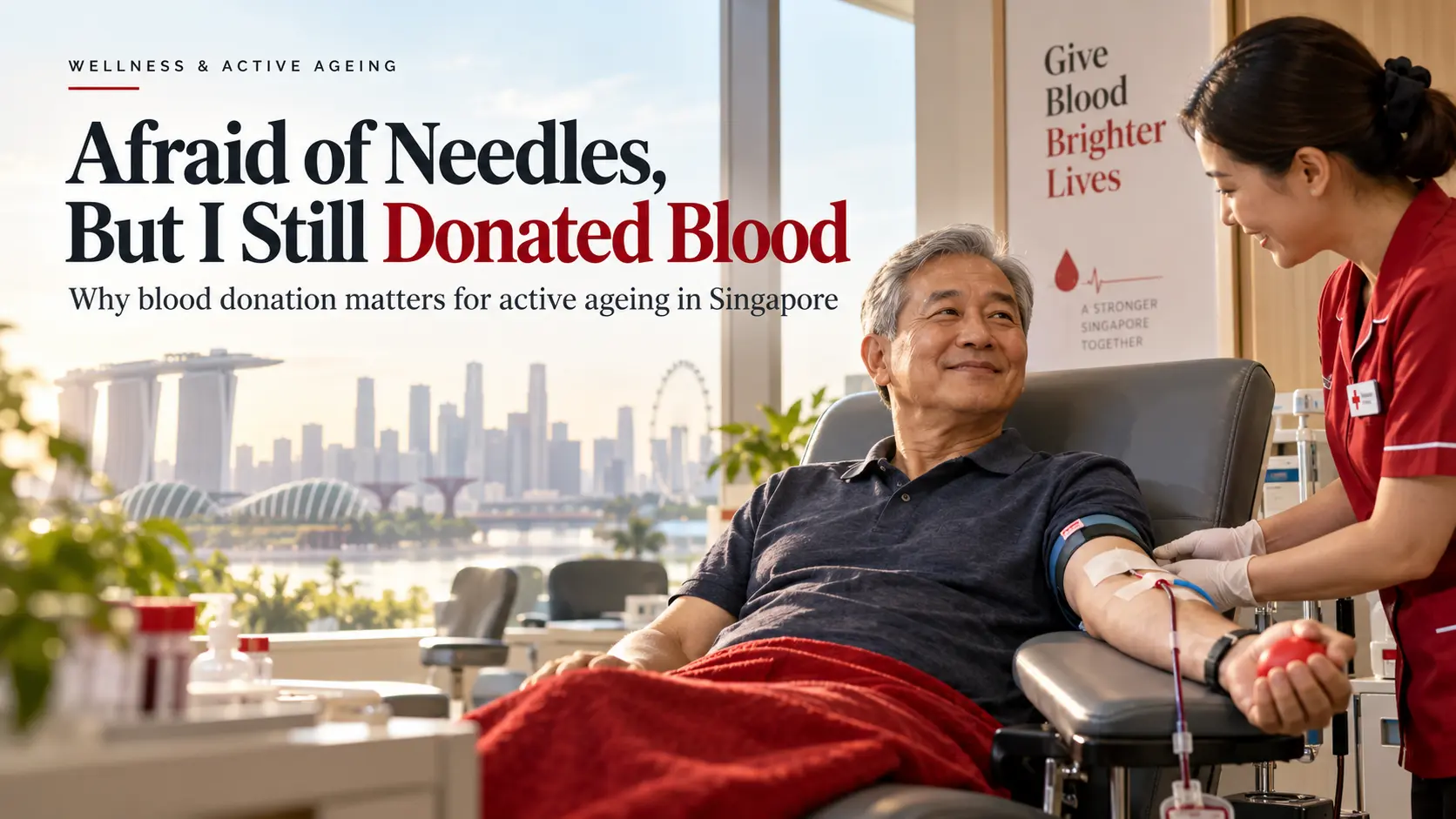
Blood donation in Singapore from the donor’s perspective, showing a donation chair and screening area

Afraid of Needles, But I Still Donated Blood

There was a time when I was afraid of needles.

I suspect many people are, even if they never say it out loud. The moment a needle comes into view, the body tenses. The mind starts racing. For some, that fear alone is enough to stop them from ever considering blood donation.

I understand that feeling.

Even today, I can still remember that discomfort from my younger days. During my army years, I was exposed to needle-related training under supervision, though I cannot confidently verify the exact details now. What I remember clearly was the feeling , the hesitation, the tension, and the quiet mental battle that comes with it.

Later in life, when I was working in the biomedical industry, I had the opportunity to service accounts connected to Singapore’s healthcare and biomedical ecosystem, including SGH, HSA, National Cancer Centre, the TB Lab, and National Heart Centre. The SGH campus has changed greatly over the years. National Heart Centre is now in a newer building too. I still remember the days when I used to frequent the old National Cancer Centre and meet researchers at the lab. I also remember the TB Lab being located on a more secluded piece of land near the old colonial Ministry of Health site. To enter, I had to gown up in basic safety level 3 protective wear, with covered shoes and the proper precautions. What stayed with me was how serious and tightly controlled the environment felt. There was constant testing taking place in the lab, and I remember the BACTEC machines always appearing full, operating around the clock. Perhaps that is why, in my mind, it almost felt like stepping into a highly secured space lab built to test for aliens, a light-hearted thought, yes, but one shaped by the intensity of the place.

Those memories stayed with me.

They gave me a deeper respect not only for doctors and nurses, but also for the researchers, technicians, lab staff, and healthcare teams working quietly behind the scenes to support patient care every single day.

Perhaps that is also why blood donation feels meaningful to me today.

Because I have seen, in my own way, how much healthcare depends on systems, people, and the willingness of others to step forward.

And that is what blood donation really is.

It is not just about a needle.
It is not just about a chair, a tube, or a bag of blood.
It is about one person making a choice that may help another person live.

In Singapore, blood is needed every single day for emergencies, major surgeries, and patients with conditions such as leukaemia, thalassaemia, and bleeding disorders. HSA says about 400 units are needed daily, and its blood facts page states that in 2026, around 14 units are required every hour, or 328 units a day.

When we think about it that way, blood donation becomes something much bigger than personal fear.

A few moments of discomfort for the donor may become relief for a family, support for a patient in treatment, or even a second chance at life for someone in crisis.

That is why I feel this belongs under the theme of active ageing.

Active ageing is not only about exercise, diet, mobility, and living longer. It is also about staying useful, staying engaged, and finding ways to contribute meaningfully to society while we still can. Blood donation, for those who are eligible, is one simple but powerful way of doing exactly that.

Many people also do not realise that blood donation involves a proper screening process before the donation itself. In Singapore, this includes a health questionnaire, a finger-prick haemoglobin check, and checks on weight, blood pressure, pulse, and temperature, together with a review of medical, travel, and social history to make sure donation is safe for both donor and recipient.

That does not mean blood donation is a substitute for a full medical check-up.

It is not.

But it does remind people that health matters. It nudges awareness. It encourages responsibility. It makes some people more conscious of their body, their habits, and whether they are actually well enough to give.

There is also something reassuring about knowing that donated blood is handled with care. In Singapore, every donated unit is tested for infections such as HIV, hepatitis B, hepatitis C, hepatitis E, and syphilis. Selected units or components may also be tested for malaria or bacterial contamination where needed.

So blood donation is not casual.

It is organised.
It is screened.
It is purposeful.

And maybe that is why it deserves more awareness.

Too many people only think about blood when someone they love suddenly needs it.

But a stable blood supply does not appear by itself. It exists because ordinary people, day after day, choose to come forward.

Some do it because they believe in giving back.
Some do it because they know someone who once needed blood.
Some do it quietly, without fanfare, simply because they can.

That, to me, is a powerful form of social responsibility.

I also think we should be honest about fear.

Not everyone is ready.
Not everyone likes needles.
Not everyone will feel brave.

That is perfectly human.

Awareness should not shame people. It should help them understand. It should show them that fear is normal, but also that blood donation has a real purpose beyond that fear.

For me, the deeper reflection is this:

As we grow older, we begin to see life differently. We become more aware of illness, vulnerability, hospitals, treatment, and how fragile health can be. We also begin to understand that being healthy is not only about ourselves. Sometimes, good health gives us an opportunity to do something for someone else.

And when that happens, even a small act can carry great meaning.

You sit for a while.
You go through screening.
You donate.
You rest.
Then you go home and continue with your day.

But somewhere down the line, what you gave may become part of someone else’s healing, treatment, or survival.

That is not a small thing.

So yes, I believe blood donation deserves more awareness.

Not because everyone must do it.
Not because people should be pressured.
But because more people should understand what it truly means.

It is an act of care.
It is an act of contribution.
It is an act of purpose.

And sometimes, in a world where many people wonder how they can make a difference, blood donation is one of the clearest answers:

You may not know the person.
You may never meet them.
But your donation may still help save their life.

That is reason enough to respect it.
And for those who are eligible, perhaps even reason enough to overcome the fear.

Gentle note: Blood donation includes basic donor screening, but it is not a replacement for a full medical examination. Anyone considering donation should check official eligibility guidance and follow the advice of the donation staff. The actual blood withdrawal typically takes about 5 to 10 minutes, and around 350 to 450 ml is collected during a standard donation.


If this reflection resonates with you, consider sharing it. More awareness about blood donation may help more people overcome fear and understand how one donation can save lives.

Fort Siloso and Sentosa: Where Heritage, Resilience and Everyday Life Meet

Sentosa is often seen as a place of leisure, entertainment, and escape home to attractions, scenic coastal routes, and popular beaches. Yet beyond its vibrant energy lies a deeper and more reflective side. Fort Siloso stands as one of Singapore’s most meaningful wartime heritage sites, quietly preserving the memory of struggle, occupation, defence, and the difficult lessons that shaped the Singapore of today.

For me, Sentosa is also one of my favourite places to exercise, hike, eat, run, and cycle. Perhaps that is what makes it so special. It is not only a place for movement and enjoyment, but also one where heritage and everyday life come together in a very real way. One moment, I am enjoying the openness of the coastal paths and sea breeze; the next, I am confronted by reminders of a painful past that transformed Singapore forever.

“The war opened the eyes of many people in Singapore. Things would never be the same again.”
Lee Kuan Yew, Prime Minister of Singapore, 1959–1990

One of the most reflective moments at Fort Siloso is encountering this reflection by Lee Kuan Yew. The quote speaks to more than the suffering of war. It reflects a profound shift in mindset. The Second World War and the Japanese Occupation shattered old assumptions and forced many in Singapore to confront a painful truth: dignity, safety, and the future of one’s family could not be left entirely in the hands of foreign powers.

Out of fear, uncertainty, and hardship emerged a stronger resolve for self-governance, national resilience, and the determination to build a country that could stand on its own feet. In this sense, the quote is not only about wartime memory. It captures the awakening of a generation and the birth of a more determined Singapore spirit.

Lee Kuan Yew quote display at Fort Siloso about how war changed Singapore and shaped the determination for self-governance

A reflective quote by Lee Kuan Yew, Prime Minister of Singapore, 1959–1990, on how the war transformed Singapore’s thinking and shaped the resolve for dignity, self-determination, and nationhood.

A generation awakened by war

This image sets the emotional tone for the entire heritage journey. It reflects how war changed the thinking of a generation and strengthened the resolve for dignity, self-determination, and nationhood.

This quote by Lee Kuan Yew, Prime Minister of Singapore, 1959–1990, carries a meaning far deeper than its words alone. It reflects a generation awakened by hardship, forced to confront the painful truth that neither colonial rule nor foreign power could guarantee their dignity, safety, or future. The Second World War and the Japanese Occupation became defining lessons that changed how many in Singapore saw themselves and the kind of country they hoped to build. Out of fear, uncertainty, and suffering emerged a stronger resolve for self-governance, national resilience, and the determination to raise future generations in a country they could truly call their own.

Scenic reflection view near Fort Siloso with greenery, calm waters, and Singapore skyline in the distance

From coastal memory to modern confidence, this Sentosa shoreline view reflects the contrast between Singapore’s past and present.

Calm waters, living community

What moved me here was not only the scenic beauty, but also the quiet community life unfolding along the shoreline that morning. I saw people gathering by the water, walking, exploring the shore, and simply enjoying the open air together. It was a simple but meaningful reminder of what peace makes possible.

Waters once linked to uncertainty and vulnerability now stand beside a modern, confident Singapore shaped by resilience and progress. The same coastline that once formed part of a landscape marked by danger, defence, and strategic concern is today a place where ordinary life unfolds peacefully. In that sense, this image is not only about landscape. It is also about community, freedom, and how far Singapore has come.

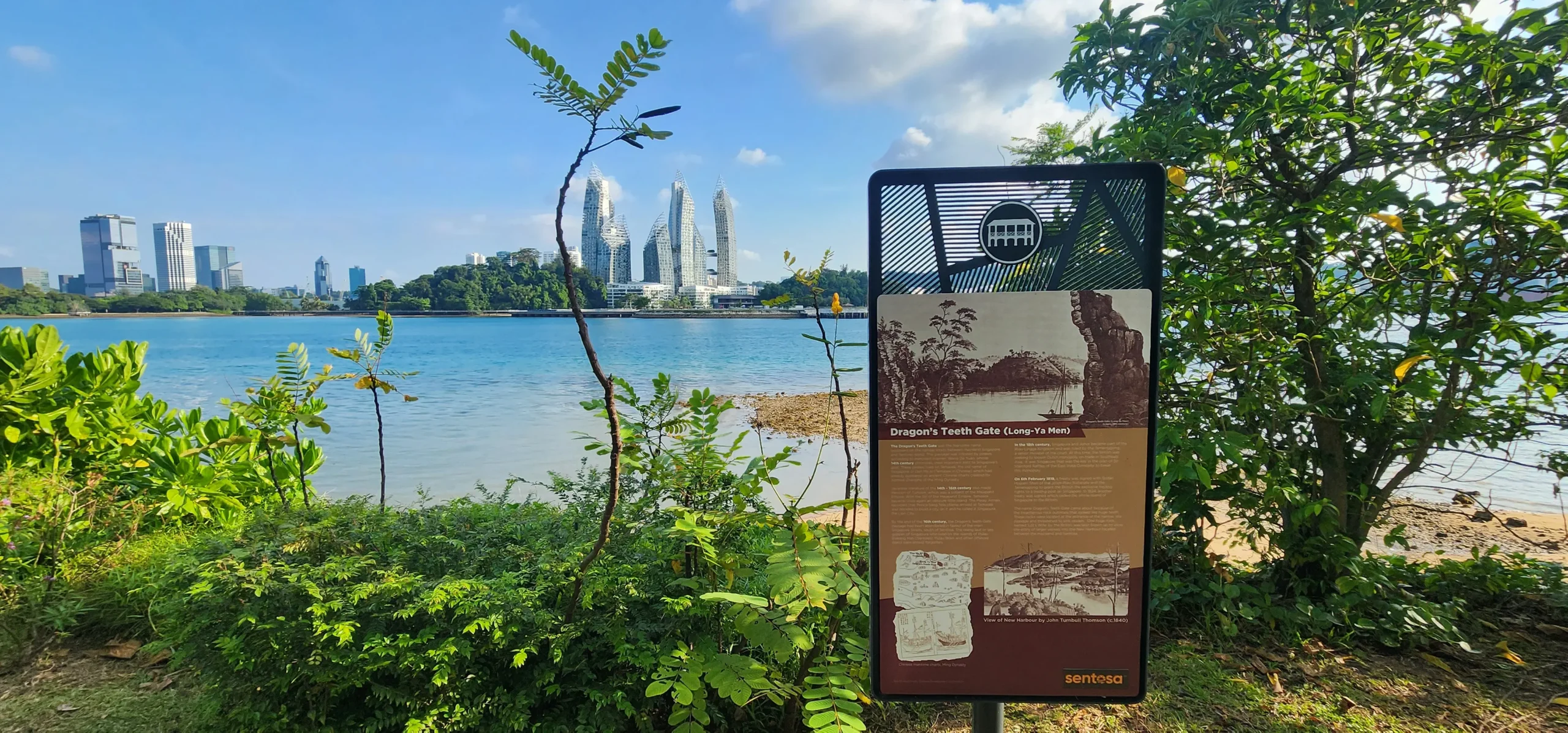
Dragon’s Teeth Gate marker in Sentosa with coastal view and Singapore skyline in the background

A heritage marker in Sentosa that reminds visitors of Singapore’s strategic maritime past and the deeper stories hidden within the landscape.

Dragon’s Teeth Gate: where geography became history

This scene holds landscape, history, and modern Singapore in one frame. The Dragon’s Teeth Gate (Long-Ya Men) marker stands quietly by the water, surrounded by greenery, while the skyline beyond represents the Singapore of today.

What makes this especially meaningful is that the board points us to a time when geography itself shaped destiny. Long before Sentosa became associated with leisure and recreation, these waters were part of a much deeper story connected to navigation, trade, defence, and the strategic significance of Singapore’s coastline. The marker turns the landscape into something more than a beautiful view. It becomes a point of remembrance, helping visitors see that Singapore’s story has always been shaped by its geography as much as by its people.

Fort Siloso entrance with artillery display and surrounding greenery in Sentosa

A preserved entrance scene at Fort Siloso, where military history, remembrance, and Singapore’s wartime legacy continue to speak to the present.

Defence and remembrance

Military relics are not just historical objects. They are reminders that security, preparedness, and peace should never be treated lightly. The preserved entrance to Fort Siloso, with its artillery display and surrounding greenery, symbolises a place where history has been intentionally kept visible for future generations.

Defence is often understood in terms of weapons, structures, and strategy. Yet places like this also remind us that remembrance is part of defence. To preserve a site like Fort Siloso is to preserve the lessons that came with hardship: that peace is fragile, that resilience matters, and that complacency can be costly.

Historical mural

Black and white historical mural at Fort Siloso showing people and scenes from Singapore’s past

This mural humanises history, reminding us that Singapore’s story was shaped not only by events and places, but by the people who lived through them.


Heritage is about people, courage, and sacrifice

This mural carries deep emotional force because it places people at the centre of history. With Lim Bo Seng on the left and Elizabeth Choy among the figures, the scene reminds us that Singapore’s wartime story was shaped not only by events and places, but by individuals of courage, sacrifice, and resilience.

Lim Bo Seng is remembered as a symbol of patriotism and sacrifice. Elizabeth Choy is remembered for courage, compassion, and moral strength. Their presence in the mural humanises the heritage of Fort Siloso, showing that remembrance is not only about military defence, but also about honouring the people whose choices, endurance, and convictions helped shape the moral memory of a nation.

In the end, forts preserve places, but people like Lim Bo Seng and Elizabeth Choy preserve meaning.

Where heritage and everyday life meet

What makes Sentosa unique is that it allows different layers of meaning to coexist. It can be a place for recreation, reflection, wellness, and remembrance all at once. That is something I appreciate deeply. I may come here to run, hike, cycle, exercise, or enjoy a meal, but I am also reminded that this same island carries stories far greater than leisure.

It holds part of Singapore’s wartime memory and, with it, the lessons that shaped our national identity. In a fast-moving world, heritage sites like Fort Siloso continue to matter because they ground us. They remind us that progress has a backstory, that peace has a price, and that nation-building is never abstract. It is lived by real people across real generations.


Sentosa, in that sense, is more than a lifestyle destination. It is a place where beauty, movement, memory, and meaning stand side by side.

Closing reflection

To visit Fort Siloso is not only to look back. It is to better understand the present. Between the old defences, the heritage markers, the shoreline, and the faces remembered in its murals, Fort Siloso quietly reminds us that modern Singapore was built through hardship, resilience, and the determination never to be easily pushed around again.

Sentosa, however, is more than a single-day destination. It is a place worth revisiting and rediscovering. At different times of the year and in different moments of life, the island can offer something new whether heritage, scenery, recreation, reflection, or a renewed appreciation of Singapore’s many layers. What one notices in the quiet of the morning may feel very different from what one experiences during a festive period or an active weekend.

That is what makes this place meaningful to me. Sentosa remains one of my favourite places to spend quiet time, exercise, hike, eat, run, and cycle, but it is also a place that encourages deeper exploration. Beyond its attractions, it reminds us that some places continue to reveal their value over time not only as destinations for enjoyment, but as spaces of memory, discovery, and reflection.

“Sentosa is not only a place to visit once, but a place to rediscover across different times of the year, different rhythms of life, and different layers of meaning.” AndrewKohSG

Ageing in Singapore: Medical Choice, Financial Reality, and the Questions Families Must Consider

 Active Ageing

Ageing in Singapore: Medical Choice, Financial Reality, and the Questions Families Must Consider

By Andrew Koh Singapore • Public-interest commentary • Educational content only

Illustration contrasting basic public healthcare support and greater private medical choice for seniors ageing in Singapore A conceptual illustration showing the contrast between basic care support and greater medical optionality in later life in Singapore. 
Singapore has built a system designed to help seniors age with dignity. Yet in practice, the experience of old age can look very different depending on one’s financial position, family support, insurance profile, housing decisions, and ability to absorb costs that fall outside the baseline of public protection.

The purpose of this reflection is not to create fear, but to encourage earlier awareness, wiser planning, and more compassionate conversations about ageing in Singapore.

The Reality Many Families Only Discover Later

A senior may appear financially stable on paper. There may be a home, CPF savings, and basic healthcare protection. But when chronic illness strikes, especially a serious condition requiring repeated treatment, follow-up care, transport, caregiving, or prolonged outpatient support, the real question becomes more practical: how much flexibility is actually available when life becomes medically uncertain?

This is where many families begin to see the difference between being protected at a basic level and having enough room to make choices comfortably. In later life, illness does not arrive with a warning letter. It often appears suddenly, and the financial implications may only become clear after treatment has already started.

The Ordinary Senior’s Path: Protection Within Boundaries

For many seniors, ageing is managed within the boundaries of the local system: public healthcare pathways, government subsidies, MediSave usage, MediShield Life protection, and, where necessary, financial assistance. This framework is important. It provides meaningful support and helps ensure that seniors are not left entirely without care because of an inability to pay.

At the same time, protection within a system is not the same as unlimited optionality. When a family must work within approved claim limits, subsidy structures, waiting times, care settings, and affordability thresholds, the decisions available to them may be narrower than they first imagined.

The Wealthy Senior’s Path: More Than Better Care, It Is More Choice

Wealth does not remove illness, but it often changes the set of decisions. A financially stronger household may be able to seek faster private consultations, absorb non-claimable costs, obtain multiple specialist opinions, pay for additional caregiving support, and pursue options that are simply not realistic for the average household.

In practical terms, the difference is often not just better treatment, but greater optionality: more speed, more privacy, more convenience, more second opinions, and more freedom to act without immediate financial pressure.

When Overseas Treatment Enters the Conversation

This divide becomes even more visible when families discuss overseas care. For some, overseas treatment is a realistic option supported by resources, planning, and the ability to bear substantial out-of-pocket expenses. For many others, it remains more aspiration than a practical pathway.

That distinction matters because it reflects a broader truth about ageing: the average senior often plans around affordability and system access, while the affluent plan around speed, choice, and medical optionality.

Why Housing and Retirement Decisions Matter More Than They First Appear

Senior life planning is rarely just about health. It is also about cash flow, housing, caregiving realities, and how much wealth remains flexible when illness arrives. A household may be asset-backed and still feel vulnerable if too much of its position is locked in a property or committed to structures that improve long-term security but reduce immediate liquidity.

This is why conversations about right-sizing, retirement adequacy, and senior housing should never be viewed only as property matters. In later life, housing, health, and care economics are deeply interconnected.

Scenario: A Senior Living in a 3-Room HDB Flat with Stage 4 Lung Cancer

Senior woman in a modest 3-room HDB flat using respiratory support, illustrating the realities of serious illness and ageing in Singapore Illustrative scenario of a senior in a modest HDB home facing serious illness, healthcare costs, and reduced medical flexibility in later life.

Consider a senior who has worked for 40 years and is now living in a 3-room HDB flat. She has no private insurance and relies mainly on CPF savings, MediSave, and MediShield Life. She is later diagnosed with stage 4 lung cancer.

In Singapore, what happens next is usually not a single event, but a sequence of medical, financial, and family decisions. The issue is not only whether treatment is available. The issue is how much of that treatment remains affordable, claimable, and sustainable over time.

What usually happens first

She will typically enter the local healthcare system through a specialist referral, public hospital, or oncology pathway. If she stays within the subsidised public route, government subsidies usually reduce the bill first. After that, MediShield Life may cover eligible portions of large hospital bills and selected costly outpatient cancer treatments, while MediSave may be used in accordance with prevailing withdrawal rules.

What the practical limits may feel like

Even with MediShield Life and MediSave, the family may still face pressure if treatment extends over a long period, if supportive services accumulate, if repeated scans and admissions are required, or if some costs fall outside claimable limits. The burden is not just the hospital bill. It can also include transport, nutrition, home support, caregiving strain, and reduced day-to-day financial flexibility.

What happens if she cannot afford the remaining bill

If she is a needy Singaporean senior and still cannot afford her medical expenses after government subsidies, insurance, and MediSave, she may apply for MediFund. For seniors aged 65 and above, MediFund Silver exists as a more targeted safety net for needy elderly patients.

What this means in reality

A senior in this position is not left completely unprotected. But she is also not in the same position as someone with strong private coverage or substantial liquid wealth. She may still receive treatment, but her choices are likely to be narrower, more financially constrained, and more dependent on staying within the subsidised system.

Her 3-room HDB flat may provide housing security, but it does not automatically address the issue of medical flexibility. A flat is a long-term asset. Cancer treatment is an immediate reality. This is where many families discover that being asset-backed is not the same as being cash-flexible.

In simple terms, she will likely still be treated, but the pathway is more likely to depend on subsidies, MediShield Life, MediSave limits, and possible MediFund assistance, rather than broad private or overseas medical choice.

The Real Divide in Old Age

The divide is not simply between healthy and unhealthy, or even between insured and uninsured. Often, it is between:

Planning for Survival

Working within public pathways, claim rules, affordability constraints, household support, and day-to-day practical realities.

Planning for Optionality

Retaining the financial freedom to choose speed, setting, specialist access, private care, or broader treatment pathways.

Both groups may age. Both may encounter serious illness. But they do not age with the same degree of medical freedom. That is the deeper inequality many families sense, even if they do not always articulate it in those words.

A More Realistic Way to Think About Senior Readiness

For seniors and their families, the better question is not only whether there is a home, CPF savings, or a policy in place. The better question is whether there is enough flexibility when something serious happens.

That flexibility may come from a combination of:

  • appropriate healthcare protection and a realistic understanding of what it does and does not cover
  • accessible cash flow, not just asset value on paper
  • strong family or caregiver support
  • prudent housing decisions that consider later-life realities
  • early conversations before a medical crisis force rushed decisions

Closing Reflection

Singapore’s system gives seniors meaningful support, and that should be recognised. But support is not the same as unlimited choice. For the average senior, the challenge is often how to remain secure within the system’s boundaries. For the affluent, the challenge is different: how to make use of a much wider range of options.

To reflect on these realities is not to fear ageing. It is to approach ageing with greater honesty, responsibility, and care.

“This is not a message of fear. It is a reminder that ageing, health, housing, and financial resilience are deeply connected, and that thoughtful preparation matters long before a crisis appears.”

Important Note and Compliance Disclaimer

This article is provided for general educational and public-interest discussion only. It does not constitute medical advice, legal advice, financial advice, estate planning advice, insurance advice, CPF advice, or property advice. It is not intended as a substitute for professional consultation.

Healthcare financing, subsidies, insurance claim frameworks, CPF rules, housing policies, and eligibility criteria may change over time. Readers should refer to the latest information published by the relevant authorities and seek advice from qualified professionals before making healthcare, retirement, insurance, housing, estate planning, or financial decisions.

Any scenario presented in this article is illustrative only. It is not a prediction of medical outcome, bill size, treatment suitability, insurance payout, or financial eligibility. Actual patient experience depends on diagnosis, treatment plan, care setting, subsidies, claimable items, household circumstances, and the prevailing rules at the time.

This article does not make claims about specific hospitals, doctors, insurers, treatment outcomes, policy performance, or individual patient scenarios. Readers facing actual medical, insurance, retirement, or housing decisions should consult the relevant public agencies and appropriately qualified medical, legal, financial, insurance, or property professionals.

Andrew Koh Kah Heng Singapore Real Estate Professional | Founder AndrewKoh.sg UFitness.sg UProperty.sg

About Andrew Koh, Singapore

Andrew Koh, Singapore, writes on active ageing, strategic living, heritage, community, and long-term decision-making in the Singapore context. His work aims to encourage thoughtful public discussion around independence, dignity, resilience, and practical life planning across different stages of life.

Continue the Conversation Thoughtfully

Ageing well is not only about movement, money, or medicine in isolation. It is about how these realities intersect. A more informed conversation today may lead to more thoughtful decisions tomorrow.

Tekka Centre: Vibrant Culture, Rich Colours, and the Everyday Spirit of Singapore

Heritage & Community

Tekka Centre: Vibrant Culture, Rich Colours, and the Everyday Spirit of Singapore

A reflection on Tekka Centre as a living tapestry of heritage, food, memory, and the shared community life that continues to shape Singapore.

By Andrew Koh Heritage & Community Singapore Reflection

There are places in Singapore that do more than serve a function. They do not merely provide food, shelter, or convenience. They hold memory, identity, rhythm, and the unseen threads of human connection. Tekka Centre is one of those places.

To some, Tekka may simply be known as a busy hawker centre, a wet market, and a place closely associated with Little India. To others, it is where one goes for a good meal, fresh produce, and everyday errands. But beyond these practical roles, Tekka represents something much larger. It reflects the pulse of a Singapore that remains colourful, communal, and deeply human.

On a visit to Tekka, what stood out to me was not just the crowd, the food stalls, or the fruit vendors. It was the feeling of movement and life. There was something grounding about the place. It felt lived in. It felt honest. It felt like a place where Singapore’s multicultural spirit still expresses itself naturally, not through slogans, but through daily life.

“Vibrant Culture, Rich Colours” feels less like a slogan at Tekka, and more like a true description of the place itself.

The Mural, Memory, and a Shared Civic Story

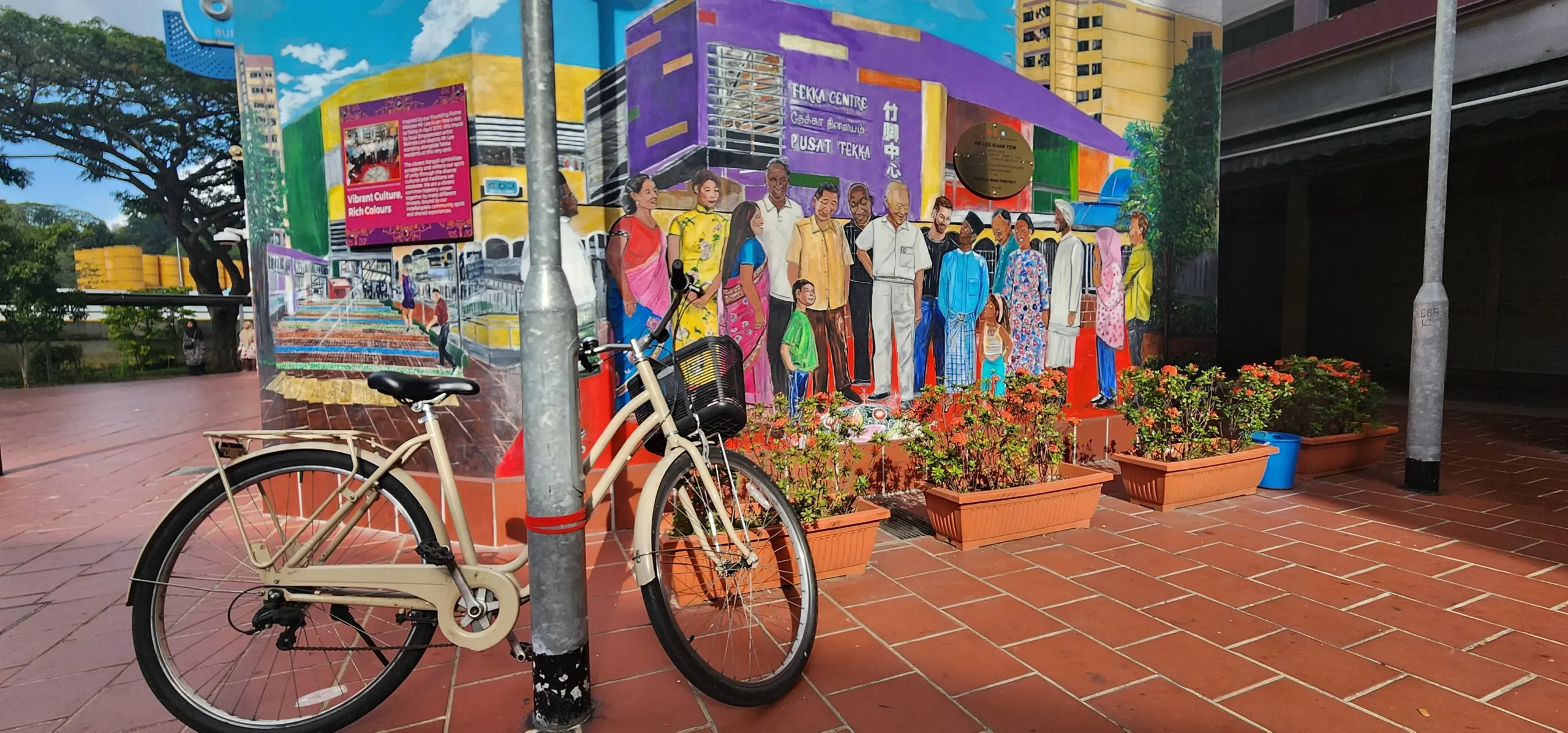
One of the most striking sights near Tekka is the mural inspired by Founding Prime Minister Mr Lee Kuan Yew’s visit to Tekka in April 2010. The mural, by local Singaporean artist Belinda Low, is more than public art. It is a visual reflection of community. The accompanying message speaks of vibrant culture, prosperity, unity, diversity, and shared experiences. Those words do not feel out of place. In fact, they feel very much alive in Tekka itself.

Standing before the mural, one gets the sense that it is not merely commemorating a visit. It is preserving the spirit of a place. The figures painted into the scene are not polished abstractions. They are recognisable as everyday people, families, elders, workers, and children. The mural reminds us that Singapore’s story has never only been about infrastructure and progress. It has also always been about people standing together in common spaces, shaped by different traditions yet bound by a shared civic life.

Tekka is one of those places where the idea of multiculturalism is not staged. It is lived, seen in the faces, heard in the languages, smelled in the food, and felt in the atmosphere.

The Everyday Rhythm Inside Tekka Centre

Walking through Tekka Centre, one notices this almost immediately. There is energy, but not emptiness. There is noise, but not chaos. The place is busy in a way that feels familiar to many Singaporeans. People gather over meals, queue for drinks, carry bags of vegetables and fruit, pause in conversation, or move steadily from one errand to the next. Some are clearly regulars. Some may be visitors. Some are older residents who have probably known this area for decades. Others are younger families and workers passing through. Together, they create the layered reality of a living public space.

The festive decorations overhead add another dimension to the setting. They bring colour and warmth, but they also remind us that places like Tekka are not static. They change with the seasons, festivals, and communities that use them. A place like this does not need to be frozen in time to have heritage value. Its heritage is not only in what it used to be, but in how it continues to be relevant and alive today.

Sometimes, when people speak about heritage, they imagine old buildings as museum pieces, or neighbourhoods as relics of the past. But true heritage is not always silent or preserved behind glass. Sometimes it is noisy, humid, crowded, practical, and wonderfully ordinary. Sometimes it is found at a hawker centre table, in a fruit stall exchange, in a shared walkway, or in the way a market continues to serve generations of people from different walks of life.

Tekka is one of those places where heritage and everyday life continue to meet.

Food, Familiarity, and Emotional Connection

Inside the food centre, the atmosphere says a great deal about the social role these spaces still play in Singapore. People are not just eating. They are gathering. Hawker centres have long been part of Singapore’s social fabric, but each one carries its own character. Tekka’s identity is shaped by the cultures that converge there, especially the strong South Asian presence that gives the area its distinct flavour, visual richness, and culinary reputation. Yet it also remains unmistakably Singaporean in its inclusiveness. There is a sense that many communities know this place, use this place, and somehow belong to it.

Personally, Tekka is also a place I enjoy returning to. I have always liked venturing here for a good cup of coffee, a hearty plate of chicken briyani with basmati rice, and, from time to time, some roti prata with egg. These simple favourites are part of what makes the place special to me. Food often becomes part of memory, and at Tekka, those familiar tastes sit naturally alongside the colour, energy, and community spirit that define the experience.

That sense of belonging matters, especially in a fast-moving city where redevelopment, digital convenience, and changing lifestyles can gradually loosen the human ties that once defined daily life. In an age where groceries can be delivered and meals can be ordered without stepping outdoors, there is still something deeply valuable about places that require us to be physically present among others.

To stand in line. To look around. To exchange a word. To notice an elderly shopper, a busy vendor, a family choosing fruit, or an old friend meeting another over breakfast. These moments may appear small, but they are not insignificant. They are part of the civic texture of a healthy society.

The Fruit Stall and the Human Side of a Market

The fruit section, in particular, carries its own kind of intimacy. Fruit markets are rarely glamorous, but they often reveal the most human side of a place. There is selection, asking, helping, waiting, carrying, and advising. There is familiarity between seller and customer. There is the subtle trust built through repeated encounters. In a city where so much is becoming increasingly frictionless and transactional, these old patterns of interaction still matter.

They remind us that community is not built only through major initiatives or national campaigns. It is also built in repeated everyday contact, in recognition, in presence, and in the habits of a shared environment.

This is one reason why places like Tekka continue to deserve attention, appreciation, and respectful documentation. They are not just useful spaces. They are social anchors. They hold together a kind of lived Singaporeanness that can be difficult to define but easy to feel.

Why Places Like Tekka Still Matter

It is also worth reflecting on the symbolism of colour at Tekka. The mural, the buildings, the festive ornaments, the produce, the clothing, and even the visual noise of the hawker centre all combine to create a vivid environment. These colours are not superficial decoration. They express the character of the place. They speak to the confidence of cultural visibility. They suggest that diversity here is not something hidden or muted. It is present, expressive, and woven into the environment itself.

In many ways, Tekka offers a counterpoint to the polished and highly curated spaces of modern city life. It is not sterile. It is not trying to impress through perfection. Its beauty lies in its authenticity. It reflects the textures of real life: the worn floor tiles, the crowded seating, the practical shopfronts, the flow of people, and the occasional disorder that comes with genuine activity. For some, this may seem unremarkable. But for those who value places where society still feels tangible, it is precisely this unfiltered quality that gives Tekka its meaning.

Perhaps that is why the mural’s message feels so fitting. “Vibrant Culture, Rich Colours” is not merely a slogan mounted on a wall. It is an accurate description of the living spirit around it. Tekka is vibrant not because it is loud, but because it is alive. It is rich in colour not only visually, but socially and culturally.

A Living Tapestry of Singapore

As Singapore continues to modernise, it becomes even more important to recognise and value the spaces where everyday community life still unfolds in visible and organic ways. Places like Tekka teach us something important. They remind us that progress should not mean losing touch with the ordinary places where identity is shared and sustained.

They remind us that culture is not only performed at major events or formal institutions. It is also carried in daily routines, in common spaces, and in the interactions of ordinary people.

For younger Singaporeans, Tekka can be a place of discovery. For older generations, it may hold memory. For visitors, it offers a glimpse into a side of Singapore that remains deeply rooted in real community life. For all of us, it can serve as a reminder that the heart of a city is not measured only by skyline, policy, or efficiency. It is also measured by whether its people still have places to gather, relate, and belong.

Tekka Centre remains one of those places.

In its mural, its walkways, its market stalls, its food centre, and its human flow, it offers something increasingly precious: a living picture of shared space, cultural confidence, and everyday coexistence. It reminds us that Singapore’s strength has never only been in its ability to build. It has also been in its ability to bring different people together and allow them to live, eat, work, and grow alongside one another.

That is why Tekka matters. Not just as a destination. Not just as a landmark. But as a living tapestry of Singapore itself.

Andrew Koh
Founder, AndrewKoh.sg

Health Housing Risk Singapore


When Health Meets Housing | AndrewKoh.sg


Awareness Article

When Health Meets Housing: The Financial Risk Many Homeowners Never Plan For

In today’s environment of rising property prices and long-term mortgage commitments, many people plan for affordability based on current income, yet few pause to ask what happens when life takes an unexpected turn.

For many families in Singapore, home ownership represents stability, achievement, and security. It is often one of the biggest financial decisions a person will ever make. Whether it is an HDB flat, an executive condominium, or a private property, the dream of owning a home is deeply connected to the idea of building a future.

Yet amid conversations about affordability, loan eligibility, capital appreciation, and future upgrading, there is one important issue that often receives far less attention than it deserves.

What happens when a household commits to a large housing budget, only to face a serious health crisis later on?

This is not a pessimistic question. It is a practical and human one. In fact, it may be one of the most important questions a family can ask before stretching itself into a large mortgage commitment.

Housing Is a Long-Term Commitment, Not a Short-Term Purchase

In Singapore, property is rarely a casual financial decision. Most home purchases involve a long mortgage tenure, significant CPF usage, and monthly repayments that may continue for 25 to 30 years. When income is stable and life is smooth, these commitments can appear manageable.

But housing is not just about whether a person can afford the purchase today. It is also about whether that commitment remains sustainable if life changes tomorrow.

A large housing budget may leave very little room for uncertainty. If monthly repayments already consume a meaningful portion of household income, then there may not be much flexibility left when unexpected financial pressure arises.

The Unpredictability of Health

Health crises often arrive without warning. A diagnosis, major surgery, chronic illness, or long treatment journey can immediately alter the financial outlook of an entire household. This is especially true when the issue is not just a one-time hospital event, but a prolonged medical journey with ongoing care, review appointments, medication, and recovery.

Many people assume that having good insurance means they are adequately protected. Insurance is important. It can reduce the burden of major hospital bills and provide an essential line of defence. But it does not mean total financial protection, and it certainly does not mean expenses will remain low.

Even the best insurance plan does not mean the journey will be inexpensive. The real burden is often the long duration of expenses.

The Hidden Cost Few People Talk About

One of the greatest misunderstandings in financial planning is the belief that medical cost is mainly about one large bill. In reality, many households are not defeated by a single invoice. They are worn down by the long tail of repeated expenses.

These may include:

  • ongoing medication over many months or years
  • special nutrition and supplements
  • transport costs for treatment and review visits
  • follow-up scans and consultations
  • caregiving support or domestic assistance
  • rehabilitation and recovery-related needs

Each item may appear manageable on its own. But over time, they accumulate. That is where the real strain begins.

The Issue Is Not Just Cost, But Duration

In today’s healthcare environment, medical advances have improved survival and extended treatment possibilities. This is good news in many ways. But it also means some illnesses are no longer short episodes. They may become long journeys of treatment, maintenance, monitoring, and adaptation.

A family may not be overwhelmed in one month. But what about twelve months? Twenty-four months? Several years?

This is where many people are caught unprepared. They may have budgeted for property, renovation, daily living, and even savings goals. But they have not mentally or financially planned for the possibility that health-related expenses can continue for a very long time while normal life obligations continue in parallel.

Income May Also Be Affected

The challenge becomes even more serious when a health crisis affects income. The patient may need to reduce work, stop work temporarily, or step away entirely. In some households, a spouse or family member may also need to become a caregiver, causing a second layer of income disruption.

This creates a difficult combination:

  • medical-related expenses go up
  • household income may go down
  • mortgage obligations remain fixed

That combination can be emotionally exhausting and financially destabilising.

Why a Large Housing Budget Can Become Dangerous

A large housing budget is not only about a bigger monthly repayment. It can also reduce flexibility across the rest of life. When a household stretches itself aggressively to secure a certain property, it may unintentionally leave itself exposed to life shocks.

On paper, the purchase may look affordable. But affordability calculations often assume stable employment, predictable income, and the absence of major disruption. Real life does not always operate that way.

If savings are thin, if emergency funds are limited, or if CPF has been heavily deployed into the property, then a health crisis can quickly expose how fragile the household’s financial structure really is.

A home should provide security. But if the financial structure behind it is overstretched, the same home can become a source of pressure during a medical crisis.

Property Is Not Easily Turned Into Cash

Another issue is that property is not liquid. Unlike cash savings, a home cannot be converted into usable funds overnight. Selling property during a crisis is not a simple or painless solution. It takes time, comes with market uncertainty, and may be emotionally difficult, especially if the family is already navigating illness and stress.

In some situations, households may feel pressured into downsizing, restructuring, or making hurried financial decisions that they would never have chosen under normal circumstances.

Awareness Often Comes Too Late

One of the saddest realities is that many people only understand this issue after it happens. Before a crisis, people often believe that planning is sufficient because they have insurance, CPF, and a home. But the lived reality of illness is far more layered than many imagine.

It is not only about treatment. It is about time, recovery, uncertainty, fatigue, caregiving, repeated cost, and the emotional weight of carrying both medical and financial burdens at once.

This is why awareness matters. Not to create fear, but to encourage responsible reflection.

A More Balanced Way to Think About Housing

None of this means people should avoid home ownership. Housing remains an important part of life planning, family stability, and long-term security. But perhaps more people need to think beyond whether they can buy, and ask whether they can remain resilient if life changes.

A more balanced housing mindset may include questions such as:

  • Can this home still be sustained if one income is disrupted?
  • Is there enough financial buffer after mortgage commitments?
  • Has too much of the household’s flexibility been tied into one asset?
  • Is the decision built only on optimism, or also on resilience?

A Human-Centred Reflection

In a time of rising housing prices and growing healthcare complexity, this conversation deserves more attention. We often celebrate successful purchases, smart investments, and ambitious upgrades. But perhaps true prudence is not only about buying well. It is also about making decisions that remain survivable when life becomes difficult.

Health crises do not only test the body. They test the structure of a household’s financial planning. They reveal whether commitments were built with enough room for uncertainty, recovery, and the long duration of real-life challenges.

A home should be a place of shelter, stability, and comfort. It should not become a silent financial burden when a family is already fighting one of life’s hardest battles.

Perhaps that is why awareness is so important. Because many people do not realise the true weight of long-duration medical and living expenses until the crisis arrives. By then, the lesson becomes personal, painful, and expensive.

Planning with greater awareness today may help families protect not just their property decisions, but their dignity, flexibility, and peace of mind for tomorrow.


From Aerobics to Time Capsules: Memories of SAF NCO Club and The Chevrons

Heritage & Community

From Aerobics to Time Capsules: Remembering SAF NCO Club and The Chevrons

A heartwarming reflection on how shared spaces, community activities, fitness, and fellowship created lasting memories across generations in Singapore.

By Andrew Koh Singapore | Heritage, Community & Shared Memories

Some places are remembered not only for what stood there, but for what they meant to people. In Singapore, clubs and community spaces have long played an important role in bringing individuals and families together. They were not just venues for recreation. They were places where friendships were formed, stories were shared, and memories quietly took root over the years.

Looking at these photographs, one cannot help but feel that they represent more than events of the past. They reflect an era of participation, belonging, and simple but meaningful moments. Whether through fitness classes, gatherings for seniors, group activities, or commemorative milestones, these moments show how communities were built not merely through infrastructure, but through people.

“History is most meaningful when we remember that behind every programme, every gathering, and every tradition, there were people who showed up, cared, and made the moment matter.”

Fitness as a Shared Community Experience

One of the most striking images is that of an aerobics class conducted at the SAF NCO Club. Beyond the colourful attire and energetic poses, the photograph captures something deeper. It reflects a period when organised fitness was becoming a more visible part of everyday community life in Singapore.

What stands out is not only the exercise itself, but the sense of participation. These were classes designed to cater to members and their families. In other words, fitness was not treated only as an individual pursuit. It was experienced as something social, accessible, and encouraging. It invited people to move together, laugh together, and perhaps even discover confidence together.

Today, as Singapore continues to place greater emphasis on healthy ageing, preventive health, and active living, such early community fitness efforts feel especially meaningful. They remind us that the seeds of wellness were often planted in spaces where people felt welcomed and included.

Historic senior citizens lunch and community event connected to SAF NCO Club, showing care for seniors and public leadership.
Community care extended beyond recreation. Events involving seniors reflected a culture of respect, inclusion, and fellowship.

Honouring Seniors Through Community

Another photograph highlights a Senior Citizens’ Lunch, a recurring event that served as an important reminder of how communities once gathered around their elders with warmth and recognition. In a fast-moving society, such moments matter because they affirm that seniors are not to be sidelined, but appreciated as part of the living fabric of the community.

Community lunches and outreach events may seem modest on the surface, but their deeper value lies in what they communicate. They say that seniors are seen. They say that age does not diminish dignity. They say that gathering around older members of society is not an obligation, but a privilege.

In Singapore today, where the conversation around ageing, caregiving, and social connection is becoming increasingly important, these older photographs remain relevant. They quietly speak to the timeless importance of companionship, visibility, and respect for the elderly.

Leadership and Ground Connection

One of the panels also records a visit by Lee Hsien Loong in 1988, when he was then serving as Minister for Trade and Industry and Second Minister for Defence. What makes such a moment meaningful is not just the presence of a national figure, but what the visit represented: a connection between leadership and everyday community life.

When leaders are present in such spaces, it reinforces the idea that community is not an abstract concept. It is something lived out on the ground. It is found in conversations, in attendance, in shared meals, and in the willingness to be present among ordinary people in ordinary but significant moments.

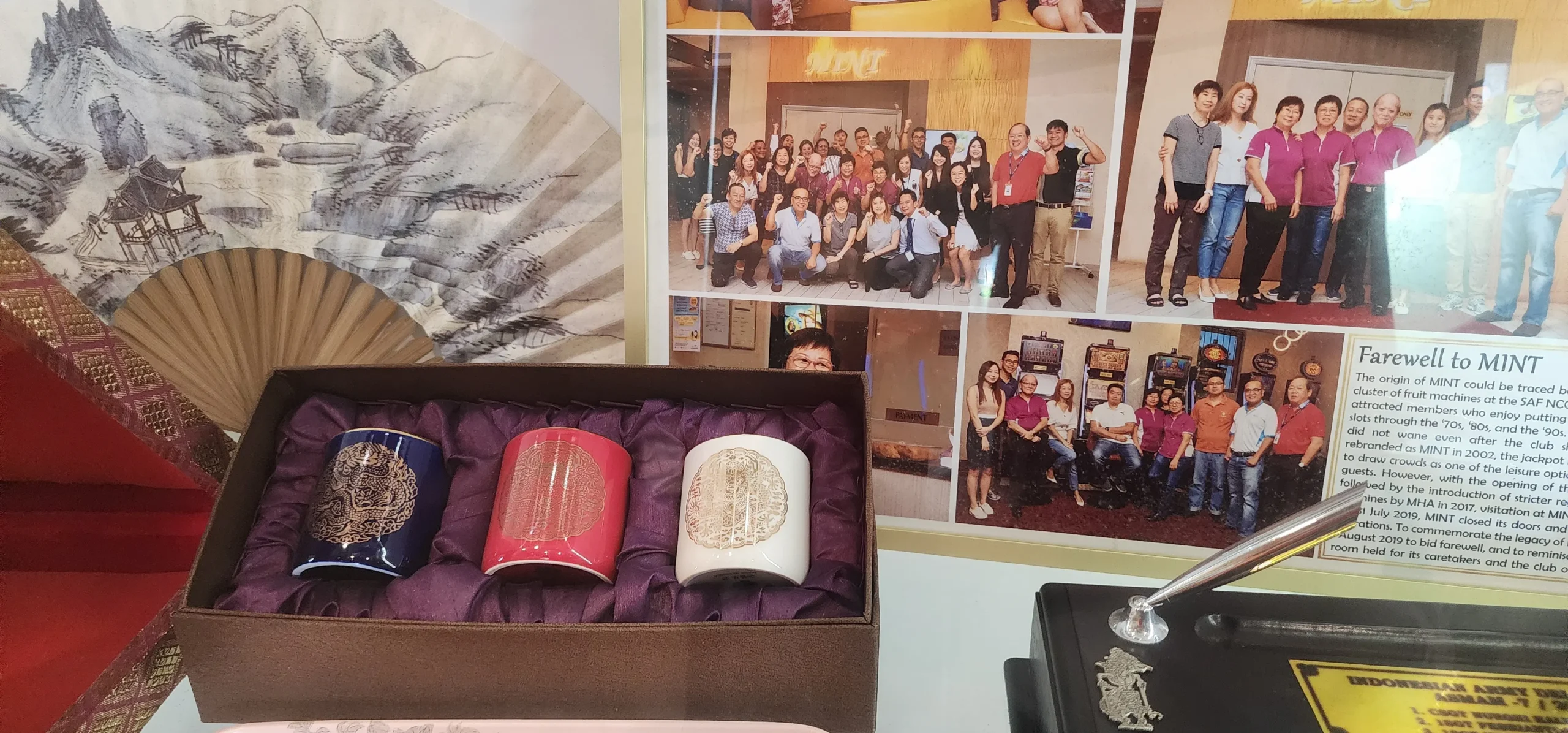
Memories and memorabilia linked to The Chevrons and earlier SAF NCO Club culture in Singapore.
Memorabilia and group photographs preserve not just objects, but the friendships, milestones, and spirit of a community across time.

More Than Activities: Shared Belonging

The image featuring the road treasure hunt offers another charming reminder of a different era. Such activities were not merely organised to fill a calendar. They brought people together in fun, informal, and memorable ways. Families and members could take part, travel around Singapore, and enjoy the experience of discovery together.

These were the kinds of moments that strengthened social bonds almost without anyone noticing. The value was not only in the event itself, but in what happened around it: conversations during the drive, laughter between checkpoints, friendly competition, and the joy of participation.

When people look back years later, it is often these simple moments that remain vivid. Community is rarely built in grand speeches alone. More often, it is built through repeated shared experiences that leave people feeling part of something larger than themselves.

A People-Centric Reflection

What these images reveal so clearly is this: heritage is not only about buildings, dates, or institutions. Heritage is also about lived moments. It is about how people gathered, how they moved through life together, and how ordinary events became lasting memories.

In many ways, these photographs tell a people-first story. They reflect seniors being cared for, members being engaged, families being welcomed, and communities being sustained through meaningful shared experiences.

From Past Memories to Present Legacy

The photograph of the Golden Jubilee Time Capsule, sealed by Dr Ng Eng Hen, Minister for Defence, on 16 March 2024, carries powerful symbolism. A time capsule is, by its very nature, an act of trust in the future. It says that what was meaningful in one generation deserves to be remembered by another.

This idea feels especially moving when placed alongside the older photographs. On one side, we see aerobics classes, senior lunches, and social events that once brought people together. On the other, we see an intentional effort to preserve memory and legacy. Together, they form a bridge between past and future.

The continuity matters. It shows that while buildings may evolve and programmes may change, the deeper values of community, participation, and remembrance remain worth preserving.

Golden Jubilee Time Capsule at The Chevrons, sealed on 16 March 2024 as a symbol of heritage and legacy.
The Golden Jubilee Time Capsule at The Chevrons stands as a symbol of memory, continuity, and legacy for future generations.

Why These Stories Still Matter Today

In a society that often moves quickly, there is something deeply grounding about revisiting images like these. They remind us that progress should never come at the cost of forgetting the human stories that shaped our institutions and communities.

They also remind us that people-centric spaces matter. Places that welcome families, encourage healthy activity, honour seniors, and preserve shared history do more than provide services. They help build identity, belonging, and continuity.

For those of us who value heritage, active ageing, social connection, and intergenerational understanding, these photographs are more than archival snapshots. They are gentle lessons. They remind us to treasure people, to recognise contributions, and to understand that the strength of a community is often found in the warmth of its shared memories.

A Closing Reflection

Perhaps that is what makes these images so touching. They do not shout. They simply show. They show people participating, caring, gathering, celebrating, and preserving. They show that community life, when built with sincerity, leaves behind more than records. It leaves behind meaning.

As Singapore continues to evolve, may we always make room for stories like these. Not merely to look backward, but to remember what must continue forward: care for people, respect for seniors, appreciation for shared spaces, and gratitude for the quiet traditions that helped shape who we are.

Heritage Lives Through People

If we want future generations to understand the true spirit of community, we must continue to document, preserve, and share the stories of the people, places, and moments that brought Singaporeans together.

About the Author

Andrew Koh Singapore writes on heritage, community, strategic living, and people-centred reflections in Singapore. Through AndrewKoh.sg, he explores stories that connect the past to the present with warmth, dignity, and meaning.

This article is a heritage and community reflection based on exhibited photographs and commemorative displays. It is intended for educational, cultural, and storytelling purposes in a respectful and people-centric manner.